Toggle light / dark theme

In World First, Stem Cell Therapy Reveres Type 1 Diabetes in Patient

Link :


A 25-year-old woman in China has had her Type 1 diabetes reversed through a groundbreaking new stem cell therapy treatment! As you can imagine, this represents a historic turning point in medical history. This revolutionary procedure has enabled her to create insulin on her own, relieving her of the constant daily hassle of injections. When this breakthrough eventually goes public, it will provide hope to millions worldwide dealing with this chronic condition.

According to Medlineplus, type 1 diabetes is classified as an autoimmune disorder in which the immune system erroneously attacks beta cells in the pancreas that produce insulin. Without insulin, your blood sugar levels can become dangerously elevated, leading to long-term damage to your vital organs. Managing this illness has generally required lifetime insulin therapy, which usually involves numerous daily injections or using insulin pumps. However, despite all of these measures, patients still face the risk of complications such as kidney damage, heart disease, and nerve issues.

This procedure involves extracting the patient’s adipose (fat) cells and reprogramming them into pluripotent stem cells. These adaptable cells have the amazing ability to develop into practically any kind of cell in the body. Scientists meticulously turned them into insulin-producing islet cells that resembled those damaged during the autoimmune onslaught. These new cells were then transplanted into the patient’s abdomen muscles and started to function as a biological insulin pump! The success of this technique is due to its individualized approach. The use of the patient’s own cells considerably reduces the likelihood of immune system rejection. Additionally, this circumvents the necessity for lifelong immunosuppressive medicines, typically prescribed for organ or cell transplants but present their own complications.

Discovery poised to help detect dark matter and pave way to unravel the universe’s secrets

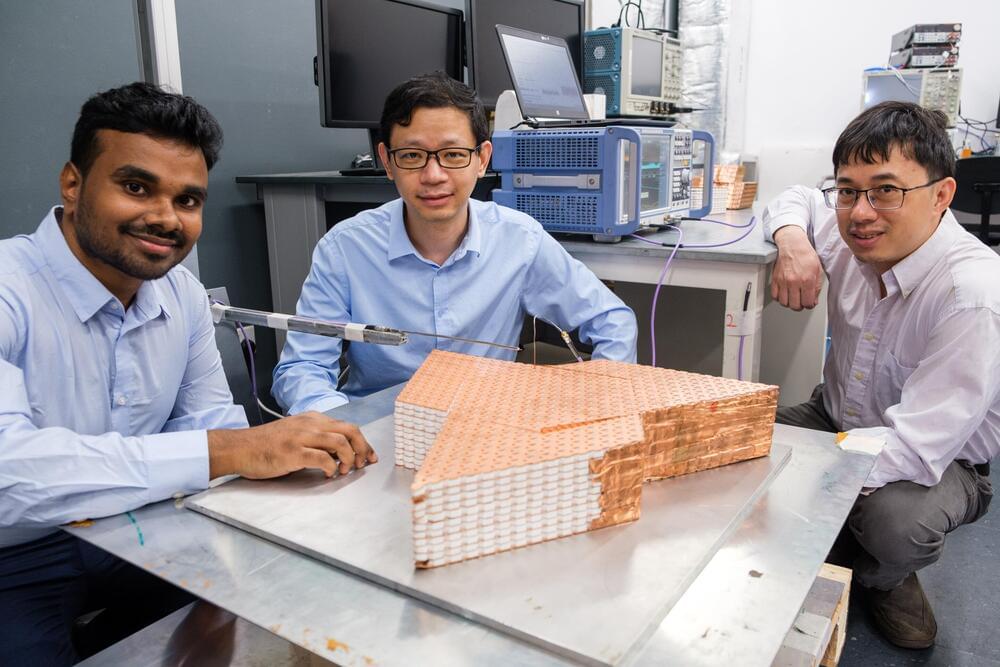
Researchers led by Nanyang Technological University, Singapore (NTU Singapore) have developed a breakthrough technique that could lay the foundations for detecting the universe’s “dark matter” and bring scientists closer than before to uncovering the secrets of the cosmos.

The things we can see on Earth and in space— like rocks and stars—make up only a small portion of the universe, as scientists believe that 85% of matter in the cosmos comprises invisible . This mysterious substance is said to be the invisible glue holding galaxies together. Finding it could help us understand cosmic phenomena that cannot be explained solely by the matter we see.

But proving the existence of dark matter is a herculean task. As its name suggests, dark matter is “dark,” meaning it does not normally emit or reflect light, carries no electric charge and interacts extremely weakly with normal matter, making it undetectable with conventional scientific instruments.

Top 12 Brilliantly Written Sapient Species From Across Fiction Who Have Amazing Lore — Explored

Throughout history, humanity has spun horrifying tales of sapient species beyond our own. From ghastly subhuman creatures dwelling in decrepit subterranean lairs to ghoulish humanoids bent on destruction, these lores have delighted and terrified us in equal measure. The medieval period was rife with legends of menacing beings lurking in the shadows, while centuries later, the Industrial Revolution ushered in scientific breakthroughs in anatomy and genetics. With this came a new question: could other sapient beings truly exist?

Storm Surfers of the Sky: How Bats Harness Winds to Power Migration

Migrating bats cleverly harness the warm winds of storm fronts to reduce energy use during their long seasonal journeys, as revealed by innovative tracking technology.

Scientists found these tiny nocturnal travelers exhibit unexpected flexibility and adaptability in their migration patterns. Yet, they face mounting challenges from anthropogenic threats and environmental changes, underscoring the urgency for conservation efforts.

Bats Surfing Storm Fronts

Smart Liquid Crystal Lenses Filter Out Seizure-Inducing Light for Epilepsy Patients

Revolutionary glasses have been engineered to shield individuals from seizure-inducing light, offering a potential new layer of safety for epilepsy patients during daily tasks and entertainment.

People with photosensitive epilepsy may soon benefit from an innovative pair of glasses designed to block light wavelengths known to trigger seizures.

Researchers from the University of Glasgow and the University of Birmingham have developed a prototype liquid crystal lens that could help reduce the risk of seizures. Their findings, published in Cell Reports Physical Science, highlight the potential of this technology to improve the lives of those with photosensitive epilepsy.

Physicists Measure Quantum Geometry of Electrons For First Time

A new breakthrough may help scientists solve some of the mysteries of the quantum realm.

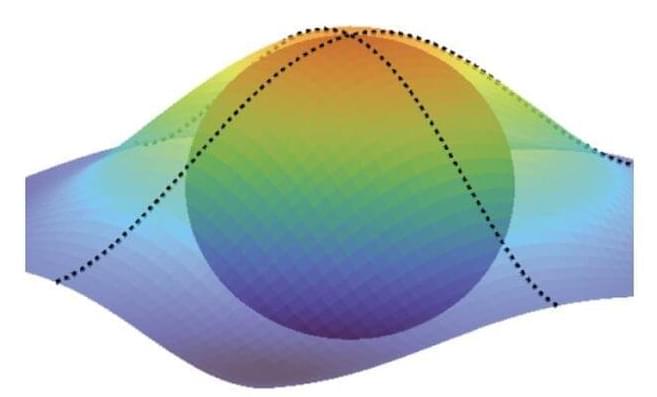
For the first time, physicists have been able to measure the geometrical ‘shape’ a lone electron adopts as it moves through a solid. It’s an achievement that will unlock a whole new way of studying how crystalline solids behave on a quantum level.

“We’ve essentially developed a blueprint for obtaining some completely new information that couldn’t be obtained before,” says physicist Riccardo Comin of the Massachusetts Institute of Technology (MIT).

Scientists use plasma to enable futuristic 3D-printed food — here’s how it could revolutionize an industry

Scientists at the University of Alberta found a new way to improve plant-based foods, and it involves plasma, the same stuff that makes up stars, as reported by Phys.org.

The breakthrough makes 3D-printed pea protein hold its shape, opening doors for more affordable and tasty meat alternatives.

Pea protein is already in many foods we eat, from bread to dairy-free milk to meatless burgers. It’s cheap and packed with nutrients, but until now, it wouldn’t keep its shape when pushed through a 3D printer, limiting its use in food production.

Integrated spin wave storage advances quantum networks

The University of Science and Technology of China has achieved a significant milestone in quantum memory research, addressing a long-standing challenge in integrated solid-state devices. The team, led by Chuan-Feng Li and Zong-Quan Zhou, has demonstrated an integrated spin-wave quantum memory capable of extended storage times and on-demand retrieval. This development marks a critical step toward scalable quantum networks.

Quantum memories play a pivotal role in enabling long-distance entanglement by linking short-distance connections, overcoming photon transmission losses. Rare-earth ions doped crystals have emerged as promising systems for quantum memory, with integrated solid-state devices showing particular potential. However, prior implementations were limited to optically excited states, which inherently restrict storage time and retrieval flexibility due to the short lifetime of these states.

The breakthrough lies in the implementation of spin-wave storage. This approach encodes photons into spin-wave excitations in ground states, vastly extending storage times to the spin coherence lifetime and enabling on-demand retrieval. Nevertheless, the challenge of separating single-photon signals from noise caused by strong control pulses has hindered progress in integrated structures — until now.

/* */