SARS-CoV-2 breakthrough infections in previously vaccinated individuals are characterized by reduced activation of innate immune responses.
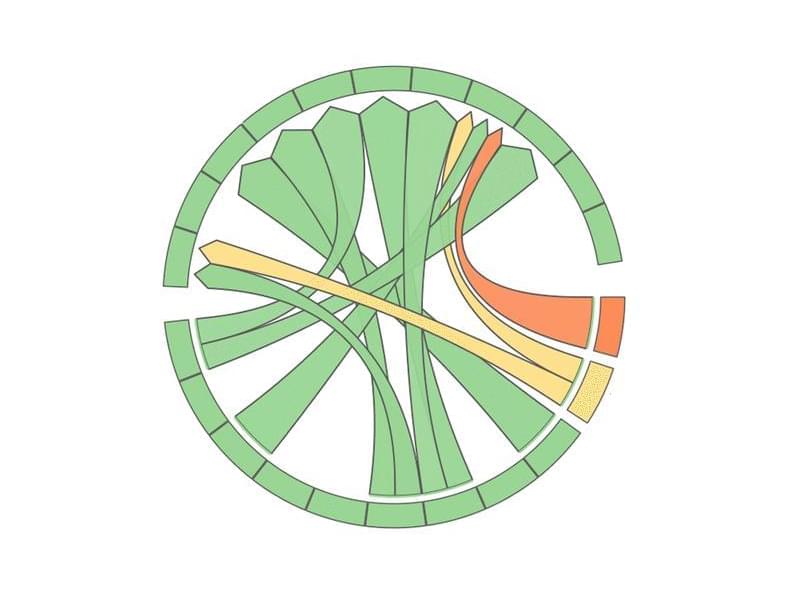



The immune system is a marathon, not a sprint.
New research reveals stem-like T cells that help fight disease longer—a breakthrough for cancer treatments and vaccines. Discover more via Pursuit → unimelb.me/3EnoujK
It’s a reminder that, much like training for a race, scientific discovery demands persistence, teamwork and a clear goal.
While more work is needed to translate these findings into real-world applications, harnessing the unique strengths of stem-like T cells and their regulation paves the way for innovative treatments that could redefine how we tackle chronic diseases and cancer.
This study is a collaborative effort between the Doherty Institute, the Peter MacCallum Cancer Centre, La Trobe University, Northwestern University (USA), the Olivia Newton-John Cancer Research Institute, the University of Birmingham (UK) and the University of Melbourne.
A Chinese company just created an AI model as powerful as ChatGPT for only $5M — causing NVIDIA’s stock to plummet 17%.
But there’s a darker story I believe nobody’s talking about…
In this deep dive, we uncover:
-How DeepSeek R1 matches OpenAI’s performance at a fraction of the cost.
–Why NVIDIA’s stock crash doesn’t tell the full story.
–Exclusive insights from an FAA data scientist about concerning patterns.
–Critical privacy risks that are being overlooked.
–The strategic implications for US-China AI competition.
–Trump’s emergency declaration and the $1.1B Texas AI facility.
Plus: Breaking down the real risks of using \.
Discover China’s Best – Best Prices on Trip.com! ✈️ : https://bit.ly/3DBipQe.
Experience China’s Bullet 🚅 : https://www.trip.com/t/OkTg4FPMnZ1
Want to sponsor the next East Money video? Get in touch:: [email protected].
Discover how the Chinese startup DeepSeek is revolutionizing AI with its groundbreaking models! In this video, we dive into the journey of Liang Wenfeng, the innovative mind behind DeepSeek, and explore how their latest model, DeepSeek-V3, outperforms industry giants using surprisingly basic hardware. Learn about their unique approach to talent acquisition, the significance of open-source development, and how they are democratizing access to advanced AI technology. Join us as we analyze the impact of DeepSeek on the global AI landscape and what it means for the future of artificial intelligence. Don’t forget to like, comment, and subscribe for more insights on AI breakthroughs!
#Eastmoney #Documentry #deepseek

More than 10X… 57X faster! 🔥
Exponential growth! 🚀
Cerebras Systems announced today it will host DeepSeek’s breakthrough R1 artificial intelligence model on U.S. servers, promising speeds up to 57 times faster than GPU-based solutions while keeping sensitive data within American borders. The move comes amid growing concerns about China’s rapid AI advancement and data privacy.
The AI chip startup will deploy a 70-billion-parameter version of DeepSeek-R1 running on its proprietary wafer-scale hardware, delivering 1,600 tokens per second — a dramatic improvement over traditional GPU implementations that have struggled with newer “reasoning” AI models.
Just as we were settling into the latest AI obsession—autonomous agents—Deepseek burst onto the scene, and suddenly, it’s all anyone can talk about. But beyond the hype, what does the “DeepSeek Effect” actually mean for AI innovation, geopolitics, and the industry’s competitive landscape? An open discussion.
Speakers: Chris, Cecile Tamura, Riju Pahwa

ANEMEL researchers have created a catalyst for water splitting that’s efficient and stable, without relying on scarce platinum group metals (PGMs). The study, recently published in Energy & Environmental Science, reports a high-performance PGM-free catalyst for the cathode in water electrolysis, responsible for the reaction that creates green hydrogen.
Current anion exchange membrane (AEM) water electrolyzers rely on PGMs, which are scarce and expensive. Specifically, these metals are used as catalysts at the cathode, where hydrogen is generated. However, ANEMEL AEM electrolyzers avoid PGMs, opting instead for more abundant metals such as nickel. This is essential to enable the wide adoption of electrolyzers: it helps to decrease the cost of electrolyzer components and improve their recyclability, reducing waste and providing a competitive advantage.
This requires investigating innovative ways to ensure electrolyzers perform at least as well, if not better than, those made with PGMs. After all, platinum and other metals in this group offer excellent activity and stability, especially at high current densities in electrolyzer environments, something PGM-free catalysts still don’t.

By crafting an artificial brain-like environment with microscopic nanopillars, researchers have successfully guided neurons to grow in structured networks. This innovation could revolutionize how scientists study neurological conditions by offering a more accurate way to observe brain cell behavior.