Facebook, now Meta, wants to pivot into virtual reality. But it won’t be able to escape its sins.


Circa 2020
Facebook has shown off a new proof-of-concept virtual reality headset, and it has a completely different design than most other VR devices on the market today. Instead of a bulky contraption that covers up the top half of your face and has to be strapped to your head, this proof-of-concept headset looks kind of like a pair of large sunglasses that can sit comfortably on your ears.
Yet Facebook is billing this new device as not a pair of augmented reality glasses, as common conceptions of AR devices go, but a legitimate VR product. They’re very thin, with a display thickness of less than 9mm, and Facebook claims they have a field of view that’s “comparable to today’s consumer VR products.” Here’s a top-down view:
The proof-of-concept glasses aren’t just thin for looks, though — they also apparently beam images to your eyes in a way that’s different than standard VR headsets on the market today. I’ll let Facebook’s research team explain one of those techniques, called “holographic optics:”
There is no doubt that the “metaverse” will continue to dominate conversations — in both marketing and culture — for years. But there’s no need to sit on the sidelines as the new paradigm of 3D or “spatial” communication emerges; it’s already here and consumers are engaged and creating. Get active in AR/VR/XR today to entertain your audiences and keep your brand top-of-mind for the influencers driving the next revolution in creativity.
Jason Steinberg is managing partner of Pretty Big Monster.
Welcome to the VentureBeat community!
Mikael Murstamor maybe just not accept his offer?
3 Replies.
Michael LorreyIf stopping an African-American from owning twitter is so important, why don’t they feel even more strongly about Saudi authoritarians and the CCP owning our biggest tech companies?
2 Replies.
View 3 more comments.
Shubham Ghosh Roy shared a link.
Check out this new look at the rebranded Horizon Worlds!
Subscribe for the latest VR trailers & clips:
This article has been sponsored by Amazon India.
M etaverse has been touted to be the next big thing to bring about a global evolution, not just in technology but in almost every sector.
Something that was considered possible only in Sci-Fi novels, films, series and video games a few years back is now a reality. A convergence of the augmented, physical and virtual reality, Metaverse is a digital world with endless possibilities. In a post-pandemic world that expedited the emergence of virtual spaces, Metaverse provides an opportunity to establish connections through its immersive technologies.
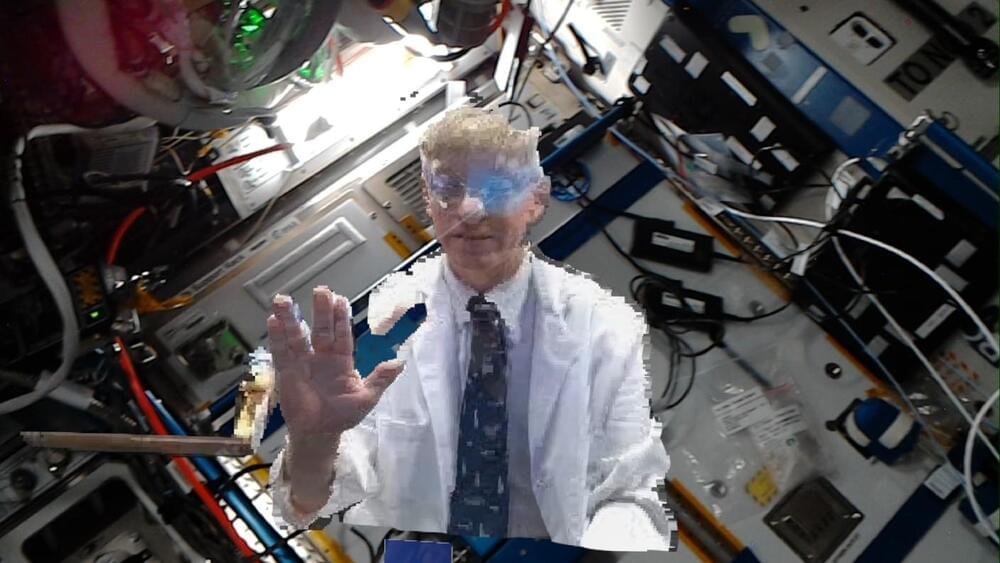
In a remarkable development, the National Aeronautics and Space Administration (NASA) ‘holoported’ the first human being into space late last year. Holoportation is the process through which a three dimensional holographic representation of an individual is created, in a combination of a ‘hologram’ and ‘teleportation’. NASA revealed the development late last week, as it announced that it had transported flight surgeon Dr. Josef Schmid, mixed and virtual reality firm AEXA Aerospance’s chief executive officer Dr. Fernando De La Pena Llaca and others to the International Space Station (ISS) during October 2021 while the ISS was orbiting the Earth at an altitude of 250 miles above the Earth’s surface.
NASA Uses Microsoft’s Hololens Konnect Camera To Create Live Hologram of Flight Surgeon In Space
The event place last year when NASA’s Crew 2 astronauts were present on the ISS. The astronauts took to the skies in April last year and returned in November, soon after Dr. Schmid and others were holoportated to the orbiting space laboratory.
It’s a reference to the evil form in the ‘Lord of the Rings’ books. For those unfamiliar with the ‘Lord of the Rings” books and movies, the Eye of Sauron is the chief antagonist in the series, exemplified as a flaming eye and that is a metaphor for pure evil. It’s not something anyone would want to be compared to unless, of course, you are Meta founder and CEO Mark Zuckerberg.
Mark Zuckerberg on Long-Term Strategy, Business and Parenting Principles, Personal Energy Management, Building the Metaverse, Seeking Awe, the Role of Religion, Solving Deep Technical Challenges (e.g., AR), and More | Brought to you by Eight Sleep’s Pod Pro Cover sleeping solution for dynamic cooling and heating (http://eightsleep.com/Tim), Magic Spoon delicious low-carb cereal (http://magicspoon.com/tim), and Helium 10 all-in-one software suite to sell on Amazon (https://helium10.com/tim).
Mark Zuckerberg (FB/IG) is the founder, chairman, and CEO of Meta, which he originally founded as Facebook in 2004. Mark is responsible for setting the overall direction and product strategy for the company. In October 2021, Facebook rebranded to Meta to reflect all of its products and services across its family of apps and a focus on developing social experiences for the metaverse—moving beyond 2D screens toward immersive experiences like augmented and virtual reality to help build the next evolution in social technology.
He is also the co-founder and co-CEO of the Chan Zuckerberg Initiative with his wife Priscilla, which is leveraging technology to help solve some of the world’s toughest challenges—including supporting the science and technology that will make it possible to cure, prevent, or manage all diseases by the end of the twenty-first century.
Mark studied computer science at Harvard University before moving to Palo Alto, California, in 2004.
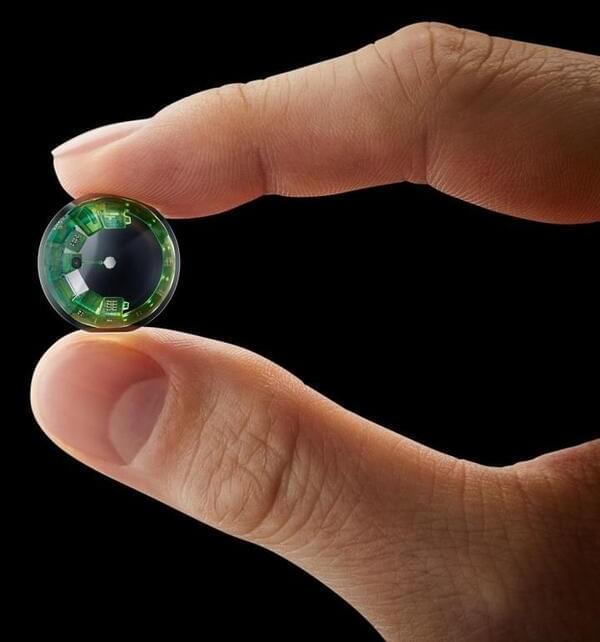
Mojo Vision said it has created a new prototype of its Mojo Lens augmented reality contact lenses. This smart contact lens will bring “invisible computing” to life, the company believes.
The Mojo Lens prototype is a critical milestone for the company in its development, testing, and validation process, and is an innovation positioned at the intersection of smartphones, augmented reality/virtual reality, smart wearables, and health tech.
The prototype includes numerous new hardware features and technologies embedded directly into the lens — advancing its display, communications, eye tracking, and power system.