Toggle light / dark theme

Ban on gain-of-function studies ends

The debate is focused on a subset of gain-of-function studies that manipulate deadly viruses to increase their transmissibility or virulence. “This is what happens to viruses in the wild”, explains Carrie Wolinetz, head of the NIH Office of Science Policy. “Gain-of-function experiments allow us to understand how pandemic viruses evolve, so that we can make predictions, develop countermeasures, and do disease surveillance”. Although none of the widely publicised mishaps of 2014 involved such work, the NIH decided to suspend funding for gain-of-function studies involving influenza, MERS-CoV, and SARS-CoV.


The US moratorium on gain-of-function experiments has been rescinded, but scientists are split over the benefits—and risks—of such studies. Talha Burki reports.

On Dec 19, 2017, the US National Institutes of Health (NIH) announced that they would resume funding gain-of-function experiments involving influenza, Middle East respiratory syndrome coronavirus, and severe acute respiratory syndrome coronavirus. A moratorium had been in place since October, 2014. At the time, the NIH had stated that the moratorium “will be effective until a robust and broad deliberative process is completed that results in the adoption of a new US Government gain-of-function research policy”. This process has now concluded. It was spearheaded by the National Science Advisory Board for Biosecurity (NSABB) and led to the development of a new framework for assessing funding decisions for research involving pathogens with enhanced pandemic potential. The release of the framework by the Department of Health and Human Services (HHS), of which NIH is part, signalled the end of the funding pause.

The situation has its roots in 2011, when the NSABB suppressed two studies involving H5N1 viruses that had been modified to allow airborne transmission from ferret to ferret. They worried that malign actors could replicate the work to deliberately cause an outbreak in human beings. After much debate, the studies were published in full in 2012. HHS subsequently issued guidelines for funding decisions on experiments likely to result in highly pathogenic H5N1 viruses transmissible from mammal to mammal via respiratory droplets. The guidelines were later expanded to include H7N9 viruses.
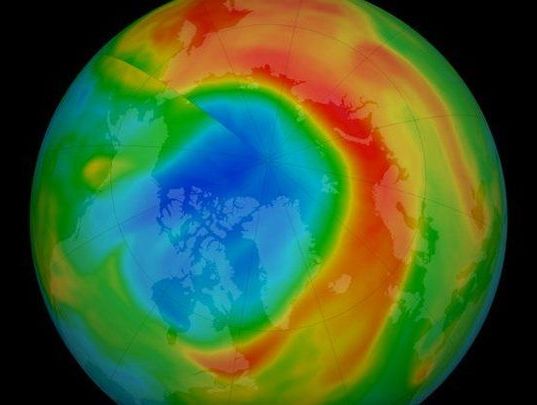
That Unusually Large Ozone Hole Over The Arctic Has Closed Up Again

Earlier this year, the layer of ozone over the Arctic thinned out enough to be considered a serious sized hole. It wasn’t exactly impressive compared with its southern cousin, but it was certainly a lot bigger than we’d ever seen it before.

Now, according to surveillance by the Copernicus Atmosphere Monitoring Service (CAMS), we can breathe a sigh of relief. It’s healed up again.

That’s great news for ecosystems below, which rely on concentrations of ozone gas high up in the stratosphere to act as a planetary-scale sunscreen against damaging showers of UV radiation.

Space Surveillance Telescope Sees First Light: through US & Australian

In partnership with the Australian Ministry of Defense, the U.S. Space Force’s (USSF) Space and Missile Systems Center’s (SMC) Space Surveillance Telescope (SST) Program recently achieved “first light” on March 5, 2020, reaching a key milestone after it was moved from White Sands Missile Range, New Mexico to Harold E. Holt Naval Communications Station in Western Australia.

“This key Space Domain Awareness, or SDA, partnership builds on the long history of close defense space cooperation between the United States and Australia and has been a cornerstone of our continued alliance,” said Gordon Kordyak, SMC Special Programs Directorate Space Domain Awareness Division chief.

Moving the SST to Australia satisfied a critical objective to improve the broader USSF Space Surveillance Network’s ground-based electro-optical coverage of the geosynchronous space regime. First light is a significant milestone in meeting this objective. It means that course alignment of the telescope optics with the wide field of view camera has been completed to allow the first images of objects in orbit to be seen by the telescope.

The first modern pandemic

During World War II, an amazing amount of innovation, including radar, reliable torpedoes, and code-breaking, helped end the war faster. This will be the same with the pandemic. I break the innovation into five categories: treatments, vaccines, testing, contact tracing, and policies for opening up. Without some advances in each of these areas, we cannot return to the business as usual or stop the virus. Below, I go through each area in some detail.


The scientific advances we need to stop COVID-19.

By Bill Gates

The Navy Will Put a Laser Gun on a Destroyer by 2021

Pew-pew-pew is coming soon-soon-soon.

The U.S. Navy plans to put a laser weapon on a warship by 2021. The High Energy Laser with Integrated Optical-dazzler and Surveillance (HELIOS) system, or HELIOS, is a defensive weapon system designed to burn boats and shoot down unmanned drones. The weapon will go to sea with a guided missile destroyer assigned to the Pacific Fleet in two years’ time, the Navy says.

The service placed an order for HELIOS in January 2019. The $150 million contract, awarded to Lockheed Martin, calls for the company to deliver two systems. According to a company press release, one will go to White Sands Missile Range in New Mexico for testing. USNI News says the Navy will install the other on a Arleigh Burke-class guided missile destroyer.

Moscow’s Facial Recognition Tech Will Outlast the Coronavirus

👽 Facial recognition and Covid 19 in Moscow, Russia.

Fyodor R.


MOSCOW – The Russian capital is home to a network of 178,000 surveillance cameras. Thousands of these cameras are already connected to facial recognition software under a program called “Safe City.” Police claim the technology has helped arrest more than 300 people.

Now, as part of the response to COVID-19, authorities are trying to bring every surveillance camera into the facial recognition network. This Orwelian step is supposedly to catch people breaking quarantine.

At the end of January, before Moscow had any confirmed cases of coronavirus, the city purchased the latest version of NTechLab’s facial recognition software.

What do we know about COVID-19 and sewage?

A version of this story was first published by COVID-19 Waterblog. Read the original.

There has been quite some talk about SARS-CoV-2 shedding in faeces and what that might mean for the water industry. Here, Susan Petterson provides a snapshot of the current data.

As I see it, there are two aspects to this conversation: the first is a concern that sewage may contain infectious SARS-CoV-2 viruses; and the second relates to the more theoretical potential of using SARS-CoV-2 RNA concentration in sewage as a public health surveillance tool.

Projecting the transmission dynamics of SARS-CoV-2 through the postpandemic period

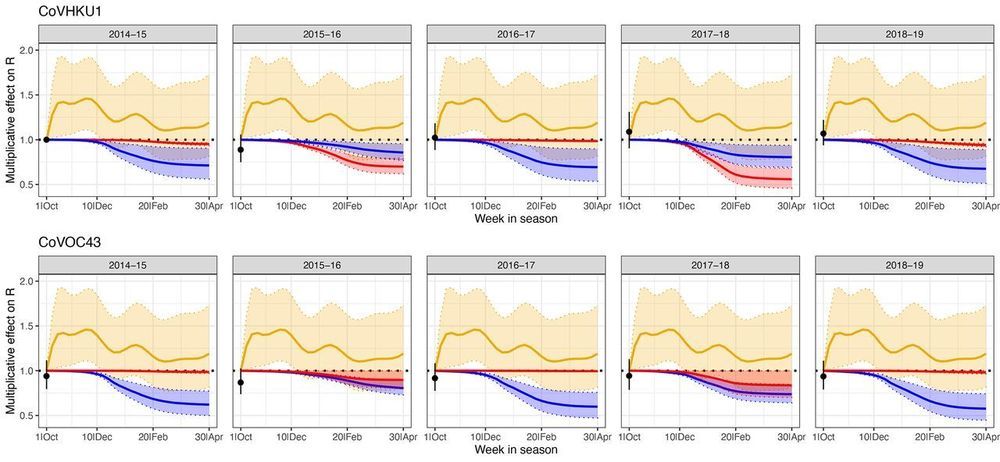
It is urgent to understand the future of severe acute respiratory syndrome–coronavirus 2 (SARS-CoV-2) transmission. We used estimates of seasonality, immunity, and cross-immunity for betacoronaviruses OC43 and HKU1 from time series data from the USA to inform a model of SARS-CoV-2 transmission. We projected that recurrent wintertime outbreaks of SARS-CoV-2 will probably occur after the initial, most severe pandemic wave. Absent other interventions, a key metric for the success of social distancing is whether critical care capacities are exceeded. To avoid this, prolonged or intermittent social distancing may be necessary into 2022. Additional interventions, including expanded critical care capacity and an effective therapeutic, would improve the success of intermittent distancing and hasten the acquisition of herd immunity. Longitudinal serological studies are urgently needed to determine the extent and duration of immunity to SARS-CoV-2. Even in the event of apparent elimination, SARS-CoV-2 surveillance should be maintained since a resurgence in contagion could be possible as late as 2024.

The ongoing severe acute respiratory syndrome–coronavirus 2 (SARS-CoV-2) pandemic has caused nearly 500,000 detected cases of coronavirus disease 2019 (COVID-19) illness and claimed over 20,000 lives worldwide as of 26 Mar 2020. Experience from China, Italy, and the United States demonstrates that COVID-19 can overwhelm even the healthcare capacities of well-resourced nations (2–4). With no pharmaceutical treatments available, interventions have focused on contact tracing, quarantine, and social distancing. The required intensity, duration, and urgency of these responses will depend both on how the initial pandemic wave unfolds and on the subsequent transmission dynamics of SARS-CoV-2. During the initial pandemic wave, many countries have adopted social distancing measures, and some, like China, are gradually lifting them after achieving adequate control of transmission.

/* */