Toggle light / dark theme

NASA Hack Squeezes More Time Out of Dying Voyager 2 Probe

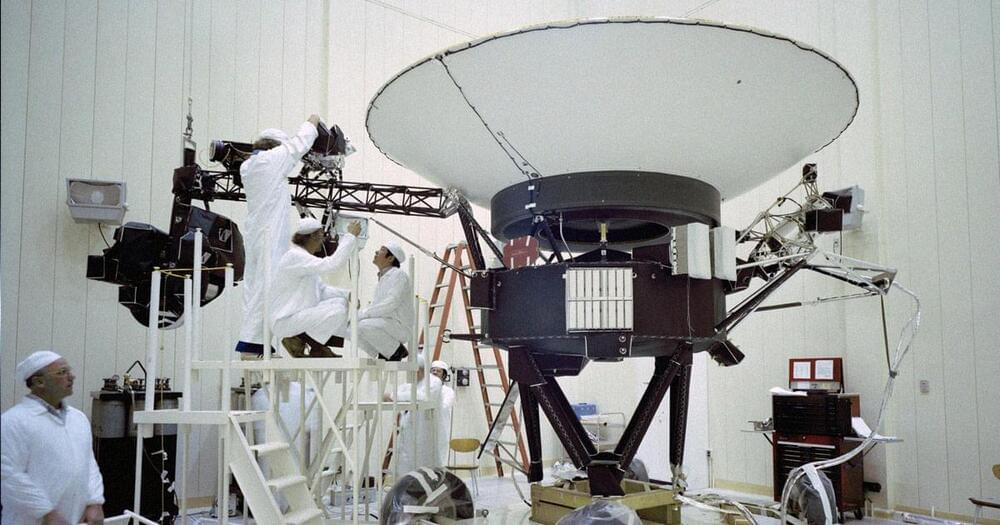
It turns out that reports of its death were greatly exaggerated. NASA says it’s figured out a way to extend the mission of its interstellar Voyager 2 probe by another three years.

And that’s no easy feat, considering the probe has been screaming through the cosmos since 1977 and is currently more than 12 billion miles from Earth.

The probe recently switched to its backup power reserves, which were originally set aside as part of an onboard safety mechanism, according to an update by NASA’s Jet Propulsion Laboratory.

Physicists Discover a New State of Matter Hidden in The Quantum World

You’re familiar with the states of matter we encounter daily – such as solid, liquid, and gas – but in more exotic and extreme conditions, new states can appear, and scientists from the US and China just found one.

They’re calling it the chiral bose-liquid state, and as with every new arrangement of particles we discover, it can tell us more about the fabric and the mechanisms of the Universe around us – and in particular, at the super-small quantum scale.

States of matter describe how particles can interact with one another, giving rise to structures and various ways of behaving. Lock atoms in place, and you have a solid. Allow them to flow, you have a liquid or gas. Force charged partnerships apart, you have a plasma.

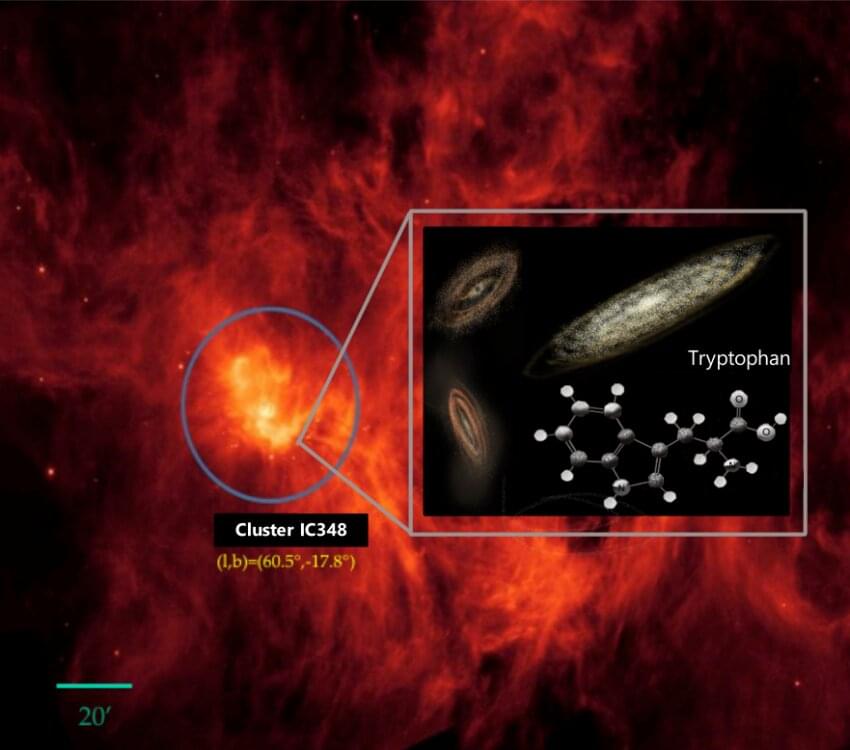
Evidence of the amino acid tryptophan found in space

Using data from the Spitzer space observatory, Dr. Susana Iglesias-Groth, a researcher from The Instituto de Astrofísica de Canarias (IAC), has found evidence for the existence of the amino acid tryptophan in the interstellar material in a nearby star-forming region. The research is published in Monthly Notices of the Royal Astronomical Society.

High amounts of tryptophan were detected in the Perseus molecular complex, specifically in the IC348 star system, a star-forming region that lies 1,000 away from Earth—relatively close in astronomical terms. The region is generally invisible to the , but shines brightly when viewed in .

Tryptophan is one of the 20 amino acids essential for the formation of key proteins for life on Earth, and produces one of the richest pattern of spectral lines in the infrared. It was therefore an obvious candidate to be explored using the extensive spectroscopic database of the Spitzer satellite, a space-based infrared telescope.

Natural Language Programming AIs are taking the drudgery out of coding

“Learn to code.” That three-word pejorative is perpetually on the lips and at the fingertips of internet trolls and tech bros whenever media layoffs are announced. A useless sentiment in its own right, but with the recent advent of code generating AIs, knowing the ins and outs of a programming language like Python could soon be about as useful as knowing how to fluently speak a dead language like Sanskrit. In fact, these genAIs are already helping professional software developers code faster and more effectively by handling much of the programming grunt work.

Two of today’s most widely distributed and written coding languages are Java and Python. The former almost single handedly revolutionized cross-platform operation when it was released in the mid-’90s and now drives “everything from smartcards to space vehicles,” as Java Magazine put it in 2020 — not to mention Wikipedia’s search function and all of Minecraft. The latter actually predates Java by a few years and serves as the code basis for many modern apps like Dropbox, Spotify and Instagram.

They differ significantly in their operation in that Java needs to be compiled (having its human-readable code translated into computer-executable machine code) before it can run. Python, meanwhile, is an interpreted language, which means that its human code is converted into machine code line-by-line as the program executes, enabling it to run without first being compiled. The interpretation method allows code to be more easily written for multiple platforms while compiled code tends to be focused to a specific processor type. Regardless of how they run, the actual code-writing process is nearly identical between the two: Somebody has to sit down, crack open a text editor or Integrated Development Environment (IDE) and actually write out all those lines of instruction. And until recently, that somebody typically was a human.

/* */