Early analysis of the asteroid Bennu sample, returned by NASA’s OSIRIS-REx mission, offers surprising insights into the early solar system and the origins of life on Earth.


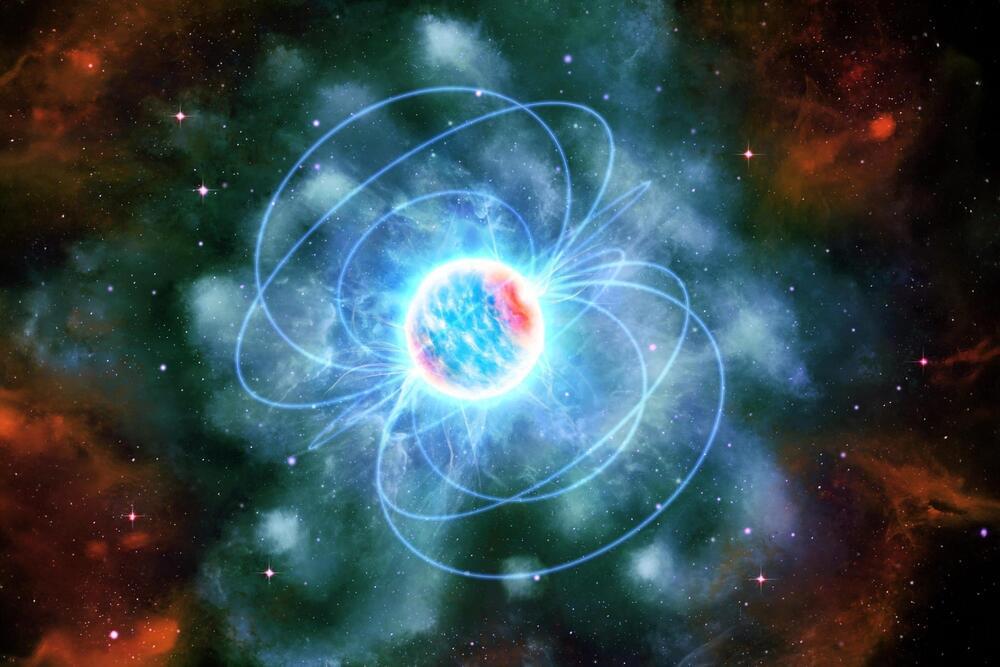
Recent observations by ESA’s XMM-Newton and NASA ’s Chandra have revealed three unusually cold, young neutron stars, challenging current models by showing they cool much faster than expected.
This finding has significant implications, suggesting that only a few of the many proposed neutron star models are viable, and pointing to a potential breakthrough in linking the theories of general relativity and quantum mechanics through astrophysical observations.
Discovery of unusually cold neutron stars.
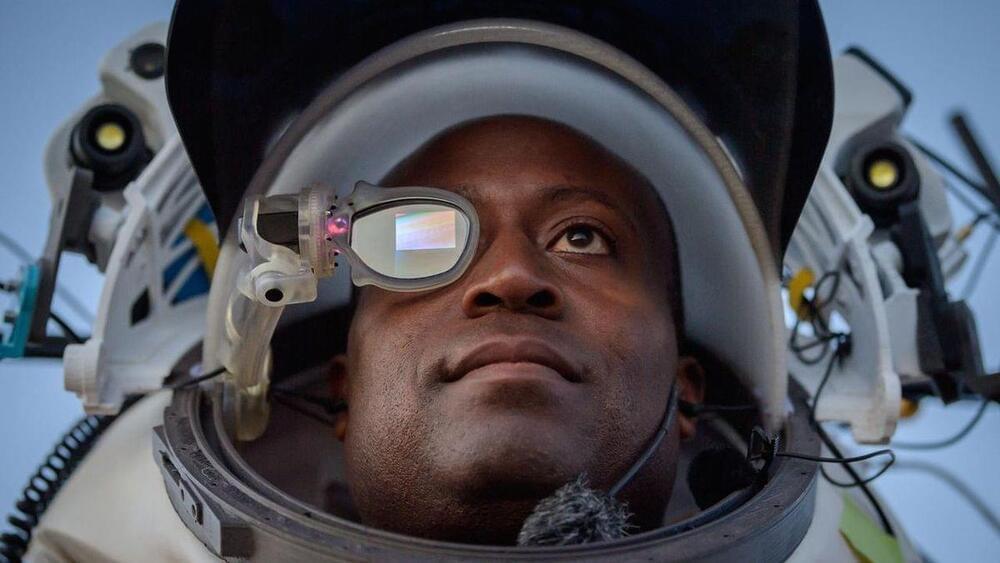
“I’ve always been fascinated with new things. I like to develop things,” Douglas told Space.com in March about the Artemis program, which later this decade aims to put astronauts on the moon’s surface for the first time since 1972. “I really believe in pushing ourselves, in understanding what is our true potential: both me as an individual, [and] within all of us as a species.”
“This is the perfect place to be, where we’re going to push that boundary,” he said.
NASA astronauts Mike Barratt, Matt Dominick, Tracy C. Dyson, Jeanette Epps, Butch Wilmore, and Suni Williams share a Fourth of July message and extend their best wishes to those back on Earth in a video recorded on June 28, 2024.
The crew members are currently living and working aboard the International Space Station. Their missions aim to advance scientific knowledge and test new technologies for future human and robotic missions to the Moon and Mars, including NASA’s Artemis lunar missions.
Learn more about the International Space Station: https://www.nasa.gov/international-sp…
Credit: NASA
#Space #SpaceStation #Astronauts
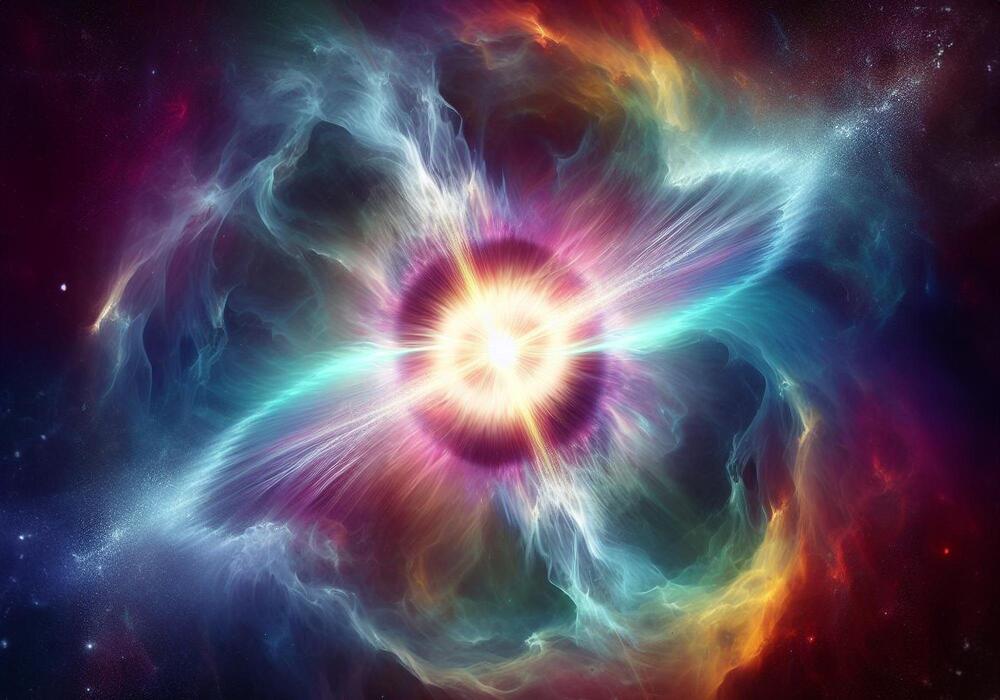
A recent study has unveiled the origins of the mysterious “heartbeats” observed in neutron stars, relating them to glitches caused by the dynamics of superfluid vortices.
Researchers found that these glitches follow a power-law distribution similar to other complex systems and developed a model based on quantum vortex networks that aligns with observed data without extra tuning.
Discovering Neutron Stars’ Heartbeats
Set for completion this decade, the Extremely Large Telescope in Chile will be the largest telescope globally, with a main mirror spanning 39 meters and made from 798 precision-engineered segments. It represents a significant international effort in astronomy.
Currently under construction in the Chilean Atacama Desert, the European Southern Observatory’s Extremely Large Telescope (ESO ’s ELT) is one step closer to completion. German company SCHOTT has successfully delivered the blank for the last of the 949 segments commissioned for the telescope’s primary mirror (M1). With a diameter of more than 39 meters, M1 will be by far the largest mirror ever made for a telescope.
Innovations in Telescope Mirror Design.
As bristling with volcanoes as a porcupine with quills, Jupiter’s moon Io is the most volcanically active world in the Solar System. At any given time, around 150 of the 400 or so active volcanoes on Io are erupting. It’s constantly spewing out lava and gas; a veritable factory of volcanic excretions.
And, thanks to the Juno probe’s Jovian Infrared Auroral Mapper (JIRAM) imaging Jupiter and its surrounding environment, we now know a lot more about what a gloriously hot mess Io is.
“The high spatial resolution of JIRAM’s infrared images, combined with the favorable position of Juno during the flybys, revealed that the whole surface of Io is covered by lava lakes contained in caldera-like features,” says astrophysicist Alessandro Mura of the National Institute for Astrophysics in Italy.
We study the possibility that the vacuum energydensity of scalar and internal-space gauge fieldsarising from the process of dimensional reduction ofhigher dimensional gravity theories plays the role of quintessence. We show that, for themultidimensional Einstein-Yang-Mills system compactifiedon a R × S3 × Sdtopology, there are classically stable solutions suchthat the observed accelerated expansion of the Universe atpresent can be accounted for without upsetting structureformation scenarios or violating observational bounds onthe vacuum energy density.