Toggle light / dark theme

Drum rolled Carbon fiber tethers five times stronger than Kevlar and Mach 8 spaceplane can place payloads into orbit at super low cost

In 2009, Carbon nanotube tethers with a strength of 9 N/Tex [9 million newton meters/kg] is over twice as strong as any fibers ever produced before.

In 2016, Jian Nong Wang and his colleagues made nanotubes with a process akin to glass blowing: Using a stream of nitrogen gas, they injected ethanol, with a small amount of ferrocene and thiophene added as catalysts, into a 50-mm-wide horizontal tube placed in furnace at 1,150–1,130 °C.

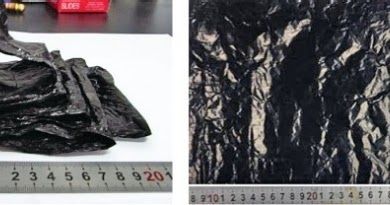
They packed the nanotubes even more densely by pressing the film repeatedly between two rollers.
Move Over EmDrive, Here Comes Woodward’s Mach Effect Drive

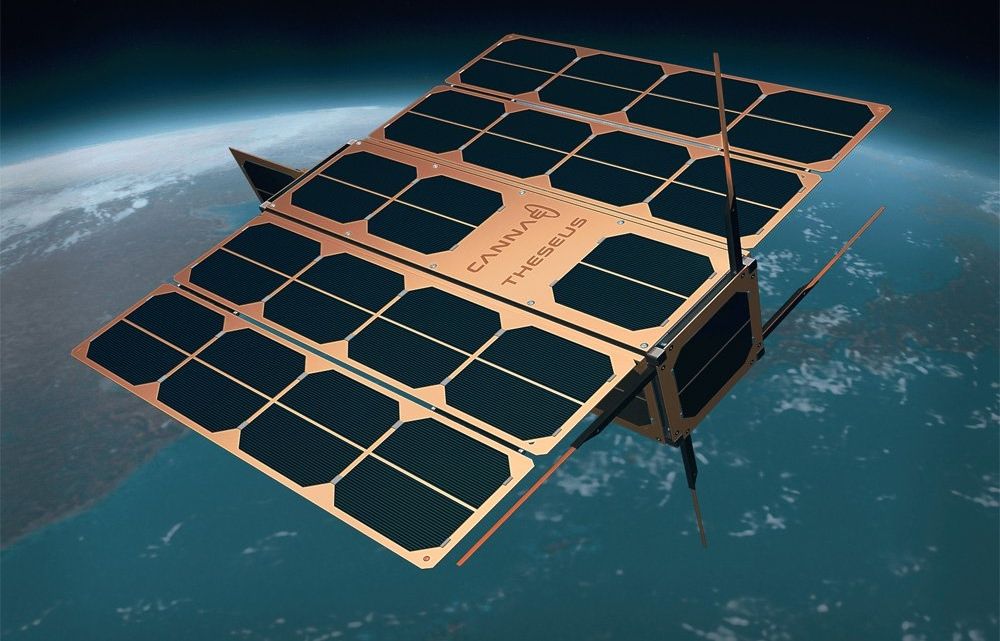
An exotic “impossible” space propulsion technology known as “Cannae Drive,” less known than the EmDrive but equally controversial, made news headlines a few weeks ago with the announcement that it is about to be tested in space. There are speculations that the Cannae Drive could exploit physics known as “Mach Effect.” But perhaps the same physics plays a role in the EmDrive as well.

Cannae Inc., the company formed by engineer Guido Fetta to commercialize Cannae Drive technology, announced the forthcoming launch of a cubesat to test its space propulsion technology. “Cannae’s technology requires no on-board propellant to generate thrust and will provide station-keeping for a cubesat flying below a 150-mile orbital altitude,” claimed the announcement. “The demonstration satellite will remain in this orbit for a minimum of six months.”

Ending a wave of speculations on the similarities between Cannae Drive technology and the anomalous EmDrive effect, Fetta posted a clarification a few days ago:

How would sex work in space?

Elon Musk doesn’t want to simply send humans to Mars. The SpaceX CEO has bigger ambitions. He wants us to be an “interplanetary species,” which means creating a self-sustaining civilization on Mars, which means living and dying on Mars — which at some point might mean sex and pregnancy on Mars.

So how would that work?

Given that Musk hasn’t figured out how to keep people alive on the trip to the Red Planet, it’s unlikely he has details on how people will make more people once they’re there. We don’t have any data on how human bodies will work on Mars specifically, but we have enough information to know that sex in space could be a real hassle.

If There’s Life on Europa, Robots Like These Will Find It

The exploration of Europa begins under the ice in Antarctica.

That’s where a team of researchers, led by the Georgia Institute of Technology (Georgia Tech), has been testing a variety of robotic subs in recent years to learn about what technologies will work best when NASA eventually launches a mission to Jupiter’s icy moon.

“I really want us to go down through the ice on Europa. I want to explore what’s down there,” says Britney Schmidt, assistant professor at the School of Earth and Atmospheric Sciences at Georgia Tech and principal investigator for the NASA-funded project called SIMPLE, for Sub-ice Investigation of Marine and Planetary-analog Ecosystems.

Elon Musk just unveiled a critical piece of his plan to save humanity

Tech billionaire Elon Musk is convinced that we must colonise Mars with a million people if the humanity is to survive long-term. To that effect in 2008, he almost went broke funding SpaceX – his then-new aerospace company – to keep developing next-generation rockets.

And on Tuesday, at a challenging moment in the 14-year-old company’s history, Musk plans to unveil his grand vision: to turn Mars into a “backup drive” and save humanity.

The big announcement is scheduled for Tuesday, September 27 at 2:30pm EDT during the 67th International Astronautical Congress (IAC) in Guadalajara, Mexico. (Watch it live at the end of this post.)

Making rocket fuel from water could drive a power revolution on Earth

Researchers led by NASA’s former chief technologist are hoping to launch a satellite carrying water as the source of its fuel.

The team from Cornell University, guided by Mason Peck, want their device to become the first shoebox-sized ‘CubeSat’ to orbit the Moon, while demonstrating the potential of water as a source of spacecraft fuel.

It’s a safe, stable substance that’s relatively common even in space, but could also find greater use here on Earth as we search for alternatives to fossil fuels.

Elon Musk unveils plan to colonise Mars (2016.9.27)

Elon Musk unveils SpaceX’s future Mars vehicle and discusses the long-term technical challenges that need to be solved to support the creation of a permanent, self-sustaining human presence on Mars. The presentation focuses on potential architectures for sustaining humans on the Red Planet that industry, government and the scientific community can collaborate on in the years ahead.

Overview:
00:00. Why Mars and become a multi-planetary civilisation.

05:55. Early exploration missions.

09:15. Challenge 1: Full re-usability

11:17. Challenge 2: Refilling in orbit

12:31. Challenge 3: Mars propellant production.

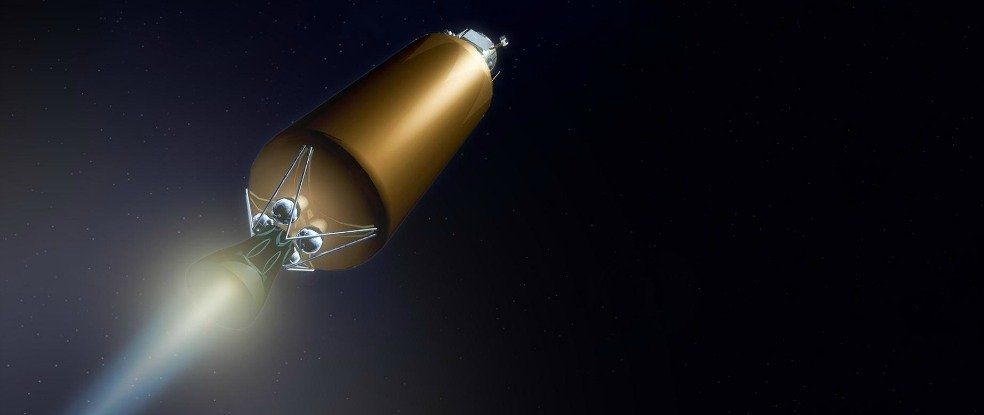
Robert Zubrin’s Nuclear Salt Water Rocket Design

Robert Zubrin is best known for his advocacy of the manned exploration of Mars.

Zubrin also had a design for interplanetary propulsion called the Nuclear Salt Water Rocket.

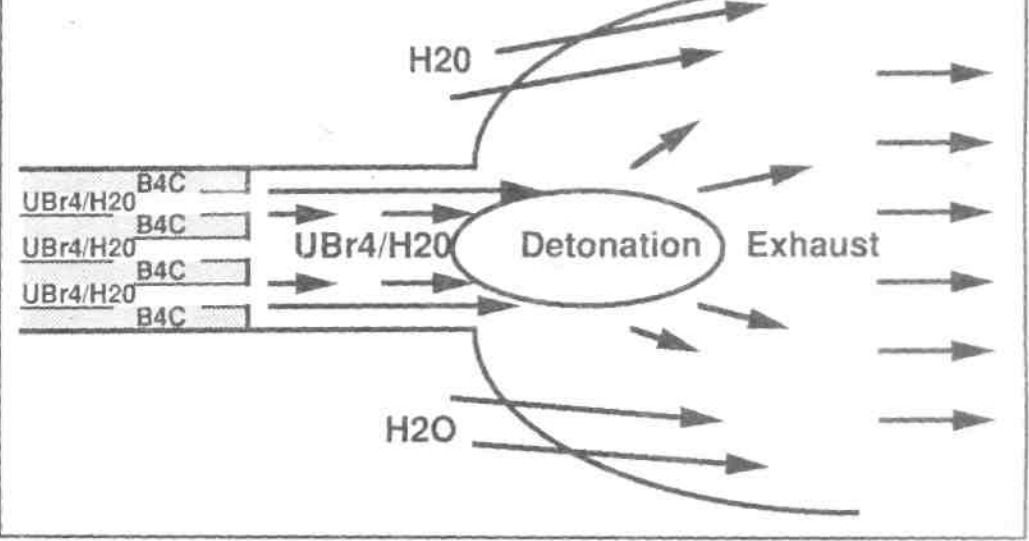
A nuclear salt-water rocket (NSWR) is a theoretical type of nuclear thermal rocket. A conservative design for the rocket would be fueled by salts of 20 percent enriched uranium or plutonium. The solution would be contained in a bundle of pipes coated in boron carbide (for its properties of neutron absorption). Through a combination of the coating and space between the pipes, the contents would not reach critical mass until the solution is pumped into a reaction chamber, thus reaching a critical mass, and being expelled through a nozzle to generate thrust.

/* */