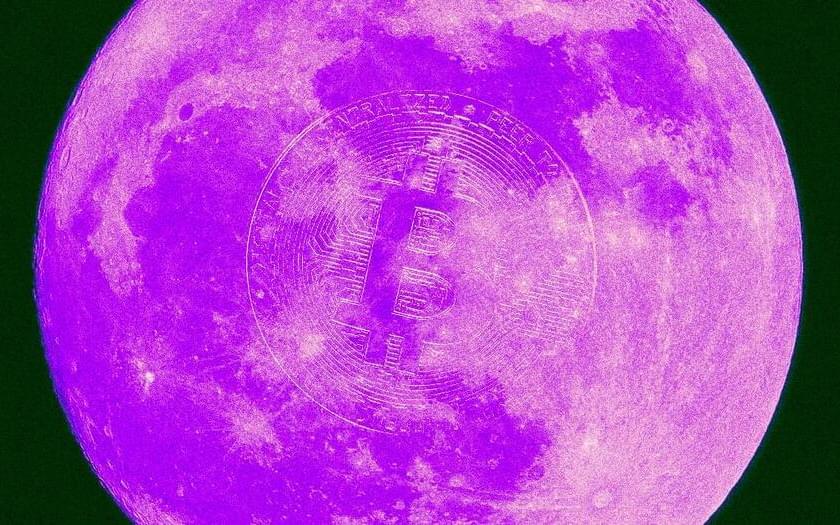
The crypto platform LunarCrush will be stowing a bounty of 62 Bitcoin on the Moon, currently worth around $1.5 million — and it’s completely up for grabs.
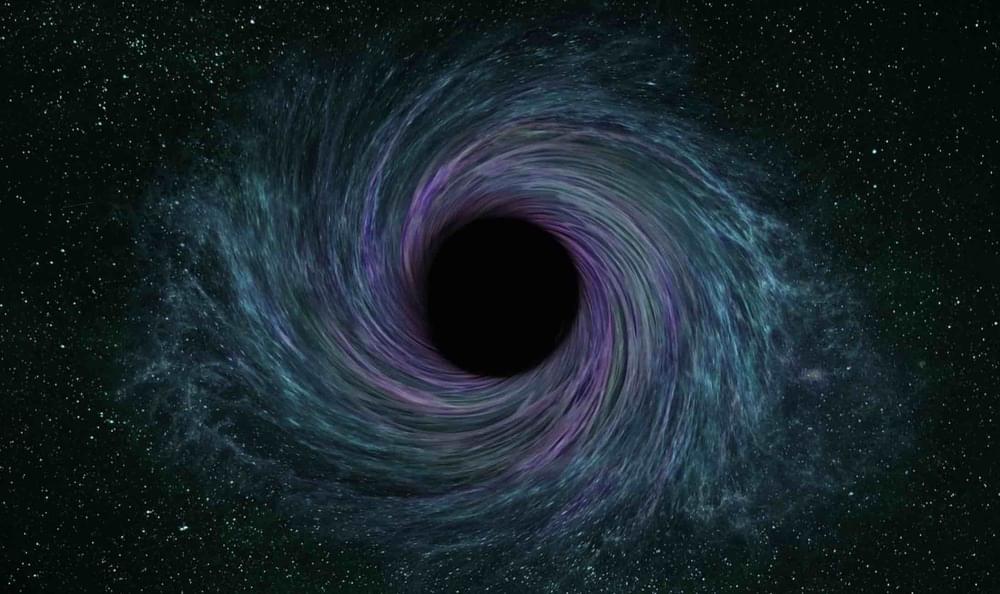
An artificial black hole produced using sound waves and a dielectric medium has been created in the lab, according to researchers with an international think tank featuring more than 30 Ph.D. research scientists from around the world.
The researchers say their discovery is significantly more cost-effective and efficient than current methods in use by researchers who want to simulate the effects of a black hole in a laboratory environment.
New York-based Applied Physics first achieved recognition with the 2021 publication of a peer-reviewed theoretical paper detailing the mathematics behind the construction of a physical warp drive. More recently, the organization published a method for using Cal Tech’s Laser Interferometer Gravitational-Wave Observatory (LIGO) to detect the use of warp drives in outer space, co-authored by Dr. Manfred Paulini, the Associate Dean of Physics at Carnegie Mellon University.
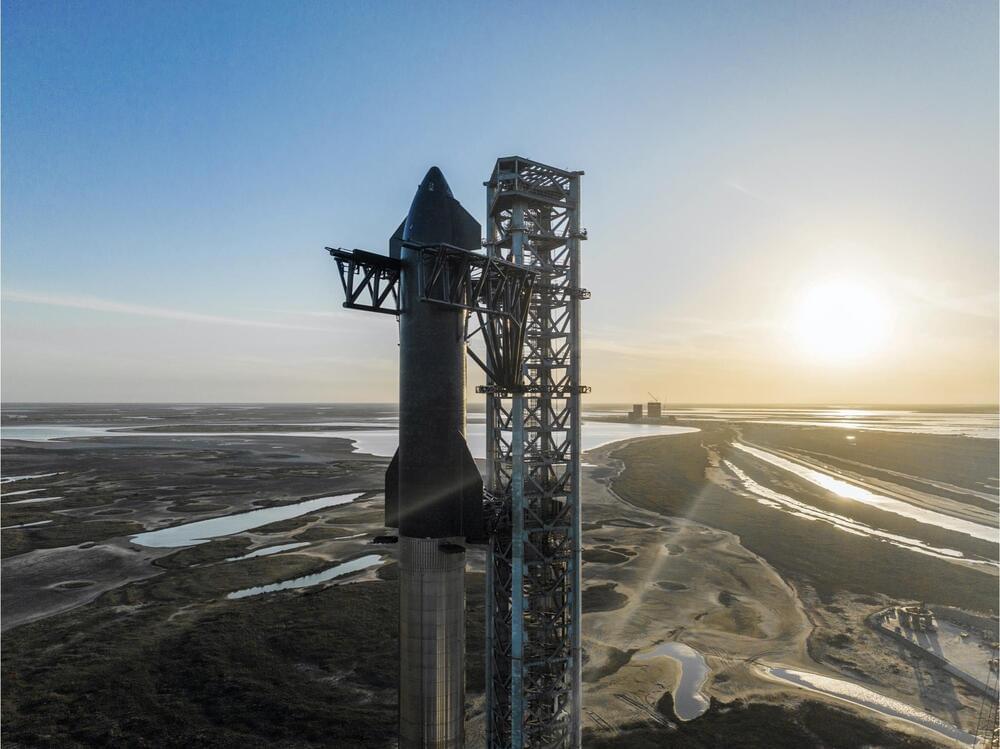
SpaceX has moved the Super Heavy Starship and NASA has reserved observation planes for April 10 and 11.
Known for identifying cutting edge technologies, he is currently a Co-Founder of a startup and fundraiser for high potential early-stage companies. He is the Head of Research for Allocations for deep technology investments and an Angel Investor at Space Angels.
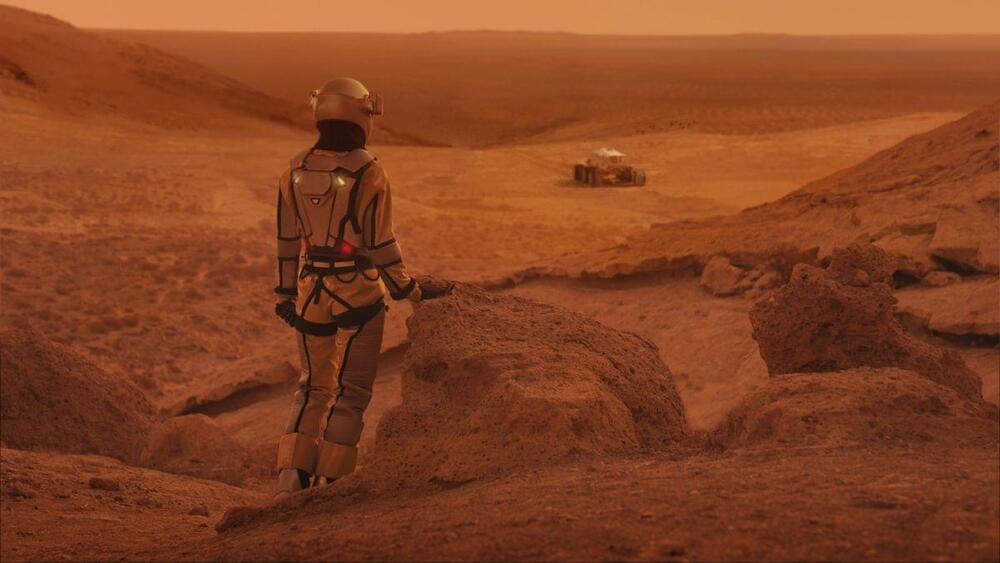
10 SpaceX Starships are carrying 120 robots to Mars. They are the first to colonize the Red Planet. Building robot habitats to protect themselves, and then landing pads, structures, and the life support systems for the humans who will soon arrive.
This Mars colonization mini documentary also covers they type of robots that will be building on Mars, the solar fields, how Elon Musk and Tesla could have a battery bank station at the Mars colony, and how the Martian colony expands during the 2 years when the robots are building. Known as the Robotic Age of Mars.
Additional footage from: SpaceX, NASA/JPL/University of Arizona, ICON, HASSEL, Tesla, Lockhead Martin.
A building on Mars sci-fi documentary, and a timelapse look into the future.
See more of Venture City at my website: https://vx-c.com.
_______
Books.
• The Martian book showcases the science, math, and physics of living on the red planet — told through the story of someone who has to survive there.
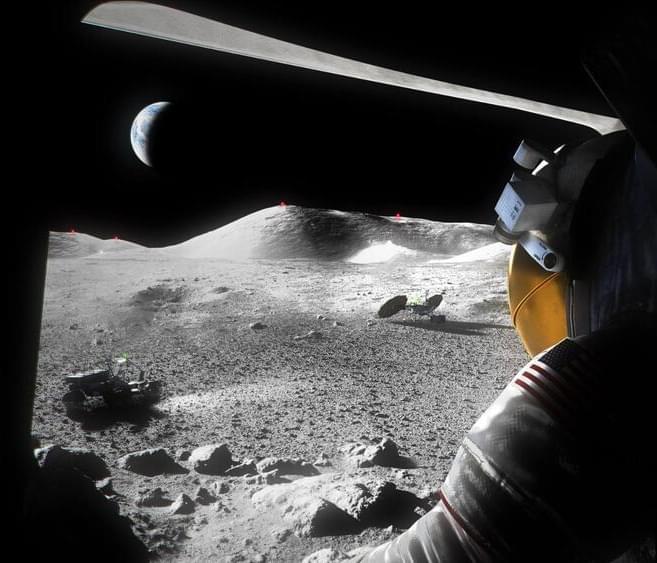
In a quest to expand human settlement to the moon and beyond, NASA and industry partners are developing landing systems to take astronauts from orbit to the lunar surface with its mission Artemis. However, a small but pertinent issue of excessive dust on the surface is posing a considerable challenge for fulfilling such explorations.
To counter this, the agency is seeking ideas from university students for solutions to mitigate the issue related to dusty landings. NASA’s new Human Lander Challenge invites college students to research ways to regulate the plume effect, the process in which a cloud of dust is stirred up by lunar vehicles when rocket engines are used to provide thrust for a smooth landing on unprepared surfaces. NASA had conducted a similar program for students, through its Breakthrough, Innovative, and Game-changing challenge in 2020 for solutions to the same issue.


FallenKingdomReads’ list of five must-read science fiction books for fans of The Matrix.
This dystopian novel is the basis for the classic film Blade Runner, and it explores a world devastated by nuclear war where bounty hunter Rick Deckard must retire six rogue androids.
In this novel, human consciousness is digitized and can be transferred between bodies, leading to an interstellar conspiracy that draws the protagonist Takeshi into a thrilling adventure.
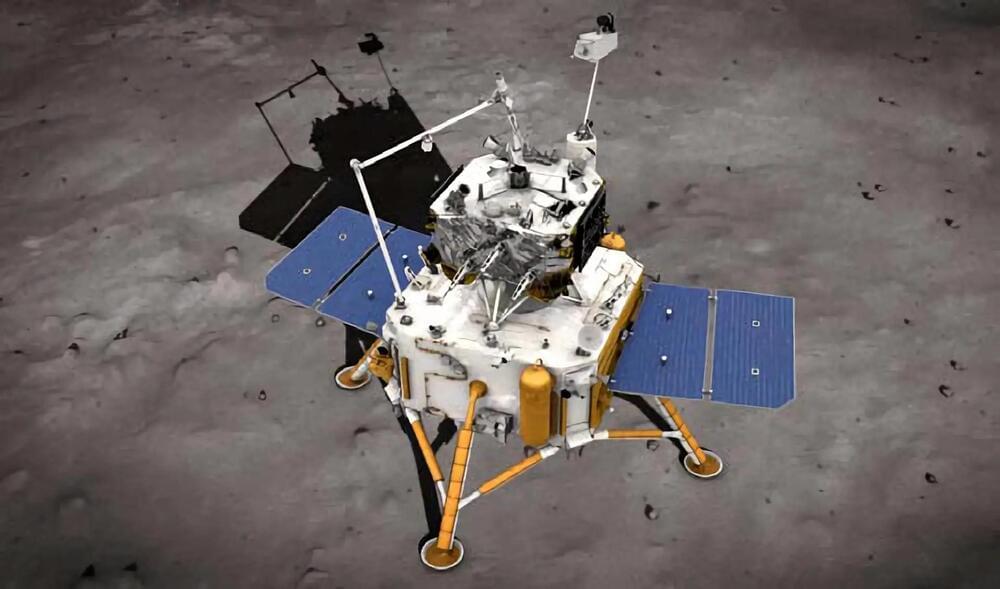
Due to its potential for in-situ resource utilization by future lunar exploration missions and other space missions, lunar surface water has attracted significant attention.
Now, a research group led by Prof. Sen Hu from the Institute of Geology and Geophysics (IGG) of the Chinese Academy of Sciences (CAS) has found that impact glass beads in Chang’e-5 (CE5) lunar soils contain some water.
Detailed studies show that these glass beads are likely a new water reservoir on the Moon, recording the dynamic ingress and egress of solar wind-derived water and acting as a buffer for the lunar surface water cycle.