Toggle light / dark theme

China’s New Quantum Computer Has 1 Million Times the Power of Google’s

And they say it’s the world’s fastest.

It appears a quantum computer rivalry is growing between the U.S. and China.

Physicists in China claim they’ve constructed two quantum computers with performance speeds that outrival competitors in the U.S., debuting a superconducting machine, in addition to an even speedier one that uses light photons to obtain unprecedented results, according to a recent study published in the peer-reviewed journals Physical Review Letters and Scienc… See More.

Qubits for the future: YouTube documentary explores how quantum computing could promote sustainability

Laura Hiscott reviews Quantum Technology | Our Sustainable Future by The Quantum Daily.

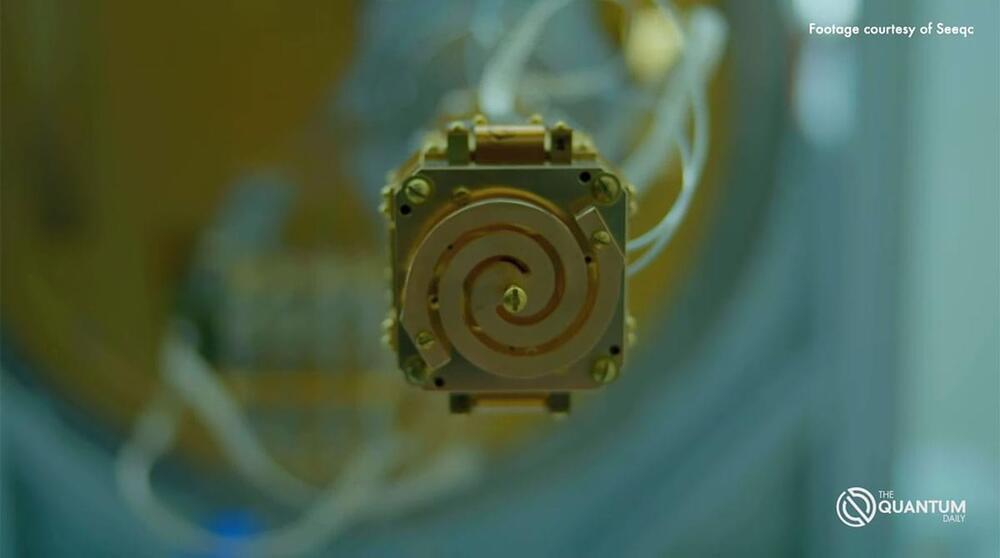
How could quantum computing help us to fix climate change? This is the question at the heart of Quantum Technology | Our Sustainable Future, a half-hour-long documentary published on YouTube in July.

Made by “The Quantum Daily”, a resource for news and information on all things quantum, the documentary consists of interviews with people working in a host of organizations in the sector, from Oxford Instruments NanoScience to Google Quantum AI. The main idea is that, since quantum computers have the potential to be much more powerful than classical ones, they could speed up the discovery of solutions, such as molecules that would be very effective at carbon capture.

An Ultra-Precise Clock Shows How to Link the Quantum World With Gravity

The infamous twin paradox sends the astronaut Alice on a blazing-fast space voyage. When she returns to reunite with her twin, Bob, she finds that he has aged much faster than she has. It’s a well-known but perplexing result: Time slows if you’re moving fast.

Gravity does the same thing. Earth — or any massive body — warps space-time in a way that slows time, according to Albert Einstein’s general theory of relativity. If Alice lived her life at sea level and Bob at the top of Everest, where Earth’s gravitational pull is slightly weaker, he would again age faster. The difference on Earth is modest but real — it’s been measured by putting atomic clocks on mountaintops and valley floors and measuring the difference between the two.

Physicists have now managed to measure this difference to the millimeter. In a paper posted earlier this month to the scientific preprint server arxiv.org, researchers from the lab of Jun Ye, a physicist at JILA in Boulder, Colorado, measured the difference in the flow of time between the top and the bottom of a millimeter-tall cloud of atoms.

This device could usher in GPS-free navigation

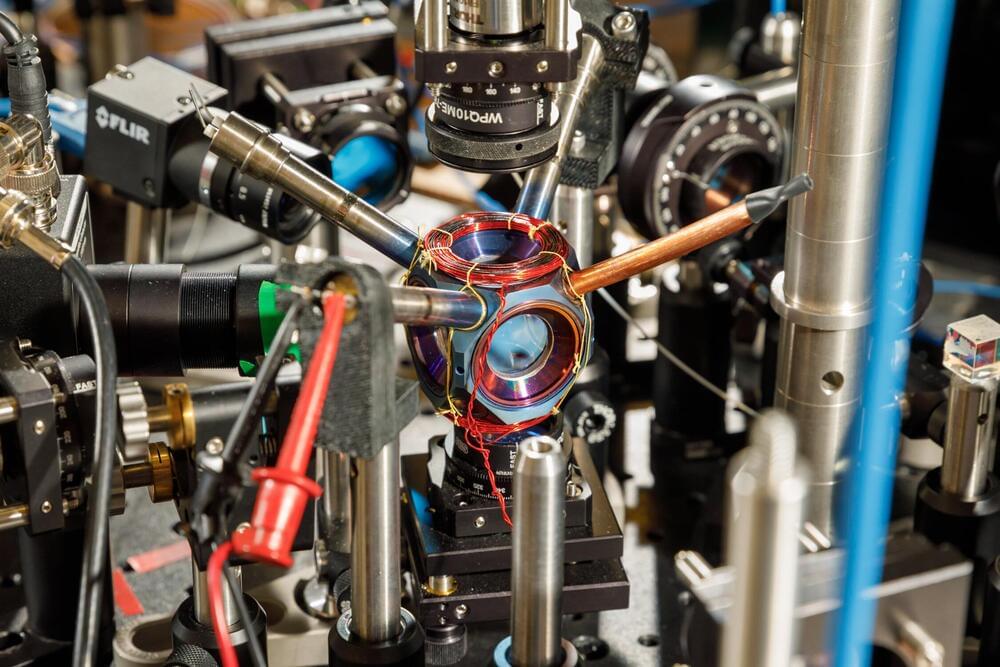
Don’t let the titanium metal walls or the sapphire windows fool you. It’s what’s on the inside of this small, curious device that could someday kick off a new era of navigation.

For over a year, the avocado-sized vacuum chamber has contained a cloud of atoms at the right conditions for precise navigational measurements. It is the first device that is small, energy-efficient and reliable enough to potentially move quantum sensors—sensors that use quantum mechanics to outperform conventional technologies—from the lab into commercial use, said Sandia National Laboratories scientist Peter Schwindt.

Sandia developed the chamber as a core technology for future that don’t rely on GPS satellites, he said. It was described earlier this year in the journal AVS Quantum Science.

NATO releases first-ever strategy for Artificial Intelligence

The strategy outlines how AI can be applied to defence and security in a protected and ethical way. As such, it sets standards of responsible use of AI technologies, in accordance with international law and NATO’s values. It also addresses the threats posed by the use of AI by adversaries and how to establish trusted cooperation with the innovation community on AI.

Artificial Intelligence is one of the seven technological areas which NATO Allies have prioritized for their relevance to defence and security. These include quantum-enabled technologies, data and computing, autonomy, biotechnology and human enhancements, hypersonic technologies, and space. Of all these dual-use technologies, Artificial Intelligence is known to be the most pervasive, especially when combined with others like big data, autonomy, or biotechnology. To address this complex challenge, NATO Defence Ministers also approved NATO’s first policy on data exploitation.

Individual strategies will be developed for all priority areas, following the same ethical approach as that adopted for Artificial Intelligence.

D-Wave Embraces Gate-Based Quantum Computing; Charts Path Forward

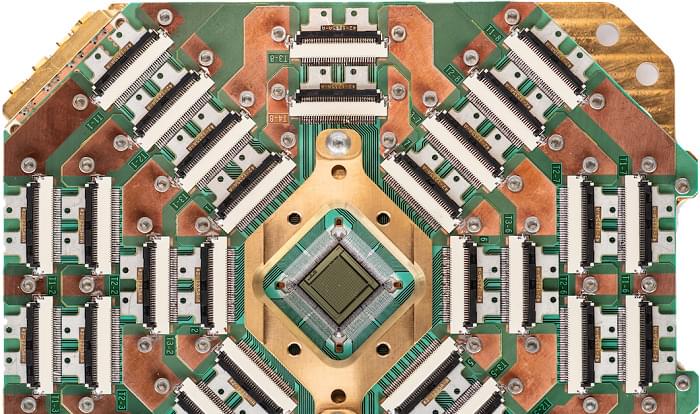
Earlier this month D-Wave Systems, the quantum computing pioneer that has long championed quantum annealing-based quantum computing (and sometimes taken heat for that approach), announced it was expanding into gate-based quantum computing.

Surprised? Perhaps we shouldn’t be. Spun out of the University of British Columbia in 1,999 D-Wave initially targeted gate-based quantum computing and discovered how hard it would be to develop. The company strategy morphed early on.

“I joined in 2005 when the company was first transitioning from a gate-model focus to quantum annealing focus,” recalled Mark Johnson, now vice president of quantum technologies and systems products. “There was still this picture that we wanted to find the most direct path to providing valuable quantum applications and we felt that quantum annealing was the was the way to do that. We felt the gate model was maybe 20 years away.”

/* */