Toggle light / dark theme

Bridging the Chasm Between Quantum Physics and the Theory of Gravity — “We Have Found a Surprisingly Simple Solution”

Quantum information theory: Quantum complexity grows linearly for an exponentially long time.

Physicists know about the huge chasm between quantum physics and the theory of gravity. However, in recent decades, theoretical physics has provided some plausible conjecture to bridge this gap and to describe the behavior of complex quantum many-body systems, for example black holes and wormholes in the universe. Now, a theory group at Freie Universität Berlin and HZB, together with Harvard University, USA, has proven a mathematical conjecture about the behavior of complexity in such systems, increasing the viability of this bridge. The work is published in Nature Physics.

“We have found a surprisingly simple solution to an important problem in physics,” says Prof. Jens Eisert, a theoretical physicist at Freie Universität Berlin and HZB. “Our results provide a solid basis for understanding the physical properties of chaotic quantum systems, from black holes to complex many-body systems,” Eisert adds.

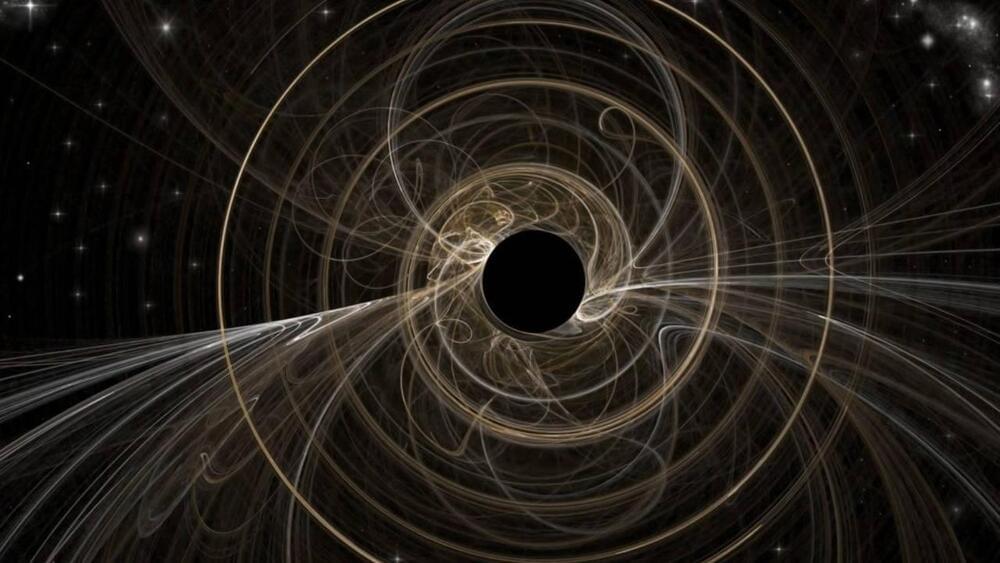
Bubbles give off weird light when popped because of quantum physics

When a bubble pops in a liquid, it can produce a flash of light, which we now know is thanks to quantum mechanics.

Sonoluminescence is a phenomenon in which small bubbles, produced and fixed in place by an ultrasound wave in a liquid, collapse and make particles of light, or photons. Physicists have known about this process for decades, but the mechanisms behind it weren’t fully known.

Could the Information Paradox Finally Be Resolved?

The information paradox may finally be resolved with the help of the holographic theory – but this time on a fractal scale.

Ever since Hawking predicted the thermal emission of black holes and their subsequent evaporation, the question arose as to where this information goes. In the context of the Copenhagen interpretation of quantum mechanics – which states that the information about a system is entirely encoded in its wave function – information is always conserved. Thus, any loss in information, like that predicted by Hawking and his evaporating black holes, would violate quantum theory. This problem is known as the information paradox.

To resolve this paradox, physicists have been actively looking for a mechanism to explain how the information of the infalling particles re-emerges in the outgoing radiation. To begin, they need to determine the entropy of the Hawking radiation.

Groundbreaking technique yields important new details on possible ‘fifth force’

Researchers uncovered new information about an important subatomic particle and a long-theorized fifth force of nature.


A group of researchers have used a groundbreaking new technique to reveal previously unrecognized properties of technologically crucial silicon crystals and uncovered new information about an important subatomic particle and a long-theorized fifth force of nature.

The research was an international collaboration conducted at the National Institute of Standards and Technology (NIST). Dmitry Pushin, a member of the University of Waterloo’s Institute for Quantum Computing and a faculty member in Waterloo’s Department of Physics and Astronomy, was the only Canadian researcher involved in the study. Pushin was interested in producing high-quality quantum sensors out of perfect crystals.

By aiming subatomic particles known as neutrons at silicon crystals and monitoring the outcome with exquisite sensitivity, researchers were able to obtain three extraordinary results: the first measurement of a key neutron property in 20 years using a unique method; the highest-precision measurements of the effects of heat-related vibrations in a silicon crystal; and limits on the strength of a possible “fifth force” beyond standard physics theories.

Towards The Cybernetic Theory of Mind

Local consciousness, or our phenomenal mind, is emergent, whereas non-local consciousness, or universal mind, is immanent. Material worlds come and go, but fundamental consciousness is ever-present, according to the Cybernetic Theory of Mind. From a new science of consciousness to simulation metaphysics, from evolutionary cybernetics to computational physics, from physics of time and information to quantum cosmology, this novel explanatory theory for a deeper understanding of reality is combined into one elegant theory of everything.

#CyberneticTheoryofMind #Consciousness #Evolution #Mind #Documentary


Based on The Cybernetic Theory of Mind eBook series (2022) by Alex M. Vikoulov as well as his magnum opus The Syntellect Hypothesis: Five Paradigms of the Mind’s Evolution (2020), comes a recently-released documentary Consciousness: Evolution of the Mind.

This film, hosted by the author of the book from which the narrative is derived, is now available for viewing on demand on Vimeo, Plex, Tubi, Xumo, Social Club TV and other global networks with its worldwide premiere aired on June 8, 2021. IMDb-accredited film, rated TV-PG. This is a futurist’s take on the nature of consciousness and reverse engineering of our thinking in order to implement it in cybernetics and advanced AI systems.

What mechanism may link quantum physics to phenomenology? What properties are inherently associated with consciousness? What is Experiential Realism? How can we successfully approach the Hard Problem of Consciousness, or perhaps, circumvent it? What is the Quantum Algorithm of Consciousness? Are free-willing conscious AIs even possible? These are some of the questions addressed in this Part V of the documentary.

Quantum computing has a hype problem

Quantum computing startups are all the rage, but it’s unclear if they’ll be able to produce anything of use in the near future.


As a buzzword, quantum computing probably ranks only below AI in terms of hype. Large tech companies such as Alphabet, Amazon, and Microsoft now have substantial research and development efforts in quantum computing. A host of startups have sprung up as well, some boasting staggering valuations. IonQ, for example, was valued at $2 billion when it went public in October through a special-purpose acquisition company. Much of this commercial activity has happened with baffling speed over the past three years.

I am as pro-quantum-computing as one can be: I’ve published more than 100 technical papers on the subject, and many of my PhD students and postdoctoral fellows are now well-known quantum computing practitioners all over the world. But I’m disturbed by some of the quantum computing hype I see these days, particularly when it comes to claims about how it will be commercialized.

Time-magnified photon counting with a 550fs resolution

“Time-resolved photon-counting plays an indispensable role in precision metrology in both classical and quantum regimes. In particular, time-correlated single-photon counting (TCSPC) has been the key enabling technology for applications such as low-light fluorescence lifetime spectroscopy and photon counting time-of-flight (ToF) 3D imaging. However, state-of-the-art TCSPC single-photon timing resolution (SPTR) is limited in the range of 10–100 ps by the available single-photon detector technology. In this paper, we experimentally demonstrate a time-magnified TCSPC (TM-TCSPC) that achieves an unprecedentedly short SPTR of 550 fs for the first time with an off-the-shelf single-photon detector. The TM-TCSPC can resolve ultrashort pulses with a 130-fs pulsewidth difference at a 22-fs accuracy. When applied to photon counting ToF 3D imaging, the TM-TCSPC greatly suppresses the range walk error that limits all photon counting ToF 3D imaging systems by 99.2 % (130 times) and thus provides unprecedentedly high depth measurement accuracy and precision of 26 {\mu}m and 3 {\mu}m, respectively.”

/* */