Toggle light / dark theme

Why Are We Genetically Modifying Humans? | Epigenetics | Spark

The idea that our genes are our fate” is dead. Exciting new discoveries in the field of epigenetics have proven that our lifestyle and environment can turn off and on many of the genes that control our health and wellbeing. Simple things like where we live, what we eat, pollution, stress, and exercise all impact which genes are silenced and expressed throughout our lives.

Research has shown that that the current dramatic rise in obesity, heart disease, diabetes and Alzheimer’s all have epigenetic mechanisms at play. Not only that but many epigenetic changes are actually passed to future generations: your grandmother’s dietary deficits may have caused your diabetes. Your father’s smoking may have turned on your marker for obesity or ADHD. Three generations later the descendants of holocaust survivors are still suffering stress disorders.

The recognition that environment, not genetics, is the primary driver of human health and disease carries with it a strong message of personal empowerment and responsibility. We are no longer powerless in the high stakes game of our own health. We can now play an active role in our genetic destiny.

Decoding Life: The Epigenetics Revolution is a one-hour documentary that uncovers the latest findings in the game-changing field of epigenetics. We meet the world’s top epigenetic experts, uncover the latest research into how epigenetics can be used to treat some of society’s most dire health crises such as cancer, heart disease, obesity, and dementia.

Find us on:
Facebook: https://www.facebook.com/SparkDocs/
Instagram: https://www.instagram.com/spark_channel/

Content licensed from Espresso to Little Dot Studios.

Are we oversimplifying Alzheimer’s disease?

Like so much in chronic disease, Alzheimer’s is complicated: “once you have seen one person with Alzheimer’s, you have seen one person with Alzheimer’s. In other words, Alzheimer’s disease (AD) is a heterogeneous disease which may present and progress differently depending on the person and the factors contributing to the disease pathology. As such, there is no paint-by-numbers approach to targeted treatment. Researchers in the field are thus motivated to figure out a way to categorize AD in order to guide more individualized approaches to patient care and help anticipate disease trajectory.”


A proposal for 4 subtypes of Alzheimer’s disease.

New Links Discovered Between Brain Cell Development and Psychiatric Disorders — “Major Step Forward”

Cardiff University study is ‘major step forward’ in hunt for developmental origins of schizophrenia and other psychiatric disorders.

Scientists from Cardiff University have discovered new links between the breakdown in brain cell development and the risk of schizophrenia and other psychiatric disorders.

Genetic risk factors are known to disrupt brain development in a number of these disorders, but little is known about which aspects of this process are affected.

There’s only one Universal Consciousness

we individualize our conscious awareness through the filter of our nervous system, our “local” mind, our very inner subjectivity, but consciousness itself, the Self in a greater sense, our “core” self is universal, and knowing it through experience has been called enlightenment, illumination, awakening, or transcendence, through the ages.

Here’s Consciousness: Evolution of the Mind (2021), Part IV: UNIVERSAL CONSCIOUSNESS >

*Subscribe to our channel to catch premiering further installments of the documentary on YouTube! This film is to be released on YouTube in parts.

OR, watch the documentary in its entirety on Vimeo on demand: https://vimeo.com/ondemand/339083

And on TUBI — free (with ads): https://tubitv.com/movies/613341/consciousness-evolution-of-the-mind.

IMDb-accredited film, rated TV-PG

Where Are Memories Stored in the Brain? They May Be in the Connections Between Your Brain Cells

All memory storage devices, from your brain to the RAM in your computer, store information by changing their physical qualities. Over 130 years ago, pioneering neuroscientist Santiago Ramón y Cajal first suggested that the brain stores information by rearranging the connections, or synapses, between neurons.

Since then, neuroscientists have attempted to understand the physical changes associated with memory formation. But visualizing and mapping synapses is challenging to do. For one, synapses are very small and tightly packed together. They’re roughly 10 billion times smaller than the smallest object a standard clinical MRI can visualize. Furthermore, there are approximately 1 billion synapses in the mouse brains researchers often use to study brain function, and they’re all the same opaque to translucent color as the tissue surrounding them.

Dementia Patients Used Morse Code Training to Escape From a Senior Living Facility

In a scene straight out of a spy movie, an elderly couple reportedly escaped from an assisted living facility using some cunning military expertise—and an antiquated telecommunications method.

On March 2, 2020, a resident of a secure memory care unit in Elmcroft of Lebanon, a Tennessee nursing facility, “eloped” with his wife from the premises, according to a state report on the incident. (The Tennessean first reported the incident last month.) The man was admitted to Elmcroft with a diagnosis of dementia, while the woman was admitted with Alzheimer’s disease.

A stranger spotted the residents, who were safe, walking two blocks from Elmcroft about 30 minutes after they left and picked them up.

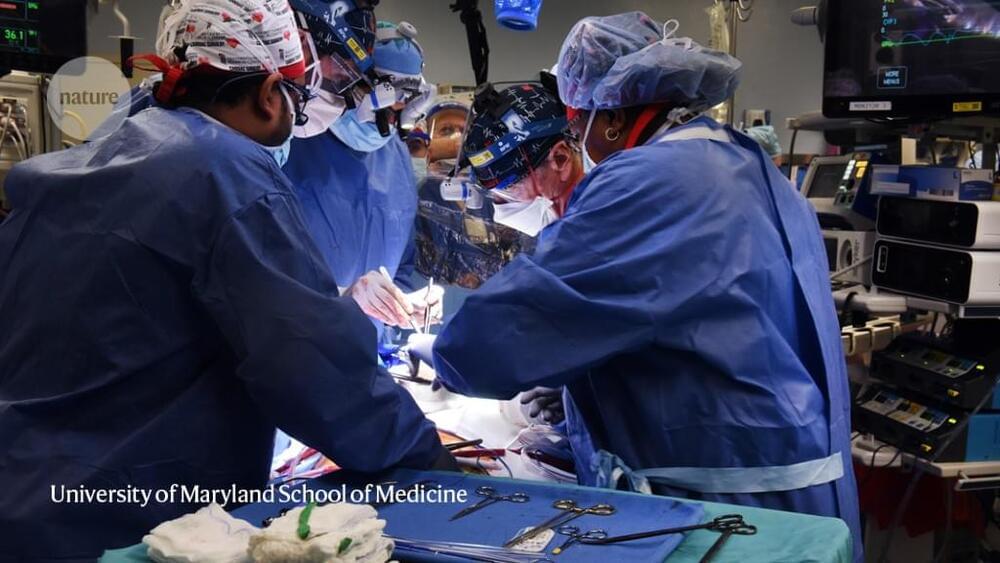
First pig-to-human heart transplant: what can scientists learn?

In a first, U.S. surgeons transplant pig heart into human patient.


Unusual opportunity

Last week’s procedure marks the first time that a pig organ has been transplanted into a human who has a chance to survive and recover. In 2021, surgeons at New York University Langone Health transplanted kidneys from the same line of genetically modified pigs into two legally dead people with no discernible brain function. The organs were not rejected, and functioned normally while the deceased recipients were sustained on ventilators.

Aside from that, most research has so far taken place in non-human primates. But researchers hope that the 7 January operation will further kick-start clinical xenotransplantation and help to push it through myriad ethical and regulatory issues.

Our brains take a little while to update, study

𝙃𝙤𝙬 𝙙𝙤𝙚𝙨 𝙤𝙪𝙧 𝙫𝙞𝙨𝙪𝙖𝙡 𝙨𝙮𝙨𝙩𝙚𝙢 𝙖𝙘𝙝𝙞𝙚𝙫𝙚 𝙩𝙝𝙞𝙨 𝙖𝙥𝙥𝙖𝙧𝙚𝙣𝙩 𝙨𝙩𝙖𝙗𝙞𝙡𝙞𝙩𝙮? 𝙉𝙚𝙬 𝙧𝙚𝙨𝙚𝙖𝙧𝙘𝙝 𝙗𝙮 𝙩𝙝𝙚 𝙐𝘾 𝘽𝙚𝙧𝙠𝙚𝙡𝙚𝙮 𝙨𝙘𝙞𝙚𝙣𝙩𝙞𝙨𝙩𝙨 𝙧𝙚𝙫𝙚𝙖𝙡𝙨 𝙩𝙝𝙖𝙩 𝙤𝙪𝙧 𝙗𝙧𝙖𝙞𝙣𝙨 𝙖𝙧𝙚 𝙘𝙤𝙣𝙨𝙩𝙖𝙣𝙩𝙡𝙮 𝙪𝙥𝙡𝙤𝙖𝙙𝙞𝙣𝙜 𝙧𝙞𝙘𝙝, 𝙫𝙞𝙨𝙪𝙖𝙡 𝙨𝙩𝙞𝙢𝙪𝙡𝙞. 𝙒𝙚 𝙨𝙚𝙚 𝙚𝙖𝙧𝙡𝙞𝙚𝙧 𝙫𝙚𝙧𝙨𝙞𝙤𝙣𝙨 𝙞𝙣𝙨𝙩𝙚𝙖𝙙 𝙤𝙛 𝙨𝙚𝙚𝙞𝙣𝙜 𝙩𝙝𝙚 𝙡𝙖𝙩𝙚𝙨𝙩 𝙞𝙢𝙖𝙜𝙚 𝙗𝙚𝙘𝙖𝙪𝙨𝙚 𝙤𝙪𝙧 𝙗𝙧𝙖𝙞𝙣’𝙨 𝙧𝙚𝙛𝙧𝙚𝙨𝙝 𝙩𝙞𝙢𝙚 𝙞𝙨 𝙖𝙗𝙤𝙪𝙩 15 𝙨𝙚𝙘𝙤𝙣𝙙𝙨.… See more.

The Neuro-Network.

𝐎𝐮𝐫 𝐛𝐫𝐚𝐢𝐧𝐬 𝐭𝐚𝐤𝐞 𝐚 𝐥𝐢𝐭𝐭𝐥𝐞 𝐰𝐡𝐢𝐥𝐞 𝐭𝐨 𝐮𝐩𝐝𝐚𝐭𝐞, 𝐬𝐭𝐮𝐝𝐲

𝙊𝙗𝙟𝙚𝙘𝙩𝙨 𝙖𝙥𝙥𝙚𝙖𝙧 𝙩𝙤 𝙗𝙚 𝙨𝙩𝙖𝙗𝙡𝙚 𝙙𝙚𝙨𝙥𝙞𝙩𝙚 𝙘𝙤𝙣𝙨𝙩𝙖𝙣𝙩 𝙘𝙝𝙖𝙣𝙜𝙚𝙨 𝙞𝙣 𝙩𝙝𝙚𝙞𝙧 𝙧𝙚𝙩𝙞𝙣𝙖𝙡 𝙞𝙢𝙖𝙜𝙚𝙨. 𝙏𝙝𝙞𝙨 𝙝𝙖𝙥𝙥𝙚𝙣𝙨 𝙙𝙪𝙚 𝙩𝙤 𝙢𝙖𝙣𝙮 𝙨𝙤𝙪𝙧𝙘𝙚𝙨 𝙤… See more.


Our brain’s refresh time is about 15 seconds.

Responding To The Washington Post Hatchet Job On Electric Cars & Winter Driving

An editorial writer and columnist for the Washington Post wrote a screed attacking electric cars this week. His heavily slanted piece was filled with misinformation. Here’s the truth about driving an electric car in winter.


Last week, hundreds of motorists on I-95 in Virginia were stuck for hours when a blizzard closed the highway south of Washington, DC. Highway crews couldn’t spread ice-melting chemicals before the storm arrived because the rain that preceded it would have washed them away. But when temperatures dropped, the rain quickly turned to ice. Then the snow came and made the ice treacherously slippery. Tractor trailers trying to get off the highway lost control, blocking many exit ramps. Senator Tim Kaine was trapped in the tangled mess of stalled cars for 27 hours.

Afterwards, Charles Lane, an editorial writer and columnist for the Washington Post, wrote a blistering opinion piece entitled, “Imagine Virginia’s Icy Traffic Catastrophe — But With Only Electric Vehicles.” In it, he wails about the Tesla driver who banged on the door of a tractor trailer, begging for help because he was afraid his family might freeze to death if his battery ran out of power. “If everyone had been driving electric vehicles, this mess could well have been worse,” Lane writes.

He goes on to say even Tesla warns on its website the cold temperatures can reduce range. Charging a cold battery takes longer, and besides, he says, there aren’t that many charging stations anyway. And what happens if the power goes out? What then? Lane, a graduate of Yale law school, apparently lacks the mental capacity to realize that when the power goes out, gas pumps stop working as well.

/* */