Toggle light / dark theme

Mistakes As Markers Of Growth: From Valuing “Right Answers” To Embracing Uncertainty

We may have evolved to be “naive realists,” guided by a deep subconscious intuition that we perceive the world as it truly is. In practice, perhaps, our reality could be described as “augmented” with our assumptions about the world. These assumptions are acquired through our limited means of learning, distorted by cognitive and motivational biases. We shouldn’t be too harsh on our brains, though. Just imagine what it must be like for them – confined to Plato’s cave of the skull, tasked with assembling an accurate picture of the outside world from a barrage of noisy electrical signals.

We often mistakenly assume that every child’s mind is a blank slate before they start formal learning. However, current research suggests that we begin to rely on underlying assumptions about the world quickly after we are born. Infants already have basic physical expectations and are surprised when the behavior of objects contradicts them. Implicit assumptions about the world, which develop during infancy and continue into adulthood, direct our basic perceptual and motor activities. You may have experienced them when picking up a milk carton you didn’t know was empty: your hand unexpectedly flew up as your brain overestimated the amount of effort required to lift the carton. Our inability to “unsee” an optical illusion – even after observing it multiple times and clearly understanding its mechanics – also suggests the resiliency of our expectations.

If our beliefs are so unreliable, why do we place so much confidence in them? As it turns out, the feeling of certainty in our convictions is merely a physical sensation akin to hunger. This feeling may have evolved as a “circuit breaker” to help our ancient ancestors with instant life-and-death decisions. Any uncertainty could delay immediate action and spell disaster. As a result, we appear wired to experience discomfort in the face of uncertainty. Our intuition may suggest that our confidence must grow as we gain skills. Yet, in practice, the more we learn, the more we realize how much there is to know. The famous Dunning-Kruger chart illustrates how we start out overconfident in our understanding and then become more humble as our expertise increases. Since we are likely to be unaware of our hubris, we need to learn strategies to avoid overconfidence and identify our misconceptions. As always, it is best to start early.

People Are Eagerly Consulting Generative AI ChatGPT For Mental Health Advice, Stressing Out AI Ethics And AI Law

Mental health has become a widespread topic nowadays.

In the past, discussions concerning mental health were often hushed up or altogether swept under the rug. A gradual cultural change has led to openly considering mental health issues and eased qualms about doing so in publicly acknowledged ways.

You might give some of the credit for this change in overarching societal attitudes as an outcome of the advent of easily accessed smartphone apps that aid your personal mindfulness and presumably spur you toward mental well-being. There are apps for mindfulness, ones for meditation, ones for diagnosing your mental health status, ones for doing mental health screening, and so on.


People on social media are touting the use of generative AI such as ChatGPT as handy for interactively providing mental health advice. This is a worrisome trend. AI Ethics and AI Law are stressed out and cautioning that this is not a sound idea.

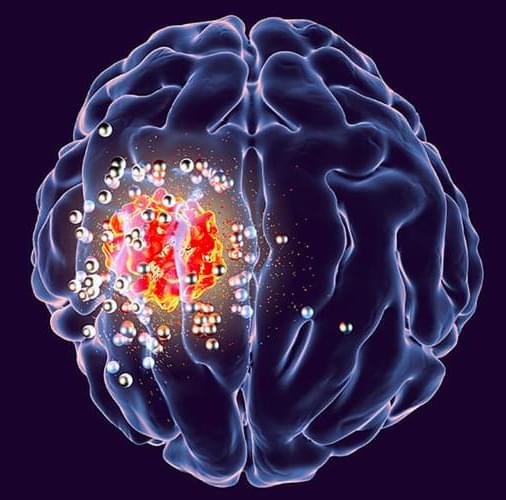
Stanford researchers think a wireless brain implant could remove tumors

𝐒𝐭𝐚𝐧𝐟𝐨𝐫𝐝 𝐫𝐞𝐬𝐞𝐚𝐫𝐜𝐡𝐞𝐫𝐬 𝐭𝐡𝐢𝐧𝐤 𝐚 𝐰𝐢𝐫𝐞𝐥𝐞𝐬𝐬 𝐛𝐫𝐚𝐢𝐧 𝐢𝐦𝐩𝐥𝐚𝐧𝐭 𝐜𝐨𝐮𝐥𝐝 𝐫𝐞𝐦𝐨𝐯𝐞 𝐭𝐮𝐦𝐨𝐫𝐬

𝙍𝙚𝙨𝙚𝙖𝙧𝙘𝙝𝙚𝙧𝙨 𝙖𝙩 𝙎𝙩𝙖𝙣𝙛𝙤𝙧𝙙 𝙈𝙚𝙙𝙞𝙘𝙞𝙣𝙚 𝙝𝙖𝙫𝙚 𝙙𝙚𝙫𝙚𝙡𝙤𝙥𝙚𝙙 𝙖 𝙨𝙢𝙖𝙡𝙡 𝙬𝙞𝙧𝙚𝙡𝙚𝙨𝙨 𝙙𝙚𝙫𝙞𝙘𝙚 𝙩𝙝𝙖𝙩 𝙘𝙤𝙪𝙡𝙙 𝙬𝙞𝙧𝙚𝙡𝙚𝙨𝙨𝙡𝙮 𝙧𝙚𝙢𝙤𝙫𝙚 𝙙𝙚𝙖𝙙𝙡𝙮 𝙗𝙧𝙖𝙞𝙣 𝙩𝙪𝙢𝙤𝙧𝙨.


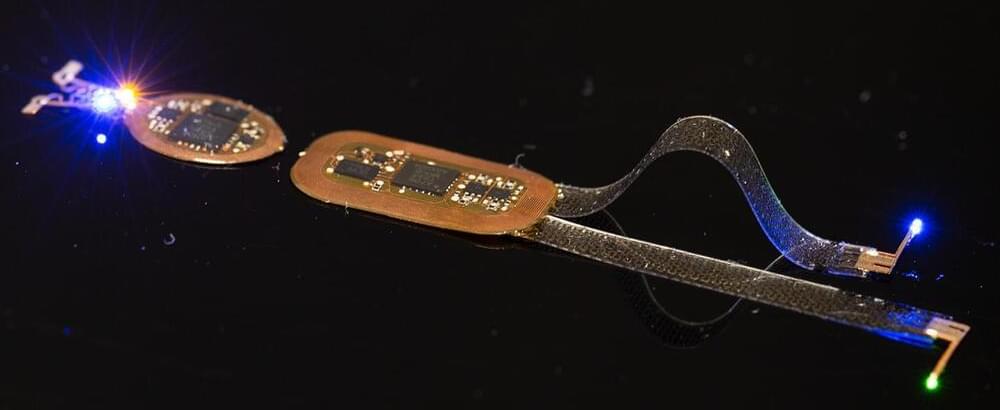
Researchers think a wireless implant to treat brain tumors could eliminate hospital visits for cancer treatment. [Image courtesy of Stanford Medicine]

According to the researchers, brain tumors are some of the most deadly and difficult-to-treat cancers. Glioblastoma, an aggressive form of brain tumor, kills more than 10,000 Americans a year.

Scientists Uncover a Gut-Brain Connection for Social Development

To learn to socialize, zebrafish need to trust their gut.

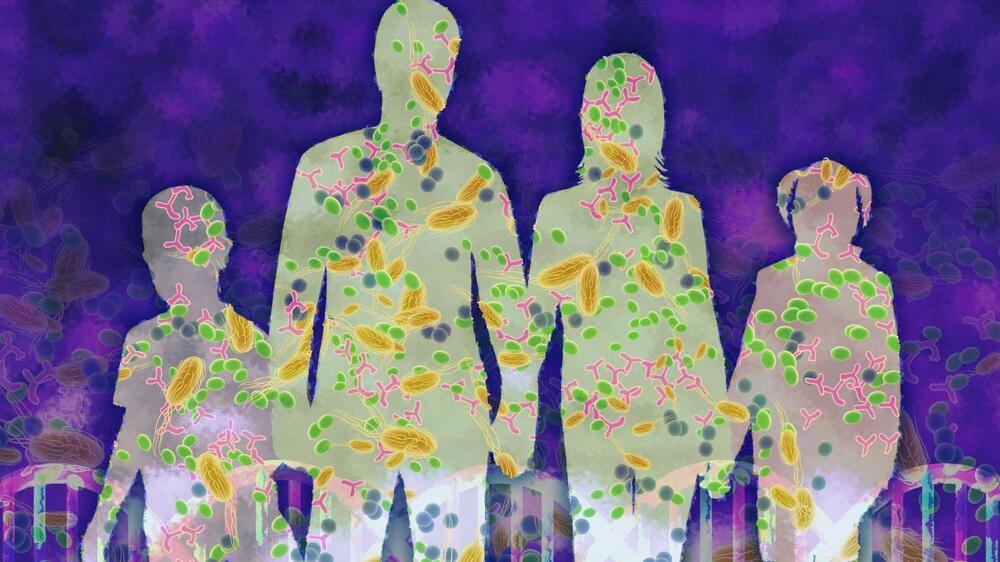
Gut microbes encourage specialized cells to prune back extra connections in brain circuits that control social behavior, new University of Oregon research in zebrafish shows. The pruning is essential for the development of normal social behavior.

The researchers also found that these ‘social’ neurons are similar in zebrafish and mice. That suggests the findings might translate between species — and could possibly point the way to treatments for a range of neurodevelopmental conditions.

Ketamine Found to Increase Brain Noise

Summary: By inhibiting NMDA receptors, ketamine increases noise to gamma frequencies in one layer of the thalamic nucleus and one lay of the somatosensory cortex. Findings suggest psychosis may be triggered by an increase in background noise impairing thalamocortical neurons which may be caused by a malfunction in NMDA receptors affecting the balance of inhibition and excitation in the brain.

Source: HSE

An international team of researchers including Sofya Kulikova, Senior Research Fellow at the HSE University-Perm, found that ketamine, being an NMDA receptor inhibitor, increases the brain’s background noise, causing higher entropy of incoming sensory signals and disrupting their transmission between the thalamus and the cortex.

A Year in Neuroscience: Top 20 Neuroscience News Articles of 2022

Summary: 2022 has been a fantastic year for neuroscience and brain science research. Here, we take a look back over some of the most popular neuroscience research articles of the year.

Source: Neuroscience News.

For over 20 years, Neuroscience News has reported on the latest, ground-breaking neuroscience research. Every year, we like to take a look back at some of the most popular articles we have published on the website.

New research reveals how the brain holds information in mind

MIT neuroscientists have published a key new insight on how working memory functions, in a study published in PLOS Computational Biology.

The researchers at The Picower Institute for Learning and Memory compared measurements of brain cell activity in an animal performing a working memory task with the output of various computer models representing two theories on the underlying mechanism for holding information in mind.

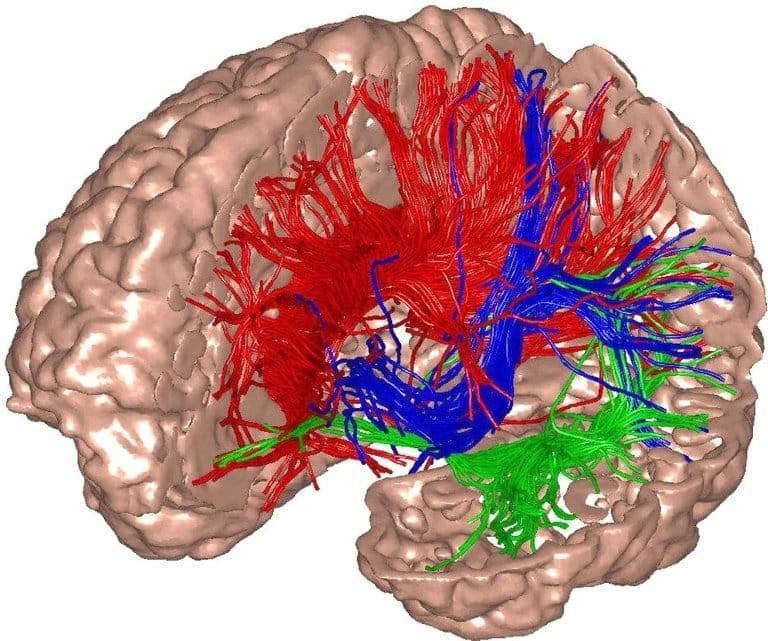
The results favored the newer theory that a network of neurons stores information by making short-lived changes in the connections, or synapses, between them, rather than the traditional theory that memory is maintained by neurons remaining persistently active.

/* */