Toggle light / dark theme

Where is the center of the Universe? Here, there, and everywhere

The Big Bang is the name we have given to the moment at which the Universe began. While the idea is well known, it is often badly misunderstood. Even people with a good grasp of science have misconceptions about it. For instance, a common question is, “Where did the Big Bang happen?” And the answer to that question is a surprising one. So, let’s dive into it and try to understand where the misunderstanding arises.

When people are told of the Big Bang, they are commonly told that “all of the mass of the universe was packed into a point with zero volume called a singularity.” The singularity then “exploded,” expanding and cooling and eventually resulting in the Universe we see today. People draw from their own experience and analogize the Big Bang with something like a firecracker or a grenade — an object that sits in a location, then explodes, dispersing debris into existing space. This is a completely natural and reasonable mental image. It is also completely wrong.

The theory that describes the Big Bang is Einstein’s general theory of relativity. In it, Einstein describes gravity as the very shape of space as it bends and stretches. Near a star or planet, space is distorted; far from any celestial body, space is flat. If space is malleable, as the theory says it is, it can also be compressed or stretched.

Scientists plan ‘thinking’ biocomputers with human neurons

Researchers have created a roadmap for how to build tiny biocomputers out of human neurons or brain cells.

“We can use a culture of the human brain to show something which is not just living cells. We can show that this is learning, this is memorising, this is making decisions, it is possibly even at some point, ‘sentient’ in the sense that it can sense its environment,” Professor Thomas Hartung, a Johns Hopkins ‘organoids’ researcher, told Cosmos.

“We are the explorers who have stumbled into a completely new field.”

Axel Montagne, PhD, on Solving Alzheimer’s and Dementia with Blood-Brain Barrier Repair

So much here I never knew:


Dr. Axel Montagne is a chancellor’s fellow and group leader at the UK Dementia Research Institute at the University of Edinburgh Centre for Clinical Brain Sciences. His group aims to understand how, when, and where critical components of the blood-brain barrier become dysfunctional preceding dementia and in the earliest stages of age-related cognitive decline. With this knowledge, they hope to develop precise treatments targeting brain vasculature to protect brain function.

More importantly his work, and that of his colleagues, provide a critical lens through which to view the contributions of vascular dysfunction (or, conversely, vascular health – if we choose to preserve it) as a critical common thread in dementia and neurodegeneration.

EPISODE LINKS:
Show notes and transcript: https://www.foundmyfitness.com/episodes/axel-montagne.
Montagne lab website: https://montagnelab.com/
Axel Montagne — Google Scholar: https://scholar.google.com/citations?user=dRTfpRoAAAAJ
Twitter: @AxL_Montagne: https://twitter.com/AxL_Montagne.

PODCAST INFO:

Through the eye of the beholder: Researchers find people with autism process illusory shapes differently

There is this picture—you may have seen it. It is black and white and has two silhouettes facing one another. Or maybe you see the black vase with a white background. But now, you likely see both.

It is an example of a visual illusion that reminds us to consider what we did not see at first glance, what we may not be able to see, or what our experience has taught us to know—there is always more to the picture or maybe even a different image to consider altogether. Researchers are finding the process in our that allows us to see these visual distinctions may not be happening the same way in the brains of children with . They may be seeing these illusions differently.

“How our brain puts together pieces of an object or visual scene is important in helping us interact with our environments,” said Emily Knight, MD, Ph.D., assistant professor of Neuroscience and Pediatrics at the University of Rochester Medical Center, and first author on a study out today in the Journal of Neuroscience. “When we view an object or picture, our brains use processes that consider our experience and contextual information to help anticipate , address ambiguity, and fill in the missing information.”

Team releases 74,000 fruit fly brain images for neuroscience research

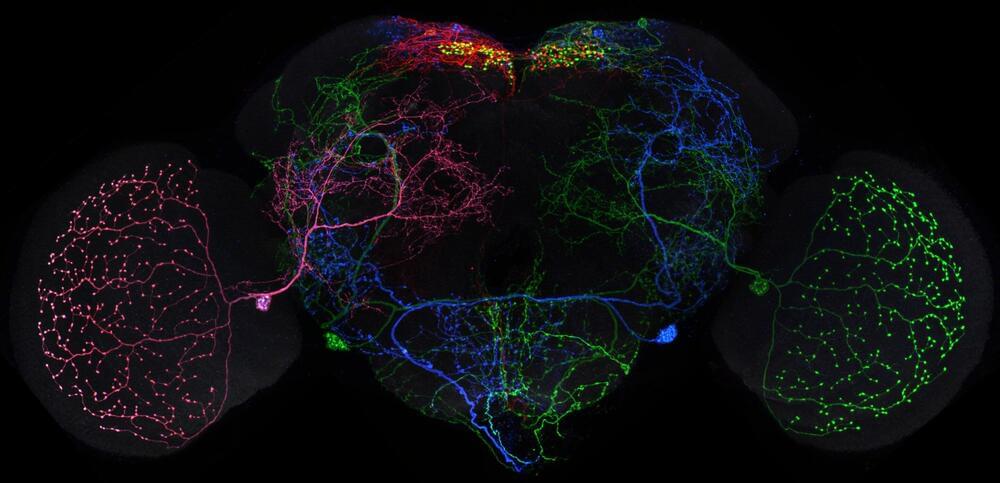
Neuroscience research just got a little bit easier, thanks to the release of tens of thousands of images of fruit fly brain neurons generated by Janelia’s FlyLight Project Team.

Over eight years, the FlyLight Project Team and collaborators dissected, labeled, and imaged the neurons of more than 74,000 fruit fly brains, taken from more than 5,000 different genetically modified fly strains.

Now, these images are being made freely available, enabling scientists to quickly and easily find the neurons they need to test theories about how the works.

Is the future of computing biological?

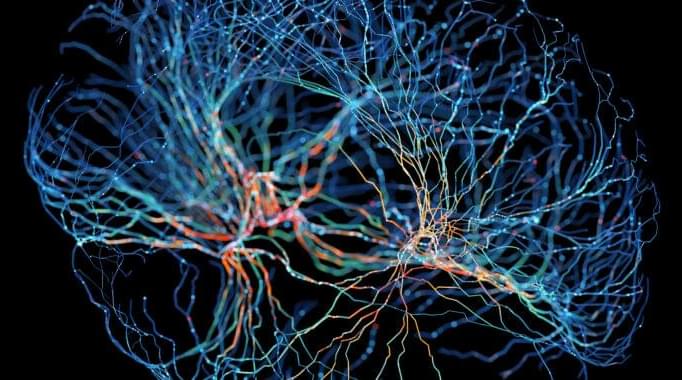
Trying to make computers more like human brains isn’t a new phenomenon. However, a team of researchers from Johns Hopkins University argues that there could be many benefits in taking this concept a bit more literally by using actual neurons, though there are some hurdles to jump first before we get there.

In a recent paper, the team laid out a roadmap of what’s needed before we can create biocomputers powered by human brain cells (not taken from human brains, though). Further, according to one of the researchers, there are some clear benefits the proposed “organoid intelligence” would have over current computers.

“We have always tried to make our computers more brain-like,” Thomas Hartung, a researcher at Johns Hopkins University’s Environmental Health and Engineering department and one of the paper’s authors, told Ars. “At least theoretically, the brain is essentially unmatched as a computer.”

Imagination makes us human — this unique ability to envision what doesn’t exist has a long evolutionary history

You can easily picture yourself riding a bicycle across the sky even though that’s not something that can actually happen. You can envision yourself doing something you’ve never done before – like water skiing – and maybe even imagine a better way to do it than anyone else.

Imagination involves creating a mental image of something that is not present for your senses to detect, or even something that isn’t out there in reality somewhere. Imagination is one of the key abilities that make us human. But where did it come from?

I’m a neuroscientist who studies how children acquire imagination. I’m especially interested in the neurological mechanisms of imagination. Once we identify what brain structures and connections are necessary to mentally construct new objects and scenes, scientists like me can look back over the course of evolution to see when these brain areas emerged – and potentially gave birth to the first kinds of imagination.

Meta works on a flurry of AR/VR devices over the next 3 to 4 years

Meta’s AR glasses could be launched in 2027.

Mark Zuckerberg’s Meta Platforms is doubling down on its virtual reality (VR) products and plans to rope in augmented reality (AR) experiences. It looks to define its position in the technology industry a few years from now. Thousands of employees of the Reality Labs Division at Meta were recently presented with a roadmap for the company’s products, which was then shared with The Verge.


VR, AR, and neural interfacesAlthough Zuckerberg has spoken mainly of the metaverse that the company would build as the future of the internet, Meta now seems to have taken its foot off the pedal to make the metaverse itself and focus on the tools instead and improving them.

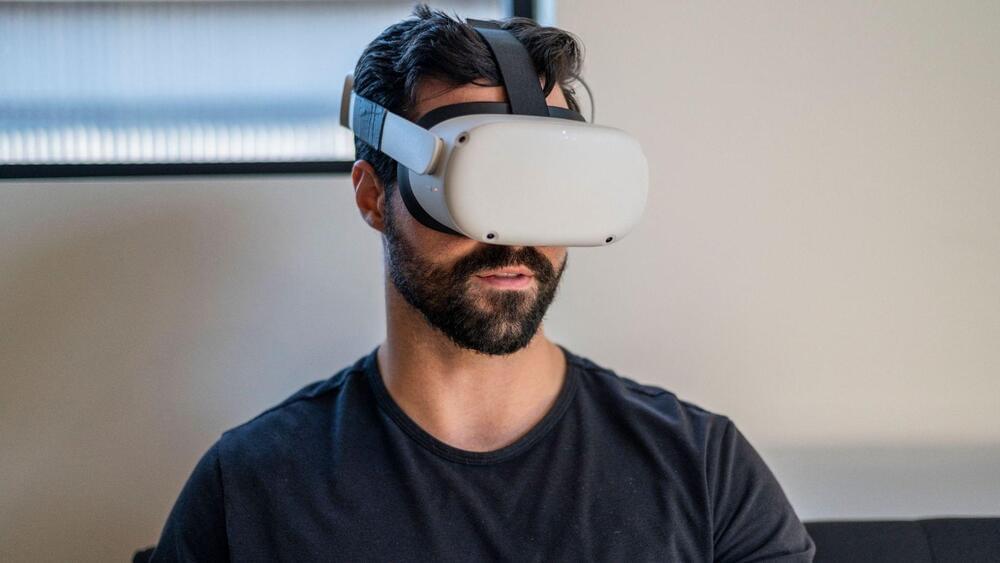
Coming out later this year is the Meta Quest 3, the flagship product from the company. It is expected to be twice as powerful but half the thickness of its predecessor—the Quest 2. Meta has sold more than 20 million Quest headsets so far, so the Quest 3 sales will be a benchmark to determine if customers are interested in these products.

Priced at $400, Quest 3 will also feature front-facing cameras that will make it less immersive than its predecessors but add the ability to deliver mixed reality experiences to users. Meta is hopeful that this will prompt users to keep the headsets on for longer and plans to ship 41 new apps and games with this headset.

/* */