Toggle light / dark theme

Artificial Intelligence: A Decisionmaking Technology

Colonel Mark M. Zais, chief data scientist at United States Special Operations Command (USSOCOM) stresses the importance of AI-related education in the DOD. In his 2020 CJCS Strategic Essay Competition first place Strategy Article, he says, “Without that education, we face a world where senior leaders use AI-enabled technologies to make decisions related to national security without a full grasp of the tools that they—and our adversaries—possess.”


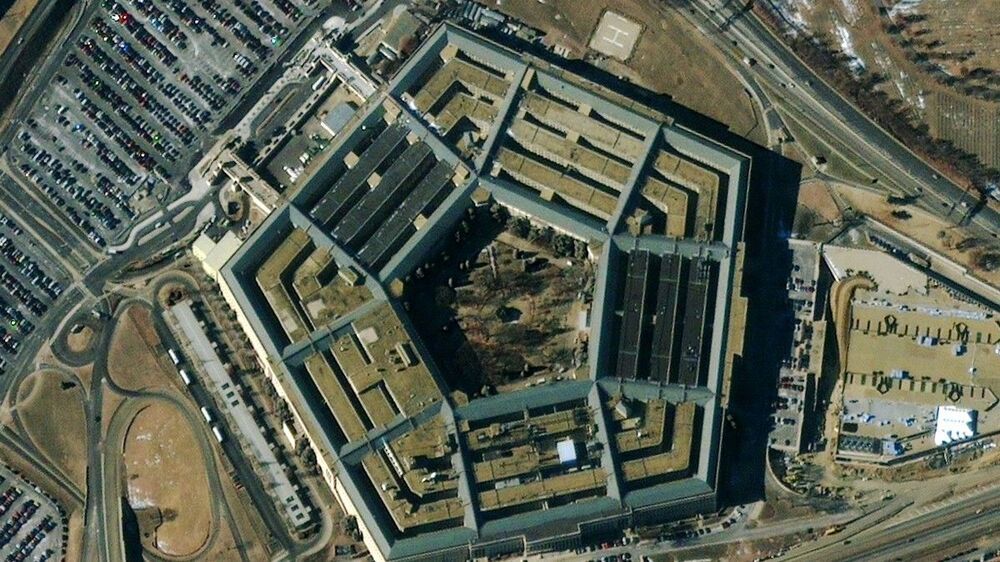
With the release of its first artificial intelligence (AI) strategy in 2019, the Department of Defense (DOD) formalized the increased use of AI technology throughout the military, challenging senior leaders to create “organizational AI strategies” and “make related resource allocation decisions.”1 Unfortunately, most senior leaders currently have limited familiarity with AI, having developed their skills in tactical counterinsurgency environments, which reward strength (physical and mental), perseverance, and diligence. Some defense scholars have advocated a smarter military, emphasizing intellectual human capital and arguing that cognitive ability will determine success in strategy development, statesmanship, and decisionmaking.2 AI might complement that ability but cannot be a substitute for it. Military leaders must leverage AI to help them adapt and be curious. As innovative technologies with AI applications increasingly become integral to DOD modernization and near-peer competition, senior leaders’ knowledge of AI is critical for shaping and applying our AI strategy and creating properly calibrated expectations.

War is about decisionmaking, and AI enables the technology that will transform how humans and machines make those decisions.3 Successful use of this general-purpose technology will require senior leaders who truly understand its capabilities and can demystify the hyperbole.4 Within current AI strategy development and application, many practitioners have a palpable sense of dread as we crest the waves of a second AI hype cycle, seemingly captained by novices of the AI seas.5 In-house technical experts find it difficult to manage expectations and influence priorities, clouded by buzzwords and stifled by ambitions for “quick wins.” The importance of AI-related education increases with AI aspirations and the illusion of progress. Without that education, we face a world where senior leaders use AI-enabled technologies to make decisions related to national security without a full grasp of the tools that they—and our adversaries—possess. This would be equivalent to a combat arms officer making strategic military landpower decisions without the foundations of military education in maneuver warfare and practical experience.

Strategic decisionmaking in a transformative digital environment requires comparably transformative leadership. Modernization of the military workforce should parallel modernization of equipment and technology. In the short term, senior leaders require executive AI education that equips them with enough knowledge to distill problems that need AI solutions and that provides informed guidance for customized solutions. With the ability to trust internal expertise, the military can avoid overreliance on consultants and vendors, following Niccolò Machiavelli’s warning against dependence on auxiliary troops.6 In the long term, military education should give the same attention to AI that is provided to traditional subjects such as maneuver warfare and counterinsurgency operations. Each steppingstone of military education should incorporate subjects from the strategic domain, including maneuver warfare, information warfare, and artificial intelligence.

DARPA Hopes to Improve Computer Vision in ‘Third Wave’ of AI Research

The military’s primary advanced research shop wants to be a leader in the “third wave” of artificial intelligence and is looking at new methods of visually tracking objects using significantly less power while producing results that are 10-times more accurate.

The Defense Advanced Research Projects Agency, or DARPA, has been instrumental in many of the most important breakthroughs in modern technology—from the first computer networks to early AI research.

“DARPA-funded R&D enabled some of the first successes in AI, such as expert systems and search, and more recently has advanced machine learning algorithms and hardware,” according to a notice for an upcoming opportunity.

Portable nuclear reactor project moves forward at Pentagon

The two companies, along with Westinghouse Government Services, were each given preliminary contracts of less than $15 million in March 2020 to begin design work. The final design is due to the Strategic Capabilities Office in 2022, at which point the Defense Department will make a decision on whether to move forward with testing the systems.

“We are thrilled with the progress our industrial partners have made on their designs,” Jeff Waksman, Project Pele’s program manager, said in a statement. “We are confident that by early 2022 we will have two engineering designs matured to a sufficient state that we will be able to determine suitability for possible construction and testing.”

The Pentagon has long eyed nuclear power as a potential way to reduce both its energy cost and its vulnerability in its dependence on local energy grids. According to a news release, the Defense Department uses “approximately 30 Terawatt-hours of electricity per year and more than 10 million gallons of fuel per day.”

Three energy-innovation takeaways from Texas’ deep freeze

Microgrids can connect and disconnect from the grid. By operating on normal “blue-sky” operating days as well as during emergencies, microgrids provide uninterrupted power when the grid goes down — and reduce grid constraints and energy costs when grid-connected. Previously the sole domain of military bases and universities, microgrids are growing 15% annually, reaching an $18 billion market in the U.S. by 2022.

For grid resiliency and reliable power supply, there is no better solution than community-scale microgrids that connect critical infrastructure facilities with nearby residential and commercial loads. Funding feasibility studies and audit-grade designs — so that communities have zero-cost but high-quality pathways to constructable projects, as New York State did with the NY Prize initiative — is a proven way to involve communities in their energy planning and engage the private sector in building low-carbon resilient energy systems.

Unpredictability and complexity are quickening, and technology has its place, but not simply as an individual safeguard or false security blanket. Instead, technology should be used to better calculate risk, increase system resilience, improve infrastructure durability and strengthen the bonds between people in a community both during and in between emergencies.

Satellites Are Stranded on the ISS Because of a Military Coup

Japan’s space agency wants to keep the satellite’s cameras out of military hands.


An unusual geopolitical situation is brewing aboard the International Space Station. Prior to the military coup in Myanmar earlier this year, Japan’s space agency JAXA had been collaborating with the country to build microsatellites that it planned to deploy in partnership with Myanmar’s government.

Now, JAXA has no idea what to do with the pair of 50-kilogram satellites, according to SlashGear. And while Japanese scientists hope to bring the agriculture and fishery-monitoring satellites to life, they’re currently holding them on the ISS instead of deploying them out of fear they might be misused for military purposes — a striking example of real-world geopolitics spilling over into space.

After the military coup in Myanmar, Teppei Kasai, the Asia program director for the group Human Rights Watch noted that it would be relatively straightforward to use the satellites’ Earth-facing cameras for military or surveillance purposes, according to SlashGear.

Veteran scientist Stefanie Tompkins takes the helm at DARPA

WASHINGTON — Stefanie Tompkins on March 15 assumed the top post at the Defense Advanced Research Projects Agency.

Tompkins is DARPA’s 23rd director.

She is a former military intelligence officer in the U.S. Army and previously worked at DARPA for nearly a decade. From 2007 until 2017 Tompkins served as program manager and deputy director of the agency’s Strategic Technology Office, DARPA chief of staff, as director of the Defense Sciences Office and as the acting deputy director of the agency.

Remotely Piloted Underwater Glider Crosses the Atlantic

Circa 2010


About 48 kilometers off the eastern coast of the United States, scientists from Rutgers, the State University of New Jersey, peered over the side of a small research vessel, the Arabella. They had just launched RU27, a 2-meter-long oceanographic probe shaped like a torpedo with wings. Although it sported a bright yellow paint job for good visibility, it was unclear whether anyone would ever see this underwater robot again. Its mission, simply put, was to cross the Atlantic before its batteries gave out.

Unlike other underwater drones, RU27 and its kin are able to travel without the aid of a propeller. Instead, they move up and down through the top 100 to 200 meters of seawater by adjusting their buoyancy while gliding forward using their swept-back wings. With this strategy, they can go a remarkably long way on a remarkably small amount of energy.

When submerged and thus out of radio contact, RU27 steered itself with the aid of sensors that registered depth, heading, and angle from the horizontal. From those inputs, it could dead reckon about where it had glided since its last GPS navigational fix: Every 8 hours the probe broke the surface and briefly stuck its tail in the air, which exposed its GPS antenna as well as the antenna of an Iridium satellite modem. This allowed the vehicle to contact its operators, who were located in New Brunswick, N.J., in the Rutgers Coastal Ocean Observation Lab, or COOL Room.

/* */