Toggle light / dark theme

How Should One Live Everlasting Life?

Ethical concerns about new and emerging technologies that could significantly extend human lifespans generally focus on their potential impact on individuals and the permissibility of providing such treatment options. Because these technologies might also prompt us to assess and balance interests of different individuals and groups, given resource and production limitations, life-extension technologies provoke profound conversations about the nature and value of traditional conceptions of humanity.


Life extension requires careful consideration of resource scarcity, justice, and what, if anything, is intrinsic to the experiences we define as human.

Study finds aging tends to shift gears as you turn 34, 60 and 78

The blood-borne signs of aging – and indeed, perhaps the causes of aging – make three big shifts around the ages of 34, 60 and 78, a new Stanford-led study has discovered, potentially leading to new diagnostic tests and avenues of anti-aging research.

The study measured levels of nearly 3,000 individual proteins in the plasma of small blood samples from 4,263 people aged between 18 and 95, and found that 1,379 of these proteins varied significantly with a subject’s age. Indeed, with information about levels of just 373 of these proteins, the researchers found they could predict a subject’s age “with great accuracy,” and an even smaller subset of just nine proteins could do a “passable” job.

Proteins are the body’s workhorses, carrying out instructions from all the body’s cells. Changes in their levels in our blood reflect the starting, stopping and changing of different biological processes. The researchers found that these changes were often quite sudden – levels of a protein would remain stable in the blood for years, and then rapidly plunge or leap, rather than showing a steady increase or decline.

Developing Deep Aging Biomarkers Using Artificial Intelligence

A type of artificial intelligence technique is now being used to develop new drugs and therapies and could perhaps even help to solve aging.

An urgent need for aging biomarkers

There has long been an urgent need in our field to develop increasingly accurate biomarkers of aging so that the efficacy of interventions can be gauged. Deep learning is one of the more recent techniques being applied in the search for aging biomarkers.

Researchers identify protein that governs human blood stem cell self-renewal

UCLA scientists have discovered a link between a protein and the ability of human blood stem cells to self-renew. In a study published today in the journal Nature, the team reports that activating the protein causes blood stem cells to self-renew at least twelvefold in laboratory conditions.

Multiplying blood in conditions outside the human body could greatly improve treatment options for like leukemia and for many inherited blood diseases.

Dr. Hanna Mikkola, a member of the Eli and Edythe Broad Center of Regenerative Medicine and Stem Cell Research at UCLA and senior author of the study, has studied blood stem cells for more than 20 years.

Researchers discover stress in early life extends lifespan

Some stress at a young age could actually lead to a longer life, new research shows.

University of Michigan researchers have discovered that oxidative experienced early in life increases subsequent stress resistance later in life.

Oxidative stress happens when cells produce more oxidants and free radicals than they can deal with. It’s part of the aging process, but can also arise from stressful conditions such as exercise and calorie restriction.

Drugs that quell brain inflammation reverse dementia

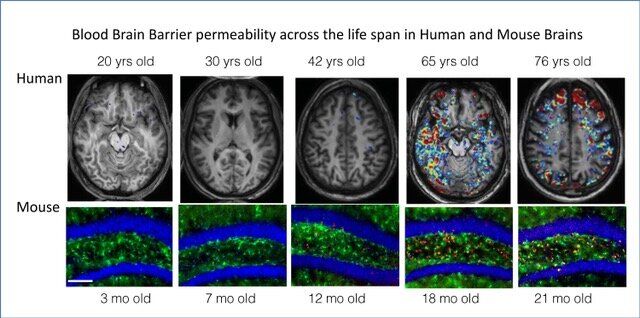
Drugs that tamp down inflammation in the brain could slow or even reverse the cognitive decline that comes with age.

In a publication appearing today in the journal Science Translational Medicine, University of California, Berkeley, and Ben-Gurion University scientists report that senile mice given one such drug had fewer signs of inflammation and were better able to learn new tasks, becoming almost as adept as mice half their age.

“We tend to think about the aged brain in the same way we think about neurodegeneration: Age involves loss of function and dead cells. But our new data tell a different story about why the aged brain is not functioning well: It is because of this “fog” of inflammatory load,” said Daniela Kaufer, a UC Berkeley professor of integrative biology and a senior author, along with Alon Friedman of Ben-Gurion University of the Negev in Israel and Dalhousie University in Canada. “But when you remove that inflammatory fog, within days the aged brain acts like a young brain. It is a really, really optimistic finding, in terms of the capacity for plasticity that exists in the brain. We can reverse brain aging.”

/* */