Your internet connection could be a lot smoother on those long flights to Europe.
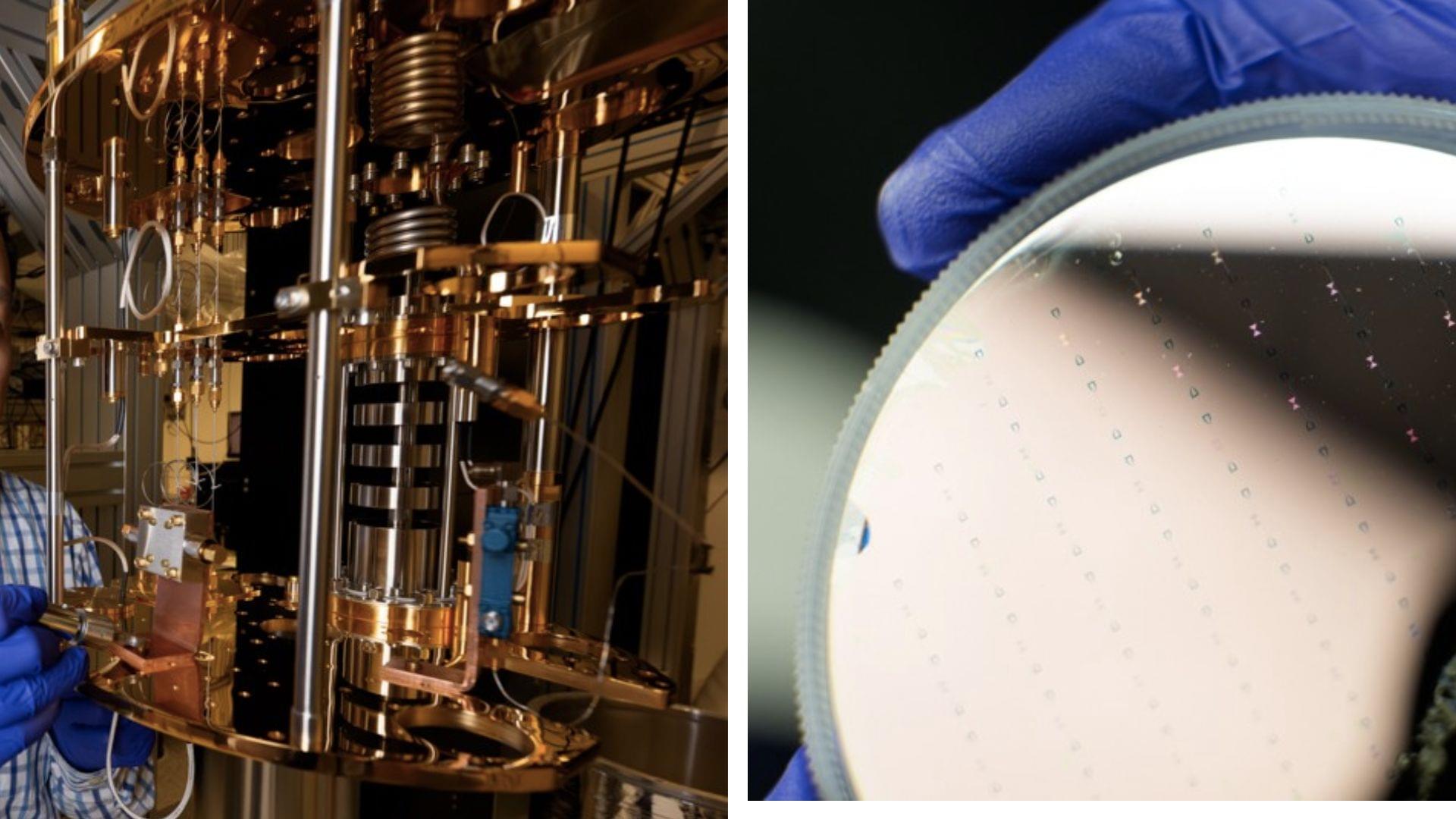

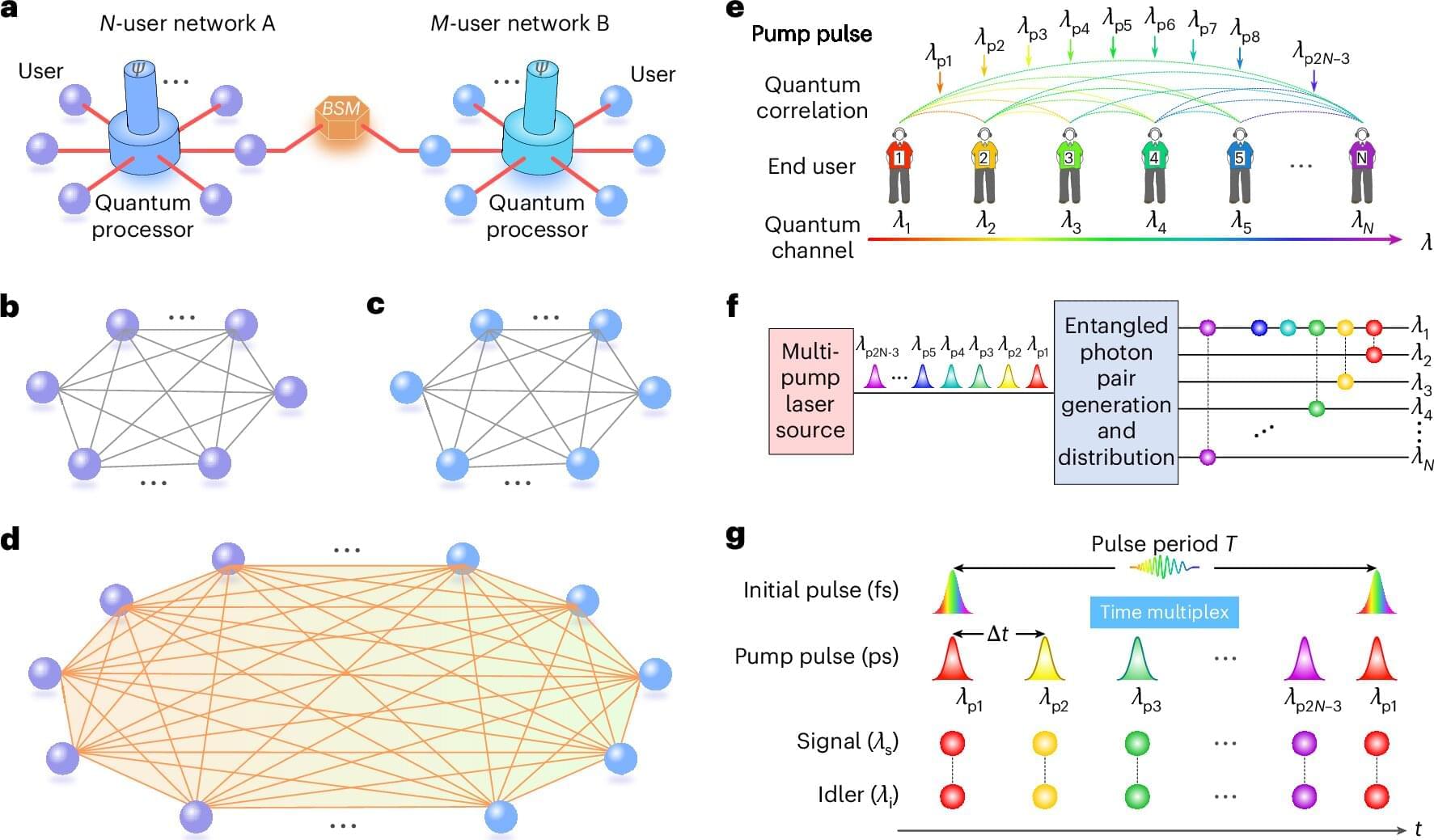
Many quantum researchers are working toward building technologies that allow for the existence of a global quantum internet, in which any two users on Earth would be able to conduct large-scale quantum computing and communicate securely with the help of quantum entanglement. Although this requires many more technological advancements, a team of researchers at Shanghai Jiao Tong University in China have managed to merge two independent networks, bringing the world a bit closer to realizing a quantum internet.
A true global quantum internet will require interconnectivity between many networks, and this has proven to be a much more difficult task for quantum networks than it is for classical networks. While researchers have demonstrated the ability to connect quantum computers within the same network, multi-user fusion remains a major challenge. Fully connected networks using dense wavelength division multiplexing (DWDM) have been achieved, but have scalability and complexity issues.
However, the research team involved in the new study, published in Nature Photonics, has merged two independent networks with 18 different users. All 18 users can communicate securely using entanglement-based protocols using this method. This represents the most complex multi-user quantum network to date.
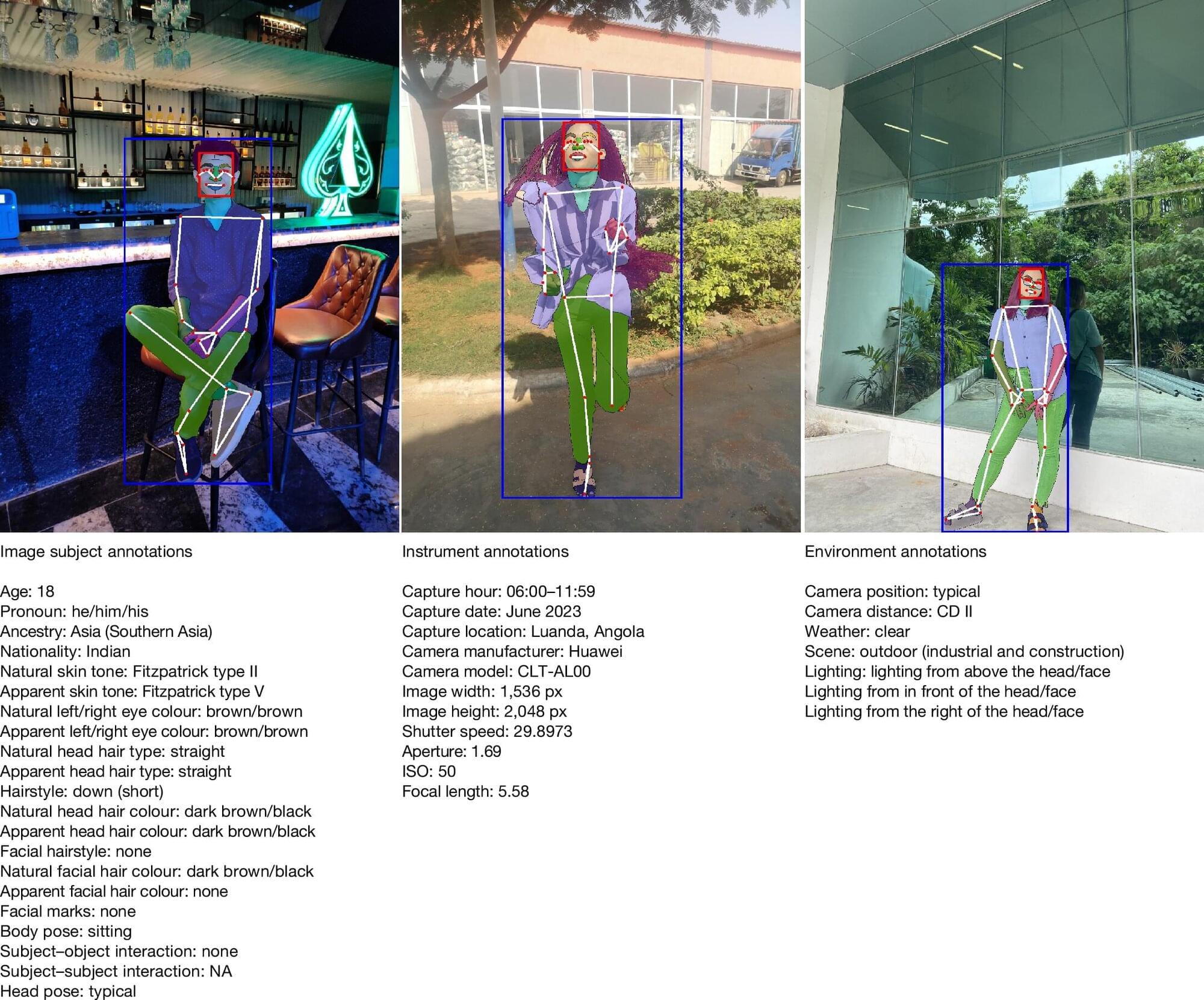
A database of more than 10,000 human images to evaluate biases in artificial intelligence (AI) models for human-centric computer vision is presented in Nature this week. The Fair Human-Centric Image Benchmark (FHIBE), developed by Sony AI, is an ethically sourced, consent-based dataset that can be used to evaluate human-centric computer vision tasks to identify and correct biases and stereotypes.
Computer vision covers a range of applications, from autonomous vehicles to facial recognition technology. Many AI models used in computer vision were developed using flawed datasets that may have been collected without consent, often taken from large-scale image scraping from the web. AI models have also been known to reflect biases that may perpetuate sexist, racist, or other stereotypes.
Alice Xiang and colleagues present an image dataset that implements best practices for a number of factors, including consent, diversity, and privacy. FHIBE includes 10,318 images of 1,981 people from 81 distinct countries or regions. The database includes comprehensive annotations of demographic and physical attributes, including age, pronoun category, ancestry, and hair and skin color.
Among other things, Harishankar discovered that the IRL weaponized roomba was sending logs, configuration files, and even unencrypted Wi-Fi credentials to the manufacturer’s servers. It was also running Google Cartographer, enabling the device to create a detailed 3D map of his home.
Most worryingly of all, the programmer found out that the command that shut down the vacuum was issued remotely – suggesting the manufacturer had root access via pre-installed rtty software, which allowed them to run any command or install any script on the device – meaning ILIFE/Zhiyi either manually bricked the vacuum in response to Harishankar blocking data transmission, or had automated scripts that did so.
A humanoid robot chef’s kitchen test went off the rails and the internet can’t stop watching.
A viral clip shows Unitree’s G1 humanoid attempting to cook — only to spill food, slip, and crash spectacularly.
In the future, how will we communicate and transmit data when missions to other planets will not only be possible but commonplace?

In this latest edition of Security & Tech Insights newsletter, the topic of vulnerabilities of digital connectivity are analyzed in special regards to IoT, Smart Cities, and Space. Also included are articles reviewing Cybersecurity Awareness and Preparedness, and new threats to contend with from AI-enabled Ransomware. Thanks for reading and sharing! Chuck Brooks.
#cybersecurity #internetofthings #smartcities #space #ai #ransomware | on LinkedIn.
Quantum teleportation was achieved over the internet for the first time
[ https://www.sciencealert.com/quantum-teleportation-was-achie…first-time]
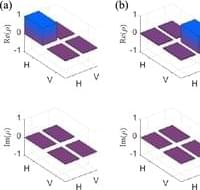
The ability for quantum and conventional networks to operate in the same optical fibers would aid the deployment of quantum network technology on a large scale. Quantum teleportation is a fundamental operation in quantum networking, but has yet to be demonstrated in fibers populated with high-power conventional optical signals. Here we report, to the best of our knowledge, the first demonstration of quantum teleportation over fibers carrying conventional telecommunications traffic. Quantum state transfer is achieved over a 30.2-km fiber carrying 400-Gbps C-band classical traffic with a Bell state measurement performed at the fiber’s midpoint. To protect quantum fidelity from spontaneous Raman scattering noise, we use optimal O-band quantum channels, narrow spectro-temporal filtering, and multi-photon coincidence detection. Fidelity is shown to be well maintained with an elevated C-band launch power of 18.7 dBm for the single-channel 400-Gbps signal, which we project could support multiple classical channels totaling many terabits/s aggregate data rates. These results show the feasibility of advanced quantum and classical network applications operating within a unified fiber infrastructure.