The algorithm lets robots find the shortest route in unfamiliar environments, opening the door to robots that can work inside homes and offices.
The news: A team at Facebook AI has created a reinforcement learning algorithm that lets a robot find its way in an unfamiliar environment without using a map. Using just a depth-sensing camera, GPS, and compass data, the algorithm gets a robot to its goal 99.9% of the time along a route that is very close to the shortest possible path, which means no wrong turns, no backtracking, and no exploration. This is a big improvement over previous best efforts.
Why it matters: Mapless route-finding is essential for next-gen robots like autonomous delivery drones or robots that work inside homes and offices. Some of the best robots available today, such as Spot and Atlas made by Boston Dynamics and Digit made by Agility Robotics, are packed with sensors that make them pretty good at keeping their balance and avoiding obstacles. But if you dropped them off at an unfamiliar street corner and left them to find their way home, they’d be screwed. While Facebook’s algorithm does not yet handle outside environments, it is a promising step in that direction and could probably be adapted to urban spaces.
A method and apparatus for ameliorating the aging process and the effects of aging and maintaining the integrity of health is provided. The method includes subjecting biological systems to alternating and steady magnetic fields having flux densities ranging from 10-6 gauss to 10-20 gauss and frequencies from 0 Hertz to 1014 Hertz. The calculation is made with reference to the equation mc2 =Bvlq, where m=mass; c=speed of light; B=magnetic flux density; v=inertial velocity of the mass contained in l; l=length of the conductive body; q=unity. The process begins by targeting the larger targets first and then diminishing the field magnitude slowly and incrementally according to the targets. The frequency when AC is indicated is calculated with the cyclotron resonance formula, fc =qB/(2πm). The apparatus includes a specially constructed pool or tub for generating the specific magnetic flux necessary for treatment. Orientation of the patient with reference to North, South, East and West is varied. The earth’s position in relation to the sun is taken into account. The patient may be in an upright, prone or swimming position depending on the specific treatment scheme.
Something to look forward to: Some of the biggest problems that need solving in the enterprise world require sifting through vast amounts of data and finding the best possible solution given a number of factors and requirements, some of which are at.
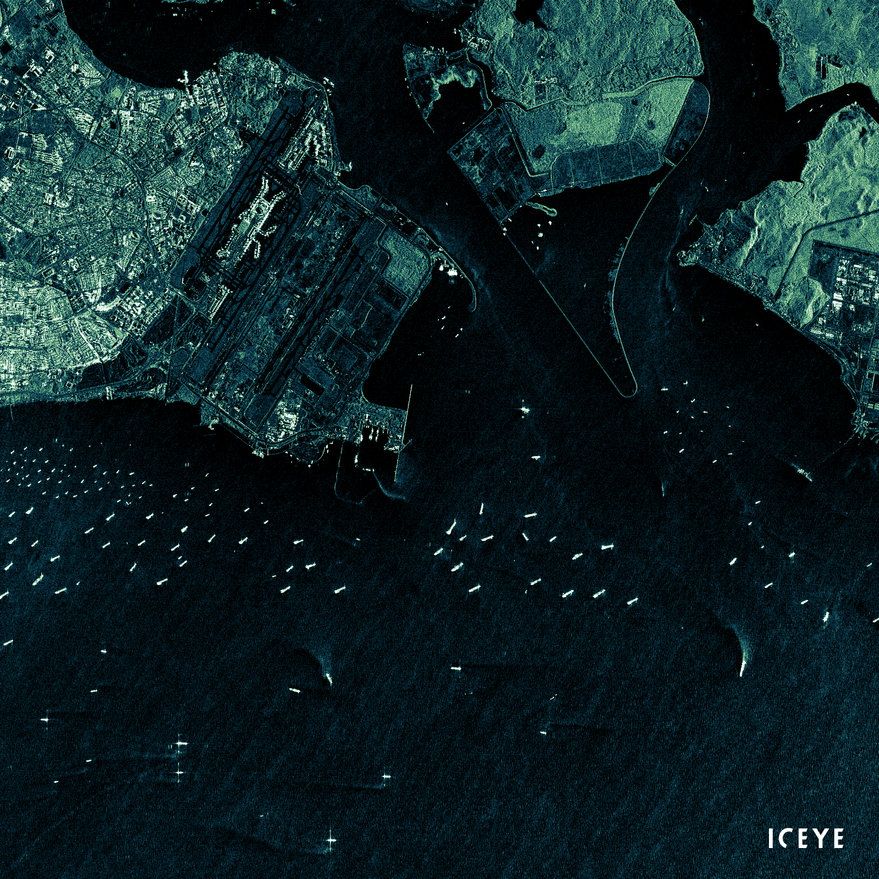
SAN FRANCISCO – Radar satellite operator Iceye released a product Jan. 20 to detect dark vessels, ships at sea that are not identifying themselves with Automatic Identification System (AIS) transponders.
Iceye combines observations from its constellation of three synthetic aperture radar satellites with other data sources to provide customers with radar satellite images of vessels that are not broadcasting their identification, position and course with AIS transponders. The technology is designed to help government agencies, nongovernmental organizations and commercial customers curb drug and human trafficking, find illegal fishing vessels and enforce rules against illegal transshipment of goods, Finland-based Iceye said in a Jan. 20 news release.
Dark vessel detection is a popular application for radar satellites which gather data day, night and in all weather conditions, Pekka Laurila, Iceye co-founder and chief strategy officer told SpaceNews. With three satellites in orbit, Iceye offers customers the ability to frequently revisit areas of interest. In addition, the company has developed machine learning algorithms to speed up dark vessel detection, he added.
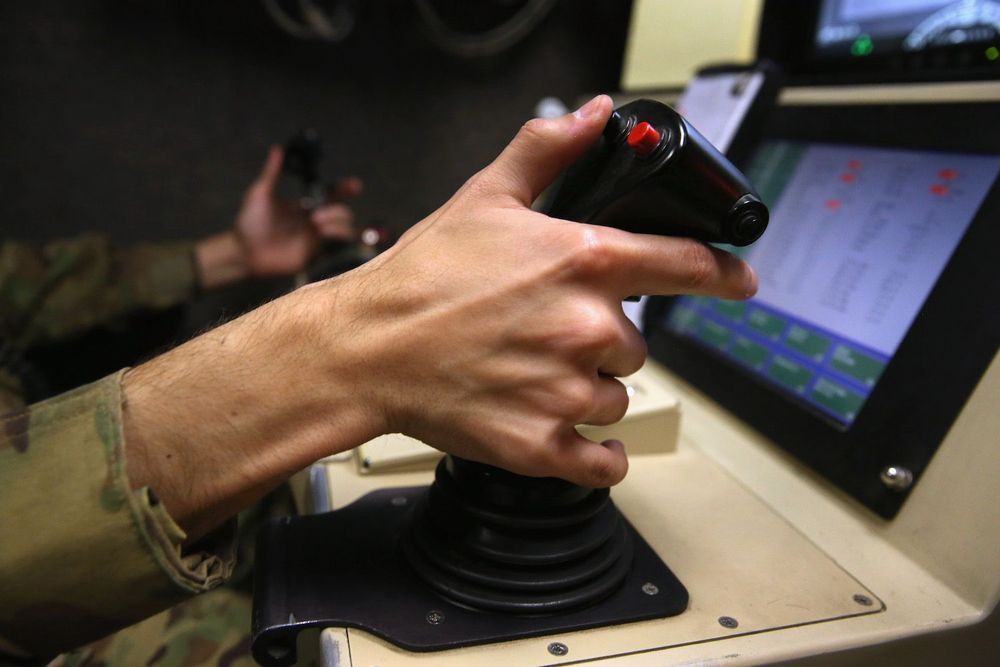
Activists fret about armies relying on killer robots, but some forms of artificial intelligence that don’t actually pull the trigger could still be a nightmare.
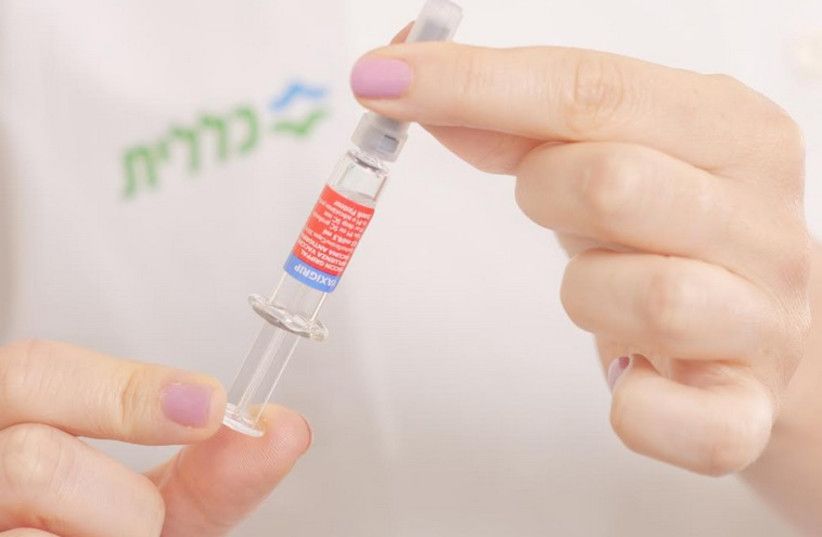
The company’s machine learning-based tool applies advanced algorithms to Maccabi’s existing electronic patient data to identify unvaccinated individuals at highest risk of developing serious flu-related complications. These could include elderly people; those with uncontrolled chronic diseases or respiratory diseases; long-term smokers; those that are immunodeficient or have diabetes; or children, explained Dr. Jeremy Orr, CEO of EarlySign.
The EarlySign investigational algorithm flags these individuals, who are then contacted by their healthcare providers and encouraged to come into the clinic and be vaccinated. Patients can be contacted by phone, text message or even snail mail, depending on their communication preferences and the methods offered by their clinics.
Orr noted that the program is especially important this year when many people have already died from the flu in Israel and the virus is expected to take an exceptionally heavier toll than usual this year.
Isaac Newton and other premodern physicists saw space and time as separate, absolute entities — the rigid backdrops against which we move. On the surface, this made the mathematics behind Newton’s 1687 laws of motion look simple. He defined the relationship between force, mass and acceleration, for example, as $latex \vec{F} = m \vec{a}$.
In contrast, when Albert Einstein revealed that space and time are not absolute but relative, the math seemed to get harder. Force, in relativistic terms, is defined by the equation $latex \vec {F} =\gamma (\vec {v})^{3}m_{0}\,\vec {a} _{\parallel }+\gamma (\vec {v})m_{0}\,\vec {a} _{\perp }$.
But in a deeper sense, in the ways that truly matter to our fundamental understanding of the universe, Einstein’s theory represented a major simplification of the underlying math.
Not sure how old this video is. But, Very impressive if it is able to grab random objects at these speeds; although i suspect it needed a lot of training before.
This handy #roboticarm can be trained to catch practically anything. 🤖 💪
Looking for a job in AI & Machine Learning. Follow us for more updates or visit: https://aijobs.com/