Members of Congress from Western states are pushing for $750 million to turn wastewater into pure water. Here’s how that works.

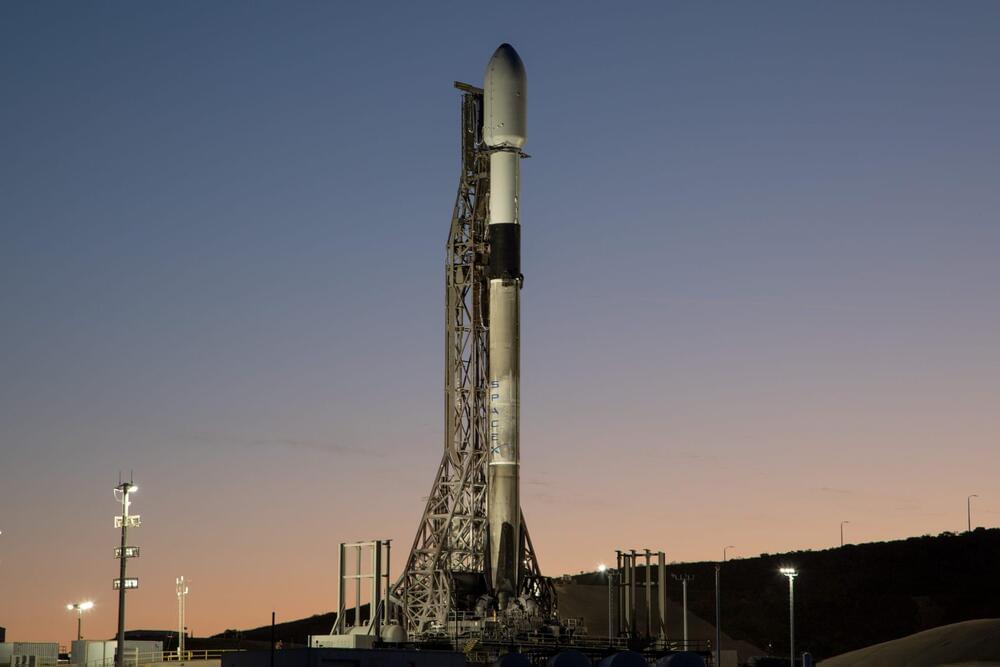
SAN FRANCISCO – The Space Development Agency awarded SpaceRake, a Cambridge, Massachusetts startup, $1.8 million to develop miniature laser communications terminals.
It was the first government contract for SpaceRake, a firm founded in 2021 by Kerri Cahoy, the Massachusetts Institute of Technology Space Telecommunications, Astronomy and Radiation Laboratory director with a Ph.D. in electrical engineering, and Jeremy Wertheimer, former Google vice president engineering with a Ph.D. in artificial intelligence.
Under the two-year direct-to-Phase 2 Small Business Innovation Research award announced Nov. 1, SpaceRake will develop terminals to enable satellites as small as cubesats to transfer data through laser links with the Transport Layer, a global communications network in low Earth orbit being established by SDA, a U.S. Space Force organization.
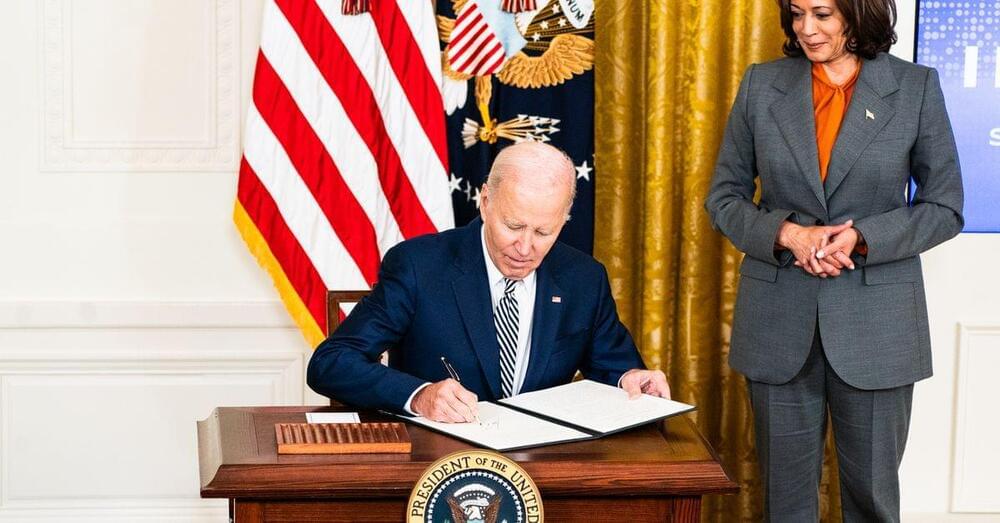
President Joe Biden’s executive order plans for standardized digital watermarking rules.
President Joe Biden’s executive order on artificial intelligence is a first-of-its-kind action from the government to tackle some of the technology’s greatest challenges — like how to identify if an image is real or fake.
Among a myriad of other demands, the order, signed Monday, calls for a new set of government-led standards on watermarking AI-generated content. Like watermarks on photographs or paper money, digital watermarks help users distinguish between a real object and a fake one and determine who owns it.
Digital watermarks are easily broken and abused.

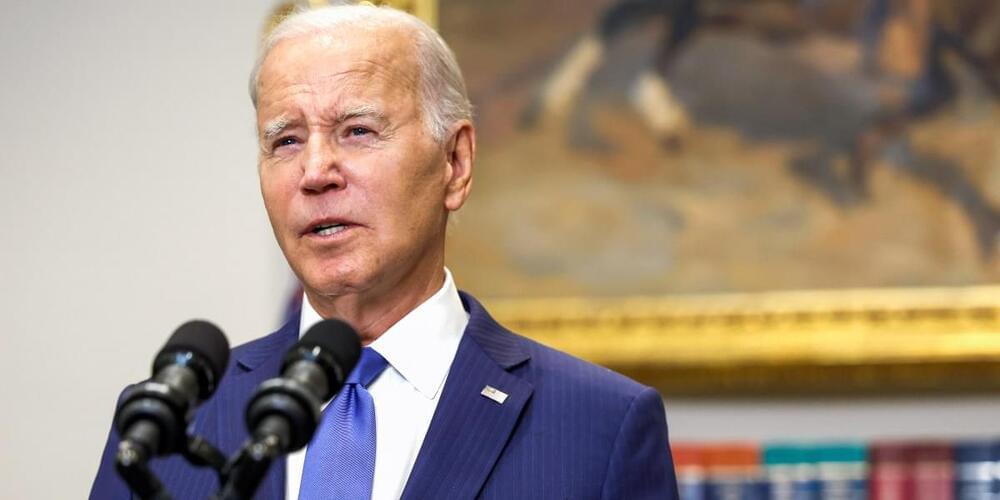
The goal of the order, according to the White House, is to improve “AI safety and security.” It also includes a requirement that developers share safety test results for new AI models with the US government if the tests show that the technology could pose a risk to national security. This is a surprising move that invokes the Defense Production Act, typically used during times of national emergency.
The executive order advances the voluntary requirements for AI policy that the White House set back in August, though it lacks specifics on how the rules will be enforced. Executive orders are also vulnerable to being overturned at any time by a future president, and they lack the legitimacy of congressional legislation on AI, which looks unlikely in the short term.
“The Congress is deeply polarized and even dysfunctional to the extent that it is very unlikely to produce any meaningful AI legislation in the near future,” says Anu Bradford, a law professor at Columbia University who specializes in digital regulation.
How safe are our routers? Japan & U.S. cybersecurity agencies have flagged a major threat in the form of China’s BlackTech group.
Learn more about the threat:
BlackTech, a notorious state-backed hackers from China, are using router backdoors to quietly to breach government, tech, and media sectors in the U.S.
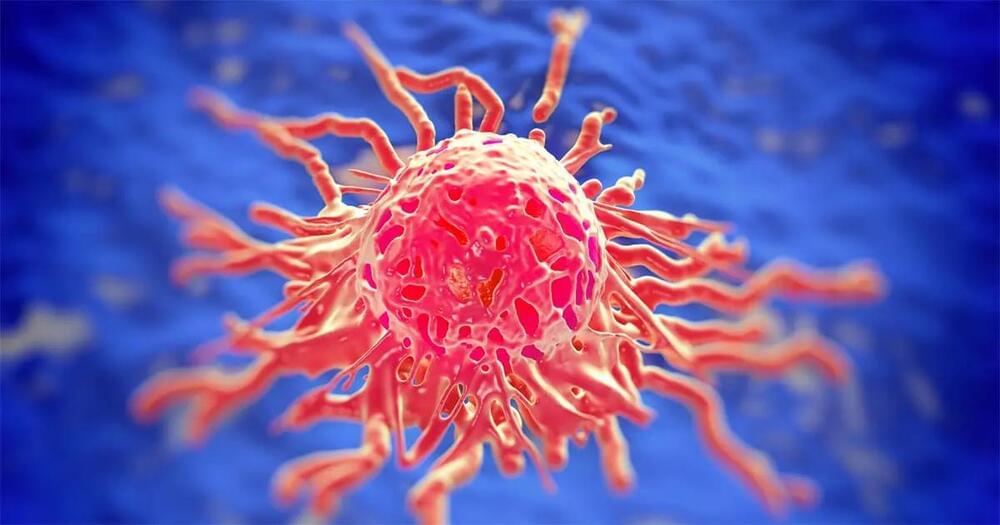
A breakthrough in treating cervical cancer is reported, with participants in a recent trial achieving a five-year survival rate of 80% – up from the previous average of 70%. The study used a combination of existing, cheap drugs ahead of usual radiotherapy treatment.
Cervical cancer cell illustration. Credit: PRB ARTS
Phase III of the INTERLACE trial, funded by Cancer Research UK and University College London (UCL) Cancer Trials Centre, assessed whether a short course of induction chemotherapy (IC) prior to chemoradiation (CRT) could reduce the rate of relapse and death among patients with cervical cancer. Researchers involved in the study presented the preliminary results at the recent European Society for Medical Oncology (ESMO) congress.

The Chicago region has been named an official US Regional and Innovation Technology Hub for quantum technologies by the Biden-Harris administration, a designation that opens the door to new federal funding and recognizes the growing strength of an ecosystem poised to become the heart of the nation’s quantum economy. The Bloch Tech Hub (pronounced “block”), a coalition of industry, academic, government, and nonprofit stakeholders led by the Chicago Quantum Exchange, was one of 31 designees from nearly 400 applications across the country.
The selection, announced Monday morning by the White House and the US Department of Commerce’s Economic Development Administration (EDA), is the first phase of a federal initiative designed to “supercharge” innovation economies that have the potential to become global leaders in a critical technology within a decade. As a recipient of the US Tech Hubs designation, The Bloch is now eligible to apply for the program’s second phase, which could include millions of dollars in funding to implement the hub’s activities. It was one of two US Tech Hubs designated in Illinois, the other focused on biomanufacturing.
“Home to world-class institutions and first-rate research centers, Illinois is transforming technology, biomanufacturing, and innovation at every turn,” said Illinois Governor JB Pritzker. “I couldn’t be prouder that the Biden Administration has selected the Chicago Quantum Exchange’s The Bloch and the University of Illinois at Urbana-Champaign’s iFAB Hub as two of just 31 inaugural tech hubs — opening the door for even more investment, advancement, and discovery. There’s no doubt that the rest of the nation have caught on to our great state’s status as an innovation powerhouse — and our future couldn’t be brighter.”

Congress is currently debating the FAA’s long-term reauthorization, which might have an impact on the ongoing use of leaded aviation fuel at smaller airports.
Serjio74/iStock.
Since 1980, the US has had a stunning 99 percent reduction in airborne lead levels as a result of EPA regulations. However, Leaded gas is still used in the aviation industry, according to a report published by EPA on Wednesday.

A new proposal spells out the very specific ways companies should evaluate AI security and enforce censorship in AI models.
Ever since the Chinese government passed a law on generative AI back in July, I’ve been wondering how exactly China’s censorship machine would adapt for the AI era.
Last week we got some clarity about what all this may look like in practice.