Toggle light / dark theme

The 2026 Timeline: AGI Arrival, Safety Concerns, Robotaxi Fleets & Hyperscaler Timelines | 221

The 2026 Timeline: AGI Arrival, Safety Concerns, Robotaxi Fleets & Hyperscaler Timelines ## The rapid advancement of AI and related technologies is expected to bring about a transformative turning point in human history by 2026, making traditional measures of economic growth, such as GDP, obsolete and requiring new metrics to track progress ## ## Questions to inspire discussion.

Measuring and Defining AGI

đŸ€– Q: How should we rigorously define and measure AGI capabilities? A: Use benchmarks to quantify specific capabilities rather than debating terminology, enabling clear communication about what AGI can actually do across multiple domains like marine biology, accounting, and art simultaneously.

🧠 Q: What makes AGI fundamentally different from human intelligence? A: AGI represents a complementary, orthogonal form of intelligence to human intelligence, not replicative, with potential to find cross-domain insights by combining expertise across fields humans typically can’t master simultaneously.

📊 Q: How can we measure AI self-awareness and moral status? A: Apply personhood benchmarks that quantify AI models’ self-awareness and requirements for moral treatment, with Opus 4.5 currently being state-of-the-art on these metrics for rigorous comparison across models.

AI Capabilities and Risks.

Why SpaceX Is Worth Trillions With Only $15B of Revenue

SpaceX’s valuation has the potential to reach $1.5 trillion due to its innovative technologies, including reusable rockets, Starship, and Starlink, which could revolutionize the space industry and unlock massive growth opportunities in areas such as satellite connectivity, data centers, and computing ## Questions to inspire discussion.

Starship Production & Economics.

🚀 Q: What is SpaceX’s Starship production target and cost reduction goal? A: SpaceX plans to manufacture 1,000 Starships per year by 2030 (with aspirational goals of 10,000 per year), reducing launch costs to $10/kg through fully reusable vehicles achieving 99% reliability and 30 flights per booster.

🎯 Q: When will Starship begin commercial payload launches? A: Starship is currently in testing phase with proven relighting, PEZ dispenser deployment, and large payload capacity, expected to achieve commercial readiness as reliability approaches 99% through iterative flight testing.

Starlink V3 Revenue Model.

💰 Q: What revenue will Starlink V3 generate for SpaceX? A: Starlink V3 constellation will generate $250B revenue with 50% profit margins, representing 90–95% of SpaceX’s revenue over the next 5 years according to Mach33 and ARK Invest modeling.

Elon Musk on AGI Timeline, US vs China, Job Markets, Clean Energy & Humanoid Robots

Questions to inspire discussion.

đŸ€– Q: How quickly will AI and robotics replace human jobs? A: AI and robotics will do half or more of all jobs within the next 3–7 years, with white-collar work being replaced first, followed by blue-collar labor through humanoid robots.

🏱 Q: What competitive advantage will AI-native companies have? A: Companies that are entirely AI-powered will demolish competitors, similar to how a single manually calculated cell in a spreadsheet makes it unable to compete with entirely computer-based spreadsheets.

đŸ’Œ Q: What forces companies to adopt more AI? A: Companies using more AI must outcompete those using less, creating a forcing function for increased AI adoption, as inertia currently keeps humans doing AI-capable tasks.

📊 Q: How much of enterprise software development can AI handle autonomously? A: Blitzy, an AI platform using thousands of specialized agents, autonomously handles 80%+ of enterprise software development, increasing engineering velocity 5x when paired with human developers.

Energy and Infrastructure.

Transparent Tribe Launches New RAT Attacks Against Indian Government and Academia

The threat actor known as Transparent Tribe has been attributed to a fresh set of attacks targeting Indian governmental, academic, and strategic entities with a remote access trojan (RAT) that grants them persistent control over compromised hosts.

“The campaign employs deceptive delivery techniques, including a weaponized Windows shortcut (LNK) file masquerading as a legitimate PDF document and embedded with full PDF content to evade user suspicion,” CYFIRMA said in a technical report.

Transparent Tribe, also called APT36, is a hacking group that’s known for mounting cyber espionage campaigns against Indian organizations. Assessed to be of Indian origin, the state-sponsored adversary has been active since at least 2013.

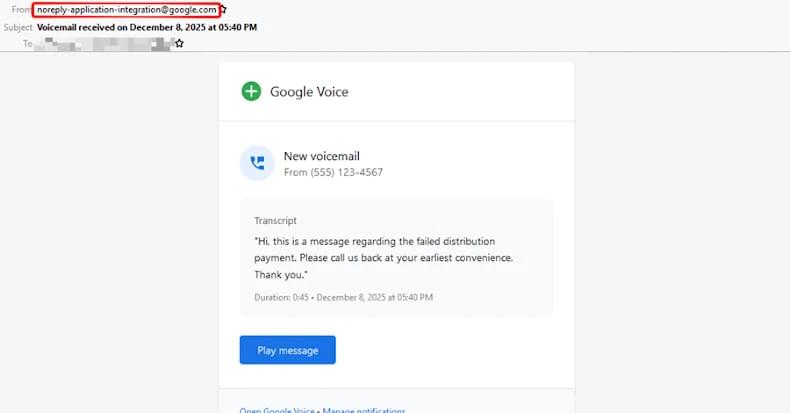
Cybercriminals Abuse Google Cloud Email Feature in Multi-Stage Phishing Campaign

In response to the findings, Google has blocked the phishing efforts that abuse the email notification feature within Google Cloud Application Integration, adding that it’s taking more steps to prevent further misuse.

Check Point’s analysis has revealed that the campaign has primarily targeted manufacturing, technology, financial, professional services, and retail sectors, although other industry verticals, including media, education, healthcare, energy, government, travel, and transportation, have been singled out.

“These sectors commonly rely on automated notifications, shared documents, and permission-based workflows, making Google-branded alerts especially convincing,” it added. “This campaign highlights how attackers can misuse legitimate cloud automation and workflow features to distribute phishing at scale without traditional spoofing.”

Glacier loss to accelerate, with up to 4,000 disappearing each year by 2050s

Thousands of glaciers will vanish each year in the coming decades, leaving only a fraction standing by the end of the century unless global warming is curbed, a study showed on Monday.

Government action on climate change could determine whether the world loses 2,000 or 4,000 glaciers annually by the middle of the century, according to the research.

A few degrees could be the difference between preserving almost half of the world’s glaciers in 2100—or fewer than 10%.

AI model uses social media posts to predict unemployment rates ahead of official data

Social media posts about unemployment can predict official jobless claims up to two weeks before government data is released, according to a study. Unemployment can be tough, and people often post about it online.

Researcher Sam Fraiberger and colleagues recently developed an artificial intelligence model that identifies unemployment disclosures on social media. The work is published in the journal PNAS Nexus.

Data from 31.5 million Twitter users posting between 2020 and 2022 was used to train a transformer-based classifier called JoblessBERT to detect unemployment-related posts, even those that featured slang or misspellings, such as “I needa job!” The authors used demographic adjustments to account for Twitter’s non-representative user base, then forecast US unemployment insurance claims at national, state, and city levels.

Technological Disruption: Strategic Inflection Points From 2026

By Chuck Brooks


Quantum Computing and the Dismantling of Cryptographic Foundations Quantum technology may be the most transformative long-term influence on the horizon. Although large-scale, fault-tolerant quantum computers may remain years from realization, their expected influence is already transforming cybersecurity strategies. As quantum technology advances, the risk of “harvest now, decrypt later” assaults suggests that today’s encrypted sensitive data could become vulnerable in the future.

From 2026 to 2030, enterprises will increasingly recognize that cryptographic agility is vital. The move to post-quantum cryptography standards means that old systems, especially those in critical infrastructure, financial services, and government networks, need to be fully inventoried, evaluated, and upgraded.

AI-based tool predicts future cardiovascular events in patients with angina

Reduced coronary blood flow, measured with an artificial intelligence-based imaging tool, predicted future cardiovascular events in patients with suspected stable coronary artery disease. These findings were presented at EACVI 2025, the congress of the European Association of Cardiovascular Imaging (EACVI).

Stable coronary artery disease (CAD) refers to the common syndrome of recurrent, transient episodes of chest symptoms, often manifesting as angina. Coronary computed tomography angiography (CCTA) is a noninvasive heart scan that is used as the first-line investigation for patients with suspected stable CAD.

AI tools and FFR-CT explained While CCTA clearly shows blockages in coronary arteries, it is limited in its ability to estimate reduced blood flow, which is necessary to diagnose angina. An artificial intelligence-based tool has been developed that analyzes CCTA images and provides an estimate of blood flow, termed CT-derived fractional flow reserve (FFR-CT).

Advancing Computers to Think Like Humans: Neuromorphic Meshing Explained

#neuromorphic #computing #futuretech


By Chuck Brooks, Skytop Contributor / December 3, 2025

Chuck Brooks serves as President and Consultant of Brooks Consulting International. Chuck also serves as an Adjunct Professor at Georgetown University in the Cyber Risk Management Program, where he teaches graduate courses on risk management, homeland security, and cybersecurity.

Chuck has received numerous global accolades for his work and promotion of cybersecurity. Recently, he was named the top cybersecurity expert to follow on social media, and also as one top cybersecurity leaders for 2024. He has also been named “Cybersecurity Person of the Year” by Cyber Express, Cybersecurity Marketer of the Year, and a “Top 5 Tech Person to Follow” by LinkedIn” where he has 120,000 followers on his profile.

As a thought leader, blogger, and event speaker, he has briefed the G20 on energy cybersecurity, The US Embassy to the Holy See, and the Vatican on global cybersecurity cooperation. He has served on two National Academy of Science Advisory groups, including one on digitalizing the USAF, and another on securing BioTech. He has also addressed USTRANSCOM on cybersecurity and serves on an industry/government Working group for DHS CISA focused on security space systems.

/* */