Hyundai’s worked with a company called Urban Air Port to create infrastructure for future eVTOL, and the UK government is on board.


The SpaceX Falcon 9 rocket successfully completed a mission to deploy 143 spacecraft and satellites into orbit on Sunday, after which the rocket returned safely to a sea-based landing pad.
The two-stage Falcon 9 rocket took flight on its ‘Transporter-1′ mission after weather considerations caused the planned launch on Saturday to be scrapped.
Falcon 9 carried 133 commercial and government spacecraft, and 10 ‘Starlink’ satellites — the most spacecraft ever deployed on a single mission, according to SpaceX.
Sunday’s mission was the fifth successful launch and landing for Falcon 9, the company said.
For more info, please go to http://www.globalnews.ca.
Like Global News on Facebook HERE: http://bit.ly/255GMJQ
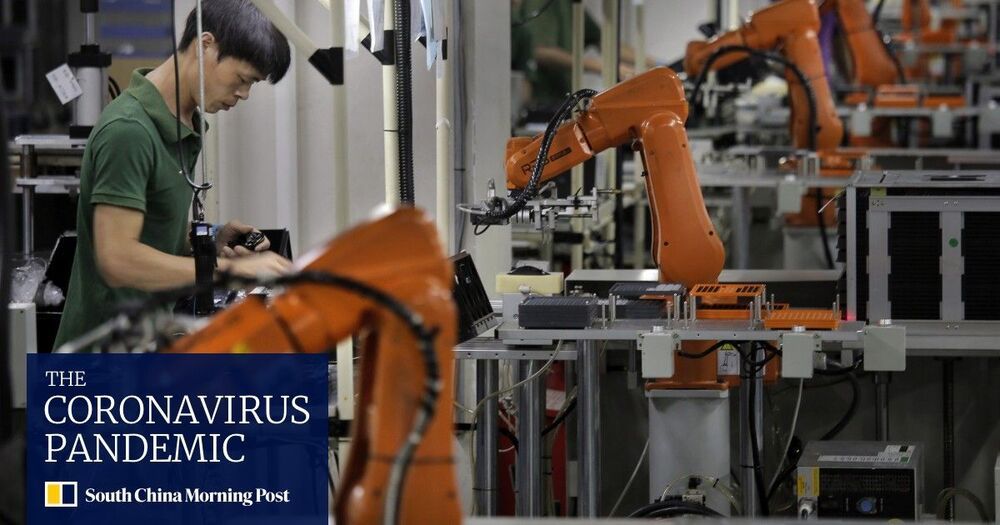
Government-backed incentives and funding are still the main engines driving Chinese manufacturers to replace humans with robots in industries including pharmaceuticals, medical devices, new infrastructure projects and food processing.
Trade war with US saw many companies relocate outside China, but orders came back last year as Chinese production rapidly rebounded from the coronavirus, and a robotics boom is expected in 2021.

Our internal systems showed no evidence of unauthorized access or compromise in any on-premises and production environments.
Our software remains safe to use, Kleczynski added.
After today’s disclosure, Malwarebytes becomes the fourth major security vendor targeted by the UNC2452/Dark Halo threat actor, which US officials have linked to a Russian government cyber-espionage operation.
This is the third installment in a three-part series. Read parts one and two.
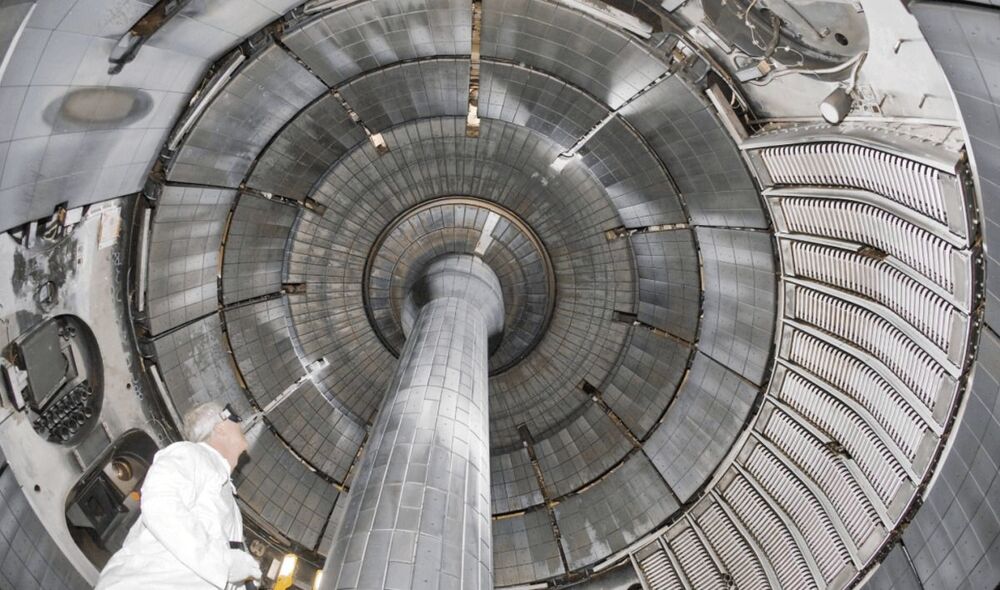
In the third and final part of our series, Fusion Industry Association director Andrew Holland tells Asia Times’ correspondent Jonathan Tennenbaum how the private sector is leap-frogging government programs in the race to develop commercial fusion power plants.
Andrew Holland: So now the private sector is coming in. You mentioned high-temperature superconductors. That’s an important new thing. There’s a whole range of new developments that come from outside of the fusion space that are now being applied.
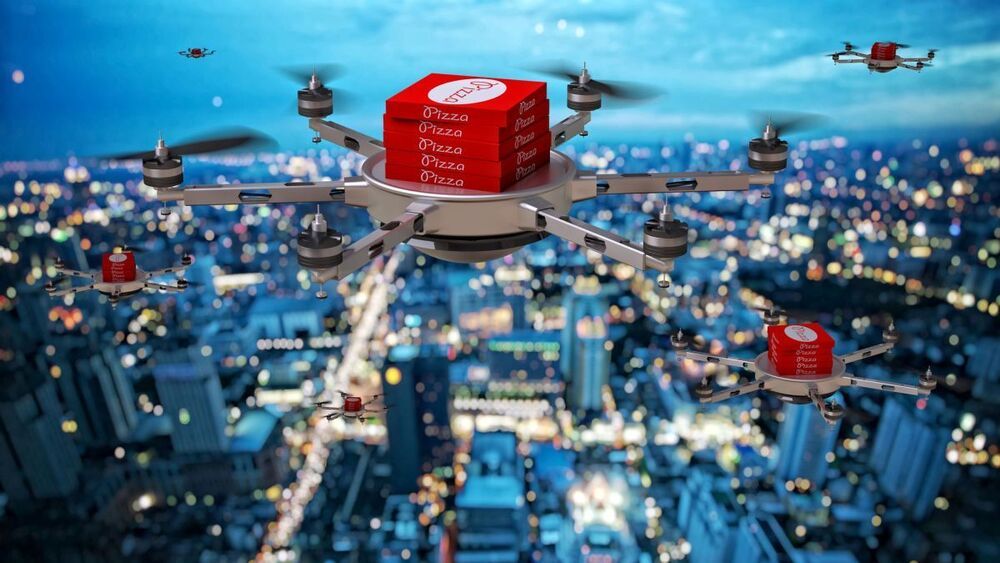
Since the dawn of time, humankind has looked to the skies and sought to conquer them. For thousands of years we tried and failed until, at last, we could soar amongst the birds. We built biplanes that danced upon gusts of wind, strapped sails to our back and leapt off fog-drenched mountaintops, launched warplanes into the wild blue yonder to rain terror from above. The heavens were soon streaked with the vapor trails of jumbo jets; the oligarchy used its deep pockets for casual jaunts to the threshold of outer space. And then, with the skies at last firmly in our dominion, we once again turned our eyes upward and declared, “Know what would look great up there? Pizza.”
The technology to flood our skies with millions of pizza boxes does not exist just yet, but it’s taken a huge leap forward in Israel, where, The Wall Street Journal reports, Pizza Hut is launching the world’s first ever full-time drone delivery service. The pilot program is being heavily regulated by the government, and Pizza Hut’s human delivery drivers don’t need to worry about being replaced (yet), as the drones will not be making direct-to-customer drop-offs. Instead, the flying robots will bring multiple orders to designated landing zones outside of Pizza Hut’s normal delivery radius, where they’ll be picked up by a driver who will take the pizzas to their final destinations.
The drones’ home base will be a Pizza Hut located in Bnei Dror in Northern Israel, and will allow the restaurant to provide delivery service to an additional 7000 households. The Ministry of Transportation has limited the drones’ flight area to about 50 square miles, and each drone’s limited battery life means there’s little chance of one going rogue.

A friend recently asked me “what do we mean by civilian space development”.Such a question made me understand that, maybe, we were not clear enough about the title of our congress, the Civilian Space Development. Following such understanding, I tried to draw a better rationale, aware that what we wrote was not that self-explanatory as we thought.
It was observed that NASA is a civilian agency, not a military one. And that the commercial space effort is civilian process, not a military one.

London, 15 January, 2021 — OneWeb, the Low Earth Orbit (LEO) satellite communications company jointly owned by the UK Government and Bharti Global, announced today that it has secured additional funding from SoftBank Group Corp. (“SoftBank”) and Hughes Network Systems LLC (“Hughes”), bringing OneWeb’s total funding to $1.4 billion. The capital raised to date positions the Company to be fully funded for its first-generation satellite fleet, totaling 648 satellites, by the end of 2022.
OneWeb’s mission is to deliver broadband connectivity worldwide to bridge the global Digital Divide by offering everyone, everywhere access including to the Internet of Things (IoT) future and a pathway to 5G. OneWeb’s LEO satellite system includes a network of global gateway stations and a range of user terminals for different customer markets capable of delivering affordable, fast, high-bandwidth and low-latency communications services. In December 2020, OneWeb launched 36 new satellites, built at its Airbus Joint Venture assembly plant in Florida, USA, bringing the Company’s total fleet to 110 satellites, all fully-functioning and benefitting from International Telecommunication Union spectrum priority.
Sunil Bharti Mittal, Executive Chairman of OneWeb, commented, “We are delighted to welcome the investment from SoftBank and Hughes. Both are deeply familiar with our business, share our vision for the future, and their commitment allows us to capitalise on the significant growth opportunity ahead for OneWeb. We gain from their experience and capabilities, as we deliver a unique LEO network for the world.”
Dr. Halima Benbouza is an Algerian scientist in the field of agronomic sciences and biological engineering.
She received her doctorate in 2004 from the University Agro BioTech Gembloux, Belgium studying Plant Breeding and Genetics and was offered a postdoctoral position to work on a collaborative project with the Agricultural Research Service, United States Department of Agriculture in Stoneville, Mississippi.
Subsequently, Dr. Benbouza was funded by Dow Agro Science to study Fusarium wilt resistance in cotton. In 2009 she was awarded the Special Prize Eric Daugimont et Dominique Van der Rest by the University Agro BioTech Gembloux, Belgium.
Dr. Benbouza is Professor at Batna 1 University where she teaches graduate and postgraduate students in the Institute of Veterinary Medicine and Agronomy. She also supervises Master’s and PhD students.
From 2010–2016, Dr. Benbouza served as inaugural Director of the Biotechnology Research Center (CRBt) in Constantine, appointed by the Ministry of Higher Education and Scientific Research. In 2011, she was appointed by the Algerian government as President of the Intersectoral Commission of Health and Life Sciences. Dr. Benbouza is a member of the Algerian National Council for Research Evaluation and a past member of the Sectorial Permanent Board of the Ministry of Higher Education and Scientific Research.
In 2013, Dr. Benbouza was appointed by the Prime Minister as President of the steering committee of Algeria’s Biotech Pharma project. In 2014 she was honored by the US Embassy in Algiers as one of the “Women in Science Hall of Fame” for her research achievements and her outstanding contribution to promote research activities and advance science in her country.