Toggle light / dark theme

Portable Sequencing Is Reshaping Genetics Research

Portable sequencing is making it possible for biologists to perform DNA analysis anywhere in the world. How is this technology reshaping the way they work?

Thanks to nanopore technology, scientists can now collect samples and sequence them anywhere. It is the concept of backpacking applied to scientific research.

French molecular biologist Anne-Lise Ducluzeau has experienced this first hand during her research in the freezing environment of Alaska. “I remember driving back home with my sequencing station on the passenger seat, it was −20ºF (−29ºC) but the car was warm and reads kept coming,” ‪relates Ducluzeau, who has been using a portable sequencer for her research for the past four years.

Scientists map the human proteome

Knowing which proteins are key to protection from disease, and the deficiencies in expression or activity that are hallmarks of disease, can inform individualized medicine and the development of new therapies.


Twenty years after the release of the human genome, the genetic “blueprint” of human life, an international research team, including the University of British Columbia’s Chris Overall, has now mapped the first draft sequence of the human proteome.

Their work was published Oct. 16 in Nature Communications and announced today by the Human Proteome Organization (HUPO).

“Today marks a in our overall understanding of human life,” says Overall, a professor in the faculty of dentistry and a member of the Centre for Blood Research at UBC. “Whereas the provides a complete ‘blueprint’ of , the human proteome identifies the individual building blocks of life encoded by this blueprint: proteins. ” Proteins interact to shape everything from life-threatening diseases to cellular structure in our bodies.”

Early Childhood Trauma Affects Metabolism in the Next Generation

Article. The research/article indicates that childhood trauma can not only impact the current generation, but future generations. Biochemical signals are sent to the germ cells, modifying the expression of some genes and/or the DNA structure.


Traumatic experiences can have a lasting impact, so children that suffer through them can feel their effects for a lifetime. Work has also shown that trauma can change the way genes are expressed, through epigenetics. Epigenetic changes do not alter the sequence of genes but they alter the biochemistry of DNA, and these changes are sometimes passed down to future generations through germ cells. Scientists have been working to learn more about how traumatic events get embedded in the genetic code of germ cells.

Image credit: Pkist

New research reported in The EMBO Journal has used a mouse model to suggest that childhood trauma can influence the composition of blood, and this is the conduit for passing the impact down to offspring.

[Burning Issue] CRISPR Technology and Associated Concerns

We ask students to login via google as we share a lot of our content over google drive. To access the same, a google account is a must.


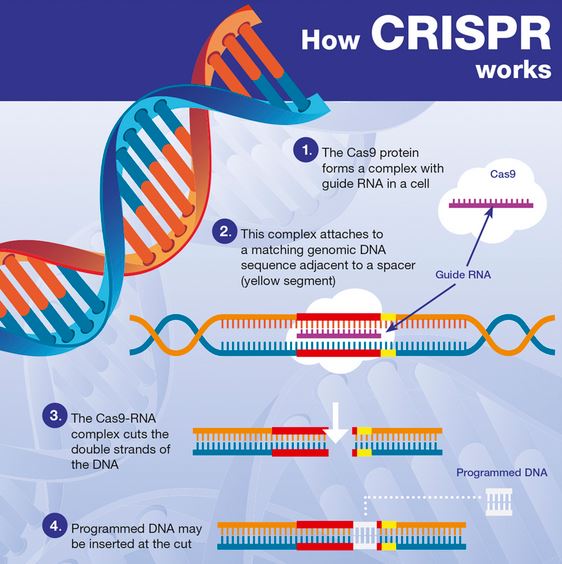
The CRISPR-Cas9 system has revolutionized genetic manipulations and made gene editing simpler, faster and easily accessible to most laboratories.

To its recognition, this year, the French-American duo Emmanuelle Charpentier and Jennifer Doudna have been awarded the prestigious Nobel Prize for chemistry for CRISPR.

High fructose intake may drive aggressive behaviors, ADHD, bipolar

The research, out today from the University of Colorado Anschutz Medical Campus and published in * Evolution and Human Behavior*, presents a hypothesis supporting a role for fructose, a component of sugar and high fructose corn syrup, and uric acid (a fructose metabolite), in increasing the risk for these behavioral disorders.

Johnson outlines research that shows a foraging response stimulates risk taking, impulsivity, novelty seeking, rapid decision making, and aggressiveness to aid the securing of food as a survival response. Overactivation of this process from excess sugar intake may cause impulsive behavior that could range from ADHD, to bipolar disorder or even aggression.” “Johnson notes, “We do not blame aggressive behavior on sugar, but rather note that it may be one contributor.”” “The identification of fructose as a risk factor does not negate the importance of genetic, familial, physical, emotional and environmental factors that shape mental health,” he adds.


Huh, want to know more.

“New research suggests that conditions such as attention deficit hyperactivity syndrome (ADHD), bipolar disorder, and even aggressive behaviors may be linked with sugar intake, and that it may have an evolutionary basis.

The research, out today from the University of Colorado Anschutz Medical Campus and published in Evolution and Human Behavior, presents a hypothesis supporting a role for fructose, a component of sugar and high fructose corn syrup, and uric acid (a fructose metabolite), in increasing the risk for these behavioral disorders.

“We present evidence that fructose, by lowering energy in cells, triggers a foraging response similar to what occurs in starvation,” said lead author Richard Johnson, MD, professor at the University of Colorado School of Medicine on the CU Anschutz Medical Campus.

Artificial Intelligence Used to ‘Redefine’ Alzheimer’s Disease

Summary: New artificial intelligence technology will analyze clinical data, brain images, and genetic information from Alzheimer’s patients to look for new biomarkers associated with the neurodegenerative disease.

Source: University of Pennsylvania

As the search for successful Alzheimer’s disease drugs remains elusive, experts believe that identifying biomarkers — early biological signs of the disease — could be key to solving the treatment conundrum. However, the rapid collection of data from tens of thousands of Alzheimer’s patients far exceeds the scientific community’s ability to make sense of it.

Scientists Found a New Way to Control the Brain With Light—No Surgery Required

Controlling brains with light.


Thanks to optogenetics, in just ten years we’ve been able to artificially incept memories in mice, decipher brain signals that lead to pain, untangle the neural code for addiction, reverse depression, restore rudimentary sight in blinded mice, and overwrite terrible memories with happy ones. Optogenetics is akin to a universal programming language for the brain.

But it’s got two serious downfalls: it requires gene therapy, and it needs brain surgery to implant optical fibers into the brain.

This week, the original mind behind optogenetics is back with an update that cuts the cord. Dr. Karl Deisseroth’s team at Stanford University, in collaboration with the University of Minnesota, unveiled an upgraded version of optogenetics that controls behavior without the need for surgery. Rather, the system shines light through the skulls of mice, and it penetrates deep into the brain. With light pulses, the team was able to change how likely a mouse was to have seizures, or reprogram its brain so it preferred social company.

Alphabet’s New Moonshot Is to Transform How We Grow Food

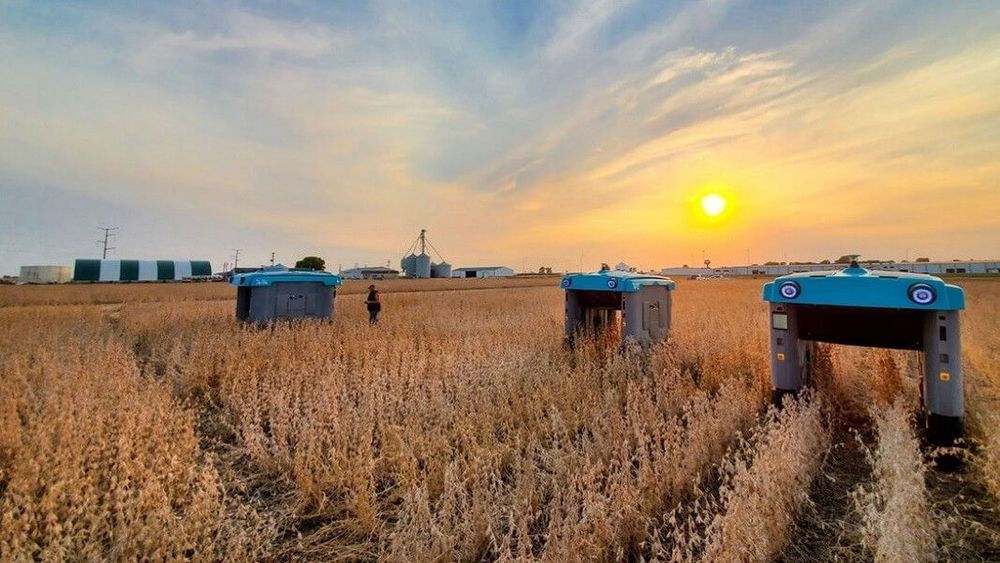
Mineral’s plant buggy looks like a platform on wheels, topped with solar panels and stuffed with cameras, sensors, and software.


But maybe there’s a better way—and Mineral wants to find it.

Like many things nowadays, the key to building something better is data. Genetic data, weather pattern data, soil composition and erosion data, satellite data… The list goes on. As part of the massive data-gathering that will need to be done, X introduced what it’s calling a “plant buggy” (if the term makes you picture a sort of baby stroller for plants, you’re not alone…).

It is in fact not a stroller, though. It looks more like a platform on wheels, topped with solar panels and stuffed with cameras, sensors, and software. It comes in different sizes and shapes so that it can be used on multiple types of crops (inspecting tall, thin stalks of corn, for example, requires a different setup than short, bushy soybean plants). The buggy will collect info about plants’ height, leaf area, and fruit size, then consider it alongside soil, weather, and other data.

New Technology Accelerates Crop Improvement with CRISPR

Researchers know how to make precise genetic changes within the genomes of crops, but the transformed cells often refuse to grow into plants. One team has devised a new solution.


Scientists who want to improve crops face a dilemma: it can be difficult to grow plants from cells after you’ve tweaked their genomes.

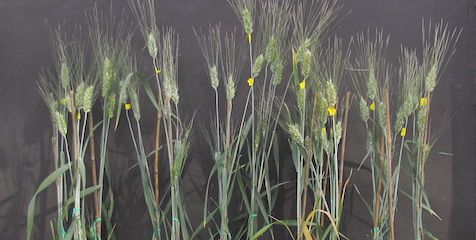
A new tool helps ease this process by coaxing the transformed cells, including those modified with the gene-editing system CRISPR-Cas9, to regenerate new plants. Howard Hughes Medical Institute Research Specialist Juan M. Debernardi and Investigator Jorge Dubcovsky, together with David Tricoli at the University of California, Davis Plant Transformation Facility, Javier Palatnik from Argentina, and colleagues at the John Innes Centre, collaborated on the work. The team reports the technology, developed in wheat and tested in other crops, October 12, 2020, in the journal Nature Biotechnology.

“The problem is that transforming a plant is still an art,” Dubcovsky says. The success rate is often low – depending on the crop being modified, 100 attempts may yield only a handful of green shoots that can turn into full-grown plants. The rest fail to produce new plants and die. Now, however, “we have reduced this barrier,” says Dubcovsky, a plant geneticist at UC Davis. Using two genes that already control development in many plants, his team dramatically increased the formation of shoots in modified wheat, rice, citrus, and other crops.

/* */