A new study published in February found that those who ate yogurt more than twice a week had a lower rate of colon cancer than those who ate it less frequently.


The process of separating useful molecules from mixtures of other substances accounts for 15% of the nation’s energy, emits 100 million tons of carbon dioxide and costs $4 billion annually.
Commercial manufacturers produce columns of porous materials to separate potential new drugs developed by the pharmaceutical industry, for example, and also for energy and chemical production, environmental science and making foods and beverages.
But in a new study, researchers at Case Western Reserve University have found these manufactured separation materials don’t function as intended because the pores are so packed with polymer they become blocked. That means the separations are inefficient and unnecessarily expensive.
A cafe in Finland has created an AI-coffee blend. From bean selection to packaging design, watch this report to see how the future of coffee is brewing.
#techitout #technology #tech.
About Channel:
WION The World is One News examines global issues with in-depth analysis. We provide much more than the news of the day. Our aim is to empower people to explore their world. With our Global headquarters in New Delhi, we bring you news on the hour, by the hour. We deliver information that is not biased. We are journalists who are neutral to the core and non-partisan when it comes to world politics. People are tired of biased reportage and we stand for a globalized united world. So for us, the World is truly One.
Please keep discussions on this channel clean and respectful and refrain from using racist or sexist slurs and personal insults.
Check out our website: http://www.wionews.com.
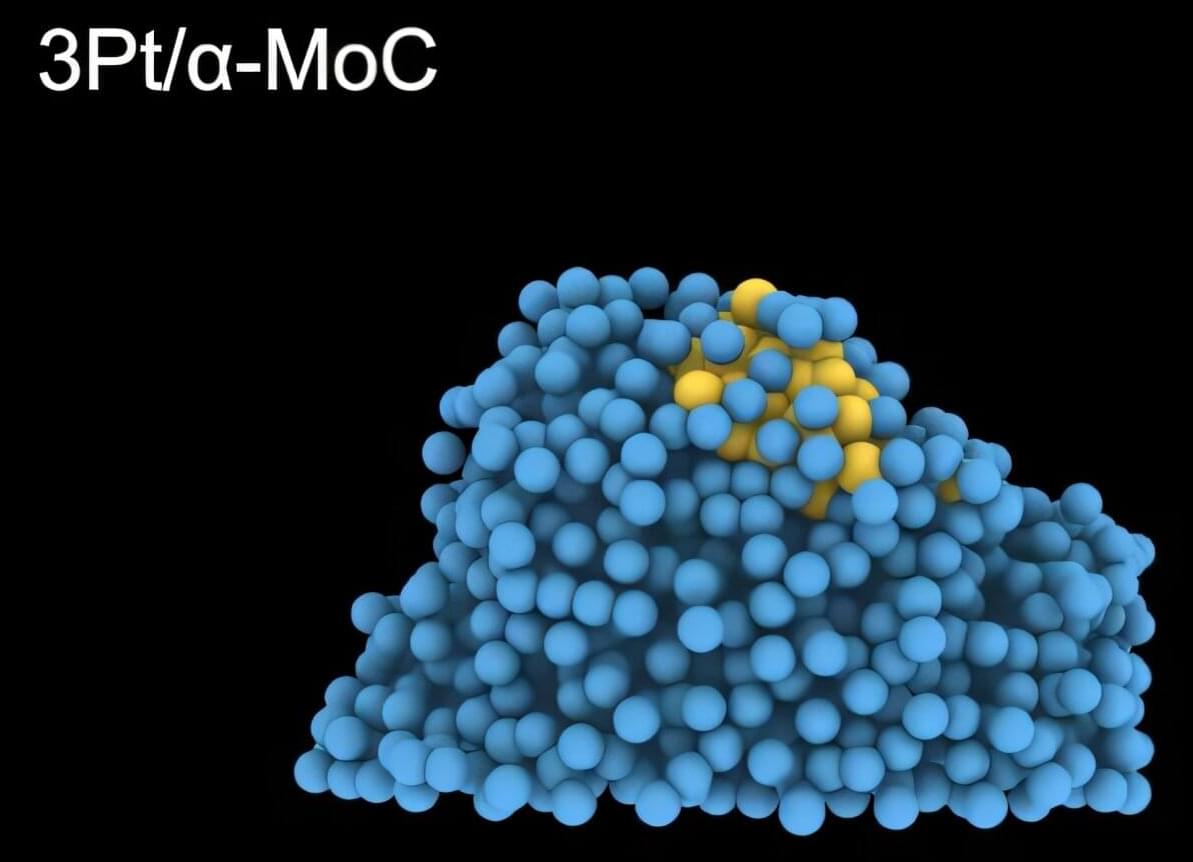
A new way of creating hydrogen, which eliminates direct CO2 emissions at source, has been developed by an international team of scientists.
The process reacts hydrogen-rich and sustainably sourced bioethanol taken from agricultural waste with water at just 270°C using a new bimetallic catalyst. Unlike traditional methods, which operate between 400°C and 600°C, are energy-intensive and generate large amounts of CO2, the catalyst shifts the chemical reaction to create hydrogen without releasing carbon dioxide as a byproduct.
Instead, the process co-produces high-value acetic acid, an organic liquid used in food preservation, household cleaning products, manufacturing and medicine, and has an annual global consumption exceeding 15 million tons.
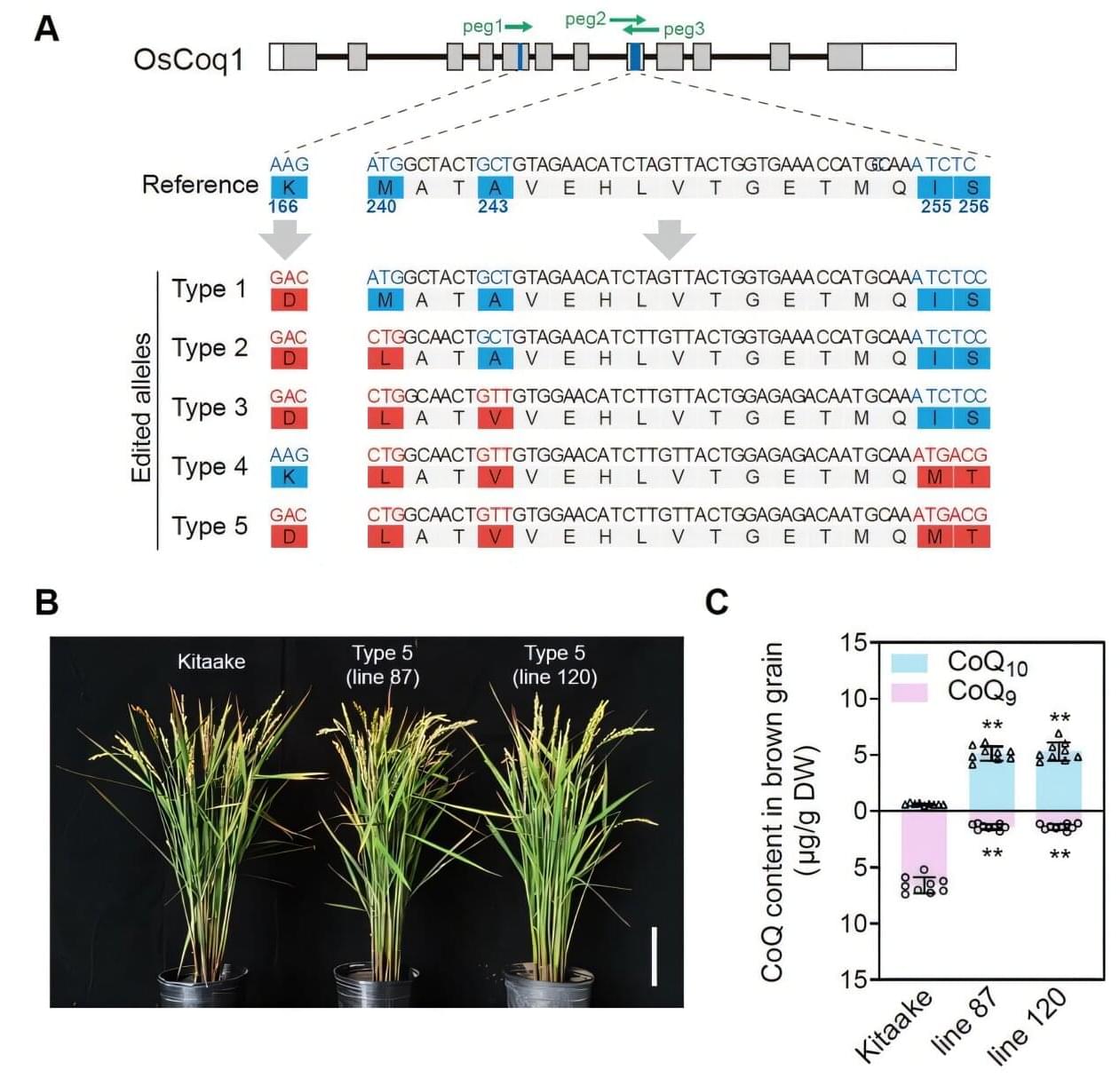
A team of Chinese scientists has used targeted gene editing to develop rice that produces coenzyme Q10 (CoQ10), a vital compound for human health.
Led by Prof. Chen Xiaoya from the CAS Center for Excellence in Molecular Plant Sciences/Shanghai Chenshan Research Center and Prof. Gao Caixia from the Institute of Genetics and Developmental Biology of the Chinese Academy of Sciences (CAS), the researchers used targeted gene editing to modify just five amino acids of the Coq1 rice enzyme, creating new rice varieties capable of synthesizing CoQ10.
The study is published in Cell.

A team of mathematicians and statisticians from the University of Wisconsin-La Crosse, the University of Tennessee and Valparaiso University, all in the U.S., has found new evidence that wolves had ample time to self-domesticate and evolve into modern dogs. In their study published in the journal Proceedings of the Royal Society B, the group developed a computer simulation showing the evolution process.
Prior research has suggested that the process of self-domesticating and then slowly evolving into modern dogs would have taken too long. Additionally, researchers believe that humans and dogs have been living in close proximity for approximately 30,000 years and that for the past 15,000 years, humans have been breeding them to perform certain tasks. But what happened in the first 15,000 years is less clear.
Some have suggested that humans may have begun encouraging the friendliest wolves to hang around by adopting their puppies, finding their presence advantageous. Others have suggested that wolves moved ever closer to groups of humans for access to leftover food. But this evolution, others have noted, would take more than 15,000 years to reach the point where humans began breeding them.
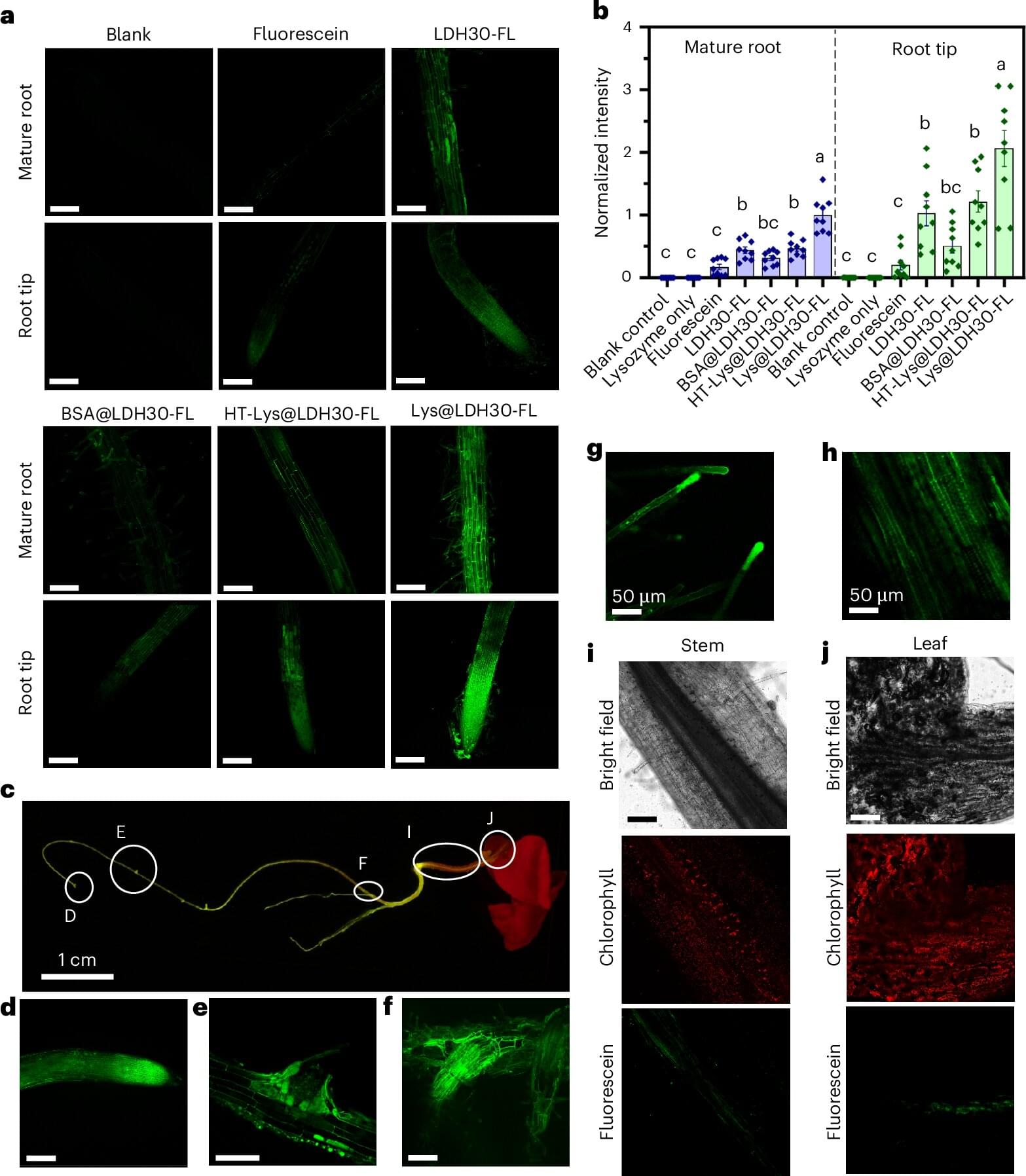
University of Queensland researchers have for the first time introduced genetic material into plants via their roots, opening a potential pathway for rapid crop improvement. The research is published in Nature Plants.
Professor Bernard Carroll from UQ’s School of Chemistry and Molecular Biosciences said nanoparticle technology could help fine-tune plant genes to increase crop yield and improve food quality.
“Traditional plant breeding and genetic modification take many generations to produce a new crop variety, which is time-consuming and expensive,” Professor Carroll said.
Many foods are marketed for their antioxidant benefits, which help neutralize reactive oxygen species.
A species is a group of living organisms that share a set of common characteristics and are able to breed and produce fertile offspring. The concept of a species is important in biology as it is used to classify and organize the diversity of life. There are different ways to define a species, but the most widely accepted one is the biological species concept, which defines a species as a group of organisms that can interbreed and produce viable offspring in nature. This definition is widely used in evolutionary biology and ecology to identify and classify living organisms.
A comprehensive video explaining quantum gravity.
HD 20,794D, An Earth like planet orbits a sun like star just 20 light years away. Watch and learn more.
GoldBacks from Galactic/Green Greg’s affiliate link:
https://www.defythegrid.com/goldbacks… coupon code GreenGregs for 1% off Outstanding Antioxidant for Your Health: https://shopc60.com/ Use discount code: GreenGregs10 for 10% off Inspire your kids to love science! SAVE 20% OFF New Science Kits Using Code: NEWKITSSAVE20 https://www.pntra.com/t/SENKTExNSUhDR… For gardening in your Lunar or Mars habitat GalacticGregs has teamed up with True Leaf Market http://www.pntrac.com/t/TUJGRklGSkJGT… Awesome deals for long term food supplies for those long missions to deep space (or prepping in case your spaceship crashes: See the Special Deals at My Patriot Supply: www.PrepWithGreg.com For that off-grid asteroid homestead stock up with Lemans before you blast off: https://www.pntrs.com/t/SENJR0ZOSk9DR…

A study in mice by Northwestern Medicine researchers has now identified a critical difference in how immune system macrophages help repair the heart in newborns versus adults after a heart attack. They found that in newborns, macrophages perform a process called efferocytosis, which recognizes and eats dying cells. This process triggers the production of a bioactive lipid called thromboxane, signaling nearby heart muscle cells to divide, and allowing the heart to regenerate damaged heart muscle. In contrast, efferocytosis by adult macrophages ultimately culminates in fibrotic scarring.
The study highlights a fundamental difference in how the immune system drives healing based on age and could point to strategies for improving tissue repair after heart attack in adults.
“Understanding why newborns can regenerate their hearts while adults cannot will open the door to developing treatments that could ‘reprogram’ adult macrophages,” said first and co-corresponding author Connor Lantz, PhD, lead scientist of the bioinformatics core at the Comprehensive Transplant Center at Northwestern University Feinberg School of Medicine.