Toggle light / dark theme

Startups apply artificial intelligence to supply chain disruptions

A growing group of startups and established logistics firms have created a multi-billion-dollar industry applying artificial intelligence and other cutting-edge… See more.


LONDON, May 3 (Reuters) — Over the last two years a series of unexpected events has scrambled global supply chains. Coronavirus, war in Ukraine, Brexit and a container ship wedged in the Suez Canal have combined to delay deliveries of everything from bicycles to pet food.

In response, a growing group of startups and established logistics firms has created a multi-billion dollar industry applying the latest technology to help businesses minimize the disruption.

Interos Inc, Fero Labs, KlearNow Corp and others are using artificial intelligence and other cutting-edge tools so manufacturers and their customers can react more swiftly to supplier snarl-ups, monitor raw material availability and get through the bureaucratic thicket of cross-border trade.
Methionine Restriction Extends Lifespan-What’s Optimal For Protein Intake? n=1 Analysis

Join us on Patreon!
https://www.patreon.com/MichaelLustgartenPhD

Papers referenced in the video:
Life-Span Extension in Mice by Preweaning Food Restriction and by Methionine Restriction in Middle Age.
https://pubmed.ncbi.nlm.nih.gov/19414512/

Low methionine ingestion by rats extends life span.
https://pubmed.ncbi.nlm.nih.gov/8429371/

Fasting glucose level and all-cause or cause-specific mortality in Korean adults: a nationwide cohort study.
https://pubmed.ncbi.nlm.nih.gov/32623847/

Total plasma homocysteine and cardiovascular risk profile. The Hordaland Homocysteine Study.
https://pubmed.ncbi.nlm.nih.gov/7474221/

Predicting Age by Mining Electronic Medical Records with Deep Learning Characterizes Differences between Chronological and Physiological Age.

Humans Disrupting 66 Million-Year-Old Fundamental Feature of Ecosystems — “This Hasn’t Happened Before”

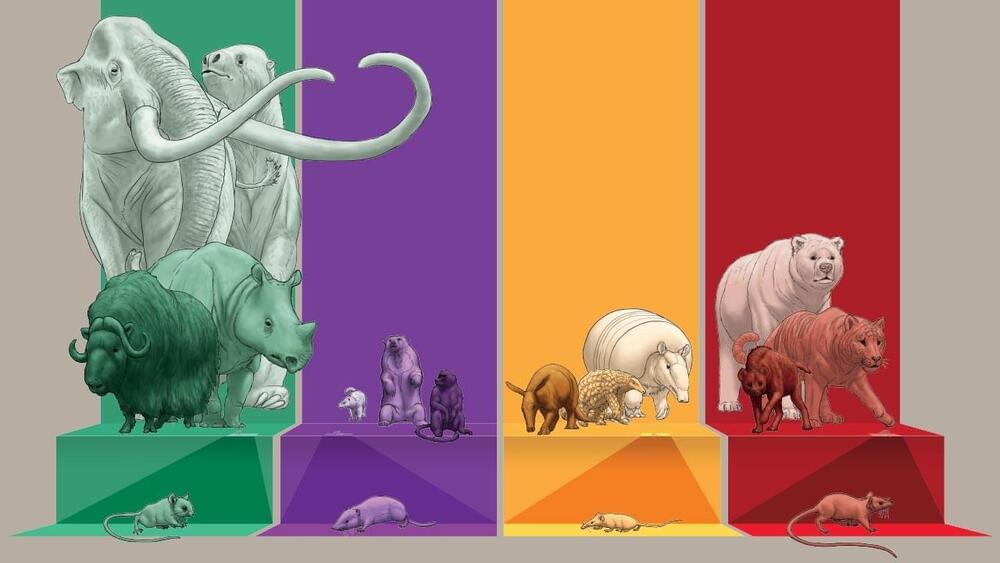
According to a new study, the U-shaped association between diet and size in modern land mammals could also stand for “universal,” as the relationship covers at least 66 million years and a range of vertebrate animal groups.

It’s been several decades since ecologists realized that graphing the diet-size relationship of terrestrial mammals yields a U-shaped curve when aligning those mammals on a plant-to-protein gradient. As illustrated by that curve, the plant-eating herbivores on the far left and meat-eating carnivores on the far right tend to grow much larger than those of the all-consuming omnivores and the invertebrate-feasting invertivores in the middle.

/* */