Toggle light / dark theme

Sean Carroll on Quantum Spacetime

Interview with Prof. Sean Carroll, Research Professor of Physics at Caltech and an External Professor at the Santa Fe Institute. We mainly talk about quantum spacetime: the idea that our familiar spacetime might be actually emergent from some complex quantum mechanical system. We cover entanglement, decoherence, entropic gravity, the AdS/CFT correspondence, string theory, black holes, along with several philosophical questions concerning these topics, including reduction and emergence, substantivalism vs. relationalism, monism, and much more.

Sean’s website: https://www.preposterousuniverse.com/
His recent book concerning these topics: https://www.preposterousuniverse.com/somethingdeeplyhidden/
His papers on these topics can be found here: https://www.preposterousuniverse.com/research/annotated-publications/
His podcast: https://www.preposterousuniverse.com/podcast/
And his Twitter: https://twitter.com/seanmcarroll/

The enigmatic black behemoths that govern our galaxy

Scientists try to unravel the birth, growth and power of black holes, some of the most forceful yet difficult-to-detect objects in our universe.

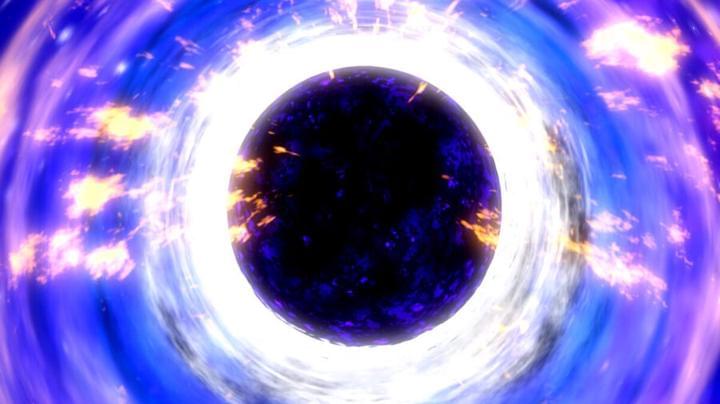
It was only last year that astronomers were finally able to unveil the first pictures of the supermassive black hole at the center of our Milky Way galaxy. But you couldn’t actually see the black hole itself, not directly. That’s because it is so dense that its gravitational pull prevents even light from escaping.

But the image of Sagittarius A, as our galaxy’s black hole is known, revealed a glowing halo of gas around the object—an object that we now know has a million times more mass than our sun.

Scientists discovered evidence of magnetic fields in the universe’s cosmic web

The cosmic web is the term used to refer to the clusters, filaments, and voids that make up the large-scale structure of the Universe. In Λ cold dark matter (ΛCDM) cosmology, this web is formed from the anisotropic gravitational collapse of matter from primordial overdensities.

We’ve been able to map the Cosmic Web through observation over the past few decades, which opens up the possibility of finding answers to some of astronomy’s most pressing issues. An area of particular interest is how magnetic fields behave on a cosmic scale and their role in galactic and cosmic structure formation.

ICRAR scientists discover tantalizing evidence of magnetic fields in the universe’s most significant cosmic structures.

Closest Known Black Hole to Earth Identified Using ESA’s Gaia Astrometry Mission

Using data from ESA’s Gaia astrometry mission, astronomers have identified the closest known black hole.

A black hole is a place in space where the gravitational field is so strong that not even light can escape it. Astronomers classify black holes into three categories by size: miniature, stellar, and supermassive black holes. Miniature black holes could have a mass smaller than our Sun and supermassive black holes could have a mass equivalent to billions of our Sun.

/* */