Toggle light / dark theme

Boson particles discovery provides insights for quantum computing

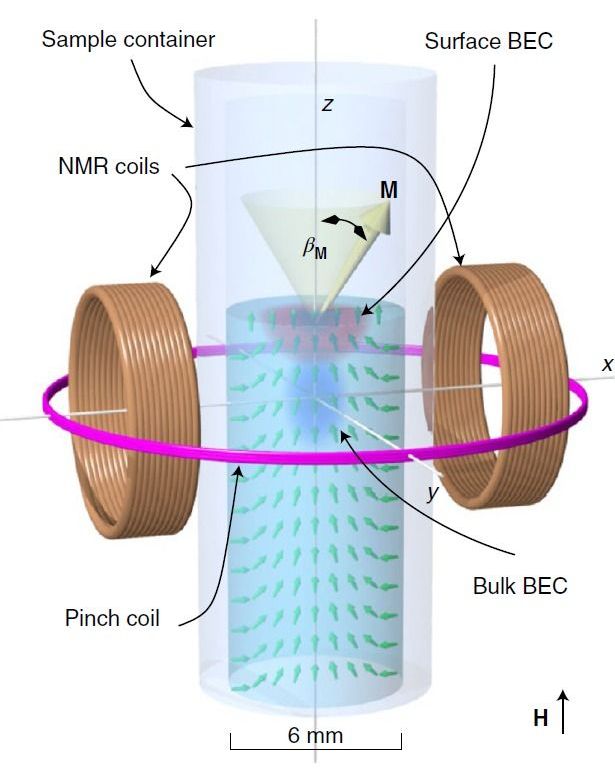
Scientists found that a class of particles known as bosons can behave as an opposite class of particles called fermions, when forced into a line.

The research, conducted at Penn State University and funded in part by the Army Research Office, an element of U.S. Army Combat Capabilities Development Command’s Army Research Laboratory, found that when the internal interactions among bosons in a one-dimensional gas are very strong, their velocity distribution transforms into that of a gas of non-interacting fermions when they expand in one dimension. The research is published in the journal Science.

“The performance of atomic clocks, quantum computers and quantum systems rely upon the proper curation of the properties of the chosen system,” said Dr. Paul Baker, program manager, atomic and molecular physics at ARO. “This research effort demonstrates that the system statistics can be altered by properly constraining the dimensions of the system. In addition to furthering our understanding of foundational principles, this discovery could provide a method for dynamically switching a system from bosonic to fermionic to best meet the military need.”

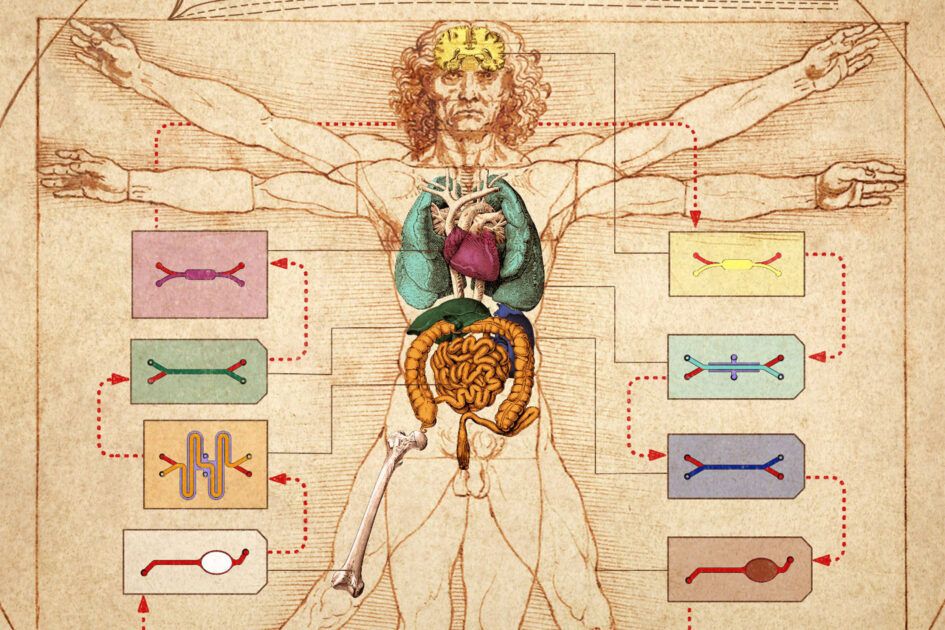
Israel, US researchers create ‘mini Human-on-a-Chip’ to speed up drug testing

Two new studies by researchers in Tel Aviv University and Harvard University on the subject were published in the journal Nature Biomedical Engineering on Monday.

Organs-on-a-chip were first developed in 2010 at Harvard University. Then, scientists took cells from a specific human organ — heart, brain, kidney and lung — and used tissue engineering techniques to put them in a plastic cartridge, or the so called chip. Despite the use of the term chip, which often refers to microchips, no computer parts are involved here.

Get The Start-Up Israel’s Daily Start-Up by email and never miss our top stories Free Sign Up.

Legendary Physicist Stephen Wolfram Is Modeling Our Universe, and He Needs Your Help

Between the summer of 1665 and the spring of 1667, Isaac Newton developed his theories on calculus, optics, and the laws of motion and gravity. He was quarantining during the Bubonic Plague and found the extra time on his hands gave him the freedom to pursue intellectual endeavors his day-to-day duties may have otherwise squandered.

Nearly 400 years later, history could be repeating itself.

With decades of work at the intersection of time, space, and elementary particles under his belt, Stephen Wolfram believes he’s close to discovering how the universe works—or, at least, the fundamental law of physics that makes all of our other laws of physics tick. So the 60-year-old computer scientist, businessman, and physicist has launched “The Wolfram Physics Project” to crowdsource that work with some of the best minds in the world.

Google will add Zoom-like gallery view to Meet and will let Meet users take calls from Gmail

Google plans to add a Zoom-like gallery view to its business- and education-focused Meet videoconferencing service and let users start calls and join meetings right from Gmail, Google’s GM and VP of G Suite Javier Soltero told Reuters in an interview. The additions come amid huge growth for Meet as families, students, and workers use the service while at home due to the COVID-19 pandemic.

The upcoming gallery view will let users display up to 16 meeting participants in one frame, according to Reuters. That functionality is coming later this month, said Soltero. Zoom’s gallery view, by contrast, lets you see the thumbnails of up to 49 people in one screen, if you have a powerful enough CPU to display them all.

Nanosize Tin ‘Bubbles’ Could Provide Low-Cost Way to Generate EUV Light

Scientists at Tokyo Institute of Technology (Tokyo Tech) have generated low-cost extreme ultraviolet (EUV) light by creating tin thin-film spheres using a polymer electrolyte “soap bubble” as a template and irradiating it with a laser.

#EUV #photonics


The team from Tokyo Tech, working with colleagues from University College Dublin, set out to find efficient, scalable, low-cost laser targets that could be used to generate EUV. The scientists created a tin-coated microcapsule or “bubble” — a low-density structure weighing as little as 4.2 nanograms and with a high level of controllability. For the bubble, they used polymer electrolytes, which are a dissolution of salts in a polymer matrix. The salts act as surfactants to stabilize the bubble.

The scientists coated the bubble with tin nanoparticles. “We produced polyelectrolyte microcapsules composed of poly(sodium 4-styrene-sulfonate) and poly(allylamine hydrochloride) and then coated them in a tin oxide nanoparticle solution,” professor Keiji Nagai said.

To test the bubble, the scientists irradiated it using a neodymium-YAG laser. This resulted in the generation of EUV light within the 13.5-nm range. The team further found that the structure was compatible with the conventional EUV light sources that are used to manufacture semiconductor chips.

Physicists close in on a simpler route to quantum degenerate molecules

Cooling atoms to ultracold temperatures is a routine task in atomic physics labs, but molecules are a trickier proposition. Researchers in the US have now used a widely-applicable combination of methods to make molecules colder than ever before – a feat that could pave the way for applications in areas as diverse as high-temperature superconductivity and quantum computing.

In everyday life, we do not see the bizarre effects of quantum mechanics because the quantum states of the particles around us are constantly collapsing, or decohering, as they interact. At temperatures near absolute zero, however, some identical particles will simultaneously occupy the lowest energy quantum state available. This phenomenon is known as quantum degeneracy, and it was experimentally demonstrated in 1995, when groups led by Eric Cornell and Carl Wieman (then at the University of Colorado, Boulder) and Wolfgang Ketterle of the Massachusetts Institute of Technology (MIT) created the first Bose-Einstein condensates (BECs) with rubidium and sodium atoms, respectively.

Other groups have subsequently made condensates using other atomic species, and various techniques have been developed to cool atoms to quantum degeneracy. In one of the simplest methods, a sample of atoms is confined in a magnetic or optical trap. Hotter atoms with more kinetic energy are more readily able to escape, or evaporate, from this trap, so the remaining atoms become cooler. In another method, known as sympathetic cooling, one type of atom is cooled directly and allowed to thermalize with atoms of another type, thereby cooling them by extracting their kinetic energy.

Hybrid integrated quantum photonic circuits

Recent developments in chip-based photonic quantum circuits have radically impacted quantum information processing. However, it is challenging for monolithic photonic platforms to meet the stringent demands of most quantum applications. Hybrid platforms combining different photonic technologies in a single functional unit have great potential to overcome the limitations of monolithic photonic circuits. Our Review summarizes the progress of hybrid quantum photonics integration, discusses important design considerations, including optical connectivity and operation conditions, and highlights several successful realizations of key physical resources for building a quantum teleporter. We conclude by discussing the roadmap for realizing future advanced large-scale hybrid devices, beyond the solid-state platform, which hold great potential for quantum information applications.

When Bats and Humans Were One and the Same

We are cousins of bats lol.


Dr David Haussler, Howard Hughes Medical Institute investigator working at University of California, Santa Cruz, co-authors report on computer analysis designed to reconstruct genome of 80-million-year-old mammal; holds that program has 98.5 percent accuracy rate and over next four years will formulate entire genome of ancestral mammal from total of 37 current mammalian species, including humans; research is published in journal Genome Research; graph (M)

/* */