Anthropic, founded in 2021 by a team that departed OpenAI over differences in vision, closed a $3.5 billion fundraise earlier this year. That valued the company at $61.4 billion.

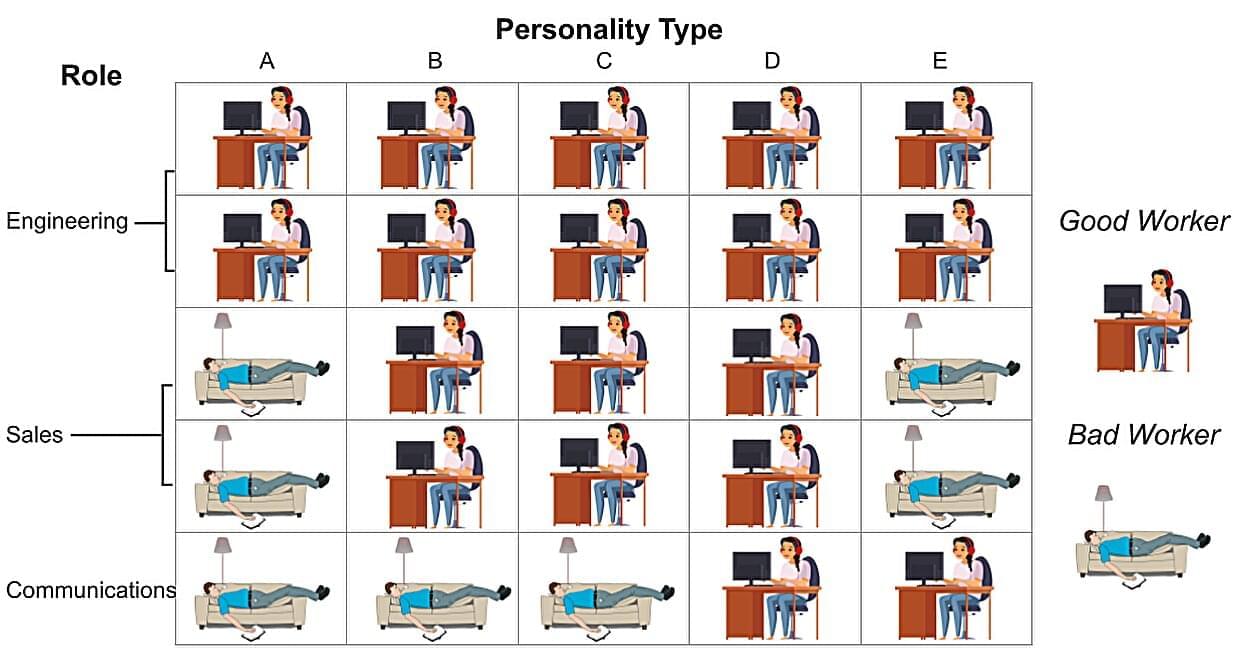
As artificial intelligence takes off, how do we efficiently integrate it into our lives and our work? Bridging the gap between promise and practice, Jann Spiess, an associate professor of operations, information, and technology at Stanford Graduate School of Business, is exploring how algorithms can be designed to most effectively support—rather than replace—human decision-makers.
This research, published on the arXiv preprint server, is particularly pertinent as prediction machines are integrated into real-world applications. Mounting empirical evidence suggests that high-stakes decisions made with AI assistance are often no better than those made without it.
From credit reports, where an overreliance on AI may lead to misinterpretation of risk scores, to social media, where models may depend on certain words to flag toxicity, leading to misclassifications—successful implementation lags behind the technology’s remarkable capabilities.


Neuralink did not immediately return requests for comment outside regular business hours.
Semafor’s report corroborates earlier reporting from Bloomberg, which noted in April that the startup was looking to raise $500 million at an $8.5 billion pre-money valuation.
Neuralink last year received “breakthrough device” clearance from the U.S. FDA. Three people have so far received implants made by Neuralink. Earlier this month, a nonverbal patient posted a video about how he uses a Neuralink implant to edit and narrate YouTube videos with just his brain signals.
Notably in April, Sierra Space announced the completion of successful hypervelocity impact trials conducted at NASA’s White Sands Test Facility in Las Cruces, New Mexico, to optimize the structural integrity of Sierra Space’s LIFE habitat space station technology. This included the use of NASA’s .50 caliber two-stage light gas gun to replicate micrometeoroid and orbital debris (MMOD) impacts to LIFE’s outer shield, to prepare the space station of use in orbit.
About Sierra Space.
Sierra Space is a leading commercial space company and emerging defense tech prime that is building an end-to-end business and technology platform in space to benefit and protect life on Earth. With more than 30 years and 500 missions of space flight heritage, the company is reinventing both space transportation with Dream Chaser®, the world’s only commercial spaceplane, and the future of space destinations with the company’s expandable space station technology. Using commercial business models, the company is also delivering orbital services to commercial, DoD and national security organizations, expanding production capacity to meet the needs of constellation programs. In addition, Sierra Space builds a host of systems and subsystems across solar power, mechanics and motion control, environmental control, life support, propulsion and thermal control, offering myriad space-as-a-service solutions for the new space economy.

Agentic architecture is the foundation of the current evolution of AI. It’s an AI system development approach that emphasizes autonomy, self-direction and self-improvement. This architecture supports multi-agent collaboration, integration with key enterprise systems and self-learning ecosystems. Instead of being programmed for specific tasks, AI agents in an agentic architecture continually evolve, shifting from task-based automation to proactive, AI-driven decision making.
Why Business And Technology Leaders Should Care
The shift to agentic AI represents a strategic transition from viewing AI as a tool to recognizing it as a strategic partner. This fundamentally alters how companies function and will redefine the roles of business and technology leaders and their interactions with AI moving forward.

Make sure to watch this next video about Type 1 to Type 4 Civilizations: https://youtu.be/5fTNGvuPTMU.
💡 Future Business Tech explores AI, emerging technologies, and future technologies.
SUBSCRIBE: https://bit.ly/3geLDGO
This video explores the Kardashev scale and the type 1 to type 7 civilizations. Related terms: ai, future business tech, future technology, future tech, future business technologies, future technologies, artificial intelligence, kardashev scale, type 7 civilization, type 6 civilization, type 5 civilization, type 4 civilization, type 3 civilization, type 2 civilization, type 1 civilization, etc.
ℹ️ Some links are affiliate links. They cost you nothing extra but help support the channel so I can create more videos like this.
#technology #ai

Their search for Earth’s lost spices just crash-landed them into a world of trouble! 💥 When the six-member crew of the Serrano wrecks their ship; Kent, C-LA, Ada, Eloy, Mod and Nexus must race against time and some mysterious planet inhabitants to escape before they become the main course.
What’s next for Spice Frontier?
Steamroller Animation is an independent studio that has thrived in a competitive industry for more than a decade. While we’ve built a successful business providing high-quality animation services, our budget for original content is limited.
Spice Frontier: Escape from Veltegar marks our first pilot-length episode, created with a new real-time pipeline in Unreal Engine. Over the past 3.5 years, we’ve invested our profits into developing this technological framework that will support a future range of incredible stories.
Spice Frontier is our industry calling card, and we’re seeking investment, co-production partners, broadcasters, and distributors to bring future episodes to life.
Support independent filmmaking so we can share more Spice Frontier with the world!