
Toggle light / dark theme

Whale experts launch free, virtual marine biology camp to entertain and inform kids

The scientists running Seattle-based Oceans Initiative more typically apply their marine mammal expertise to research on endangered orcas or conservation of white-sided dolphins in Washington’s Puget Sound.

But the upside-down world of the new coronavirus and the closure of their nearly 6-year-old daughter’s school inspired them this week to launch what they’ve dubbed their Virtual Marine Biology Camp.

“We thought maybe it would be fun for a group of us to be able to hang out online and talk about whales and dolphins and other marine life,” said Erin Ashe, executive director and scientist with the nonprofit institute.

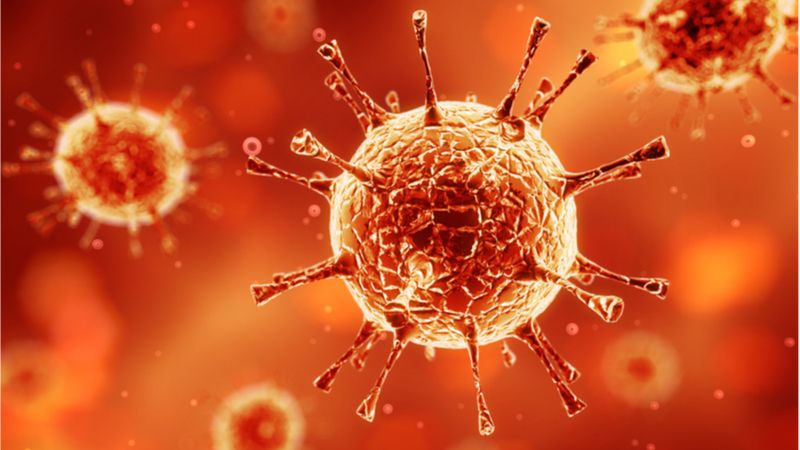
Stem Cell Therapy Successful in 7 COVID-19 Cases

A study published in Aging and Disease shows the effectiveness of mesenchymal stem cell (MSC) therapy against a deadly immune reaction caused by COVID-19.

While scientists all over the world are working on a vaccine that would be effective against the SARS-CoV-2 coronavirus, which is responsible for the COVID-19 pandemic, a group of researchers from China and other countries has been exploring a therapeutic approach. Capitalizing on previous research, this group has conducted a successful trial of MSC therapy, resulting in the recovery of all seven patients [1]. These important results inspire hope, considering that a vaccine may still be more than a year away.

DOJ seeks new emergency powers amid coronavirus pandemic

“The Justice Department has quietly asked Congress for the ability to ask chief judges to detain people indefinitely without trial during emergencies — part of a push for new powers that comes as the coronavirus spreads through the United States.”


Coronavirus

One of the requests to Congress would allow the department to petition a judge to indefinitely detain someone during an emergency.

Combined action of type I and type III interferon restricts initial replication of severe acute respiratory syndrome coronavirus in the lung but fails to inhibit systemic virus spread

STAT1-deficient mice are more susceptible to infection with severe acute respiratory syndrome coronavirus (SARS-CoV) than type I interferon (IFN) receptor-deficient mice. We used mice lacking functional receptors for both type I and type III IFN (double knockout, dKO) to evaluate the possibility that type III IFN plays a decisive role in SARS-CoV protection. We found that viral peak titres in lungs of dKO and STAT1-deficient mice were similar, but significantly higher than in wild-type mice. The kinetics of viral clearance from the lung were also comparable in dKO and STAT1-deficient mice. Surprisingly, however, infected dKO mice remained healthy, whereas infected STAT1-deficient mice developed liver pathology and eventually succumbed to neurological disease. Our data suggest that the failure of STAT1-deficient mice to control initial SARS-CoV replication efficiently in the lung is due to impaired type I and type III IFN signalling, whereas the failure to control subsequent systemic viral spread is due to unrelated defects in STAT1-deficient mice.

Sanofi, Regeneron ready to roll Kevzara into COVID-19 trials immediately

Seeking a shortcut to treatment for the novel coronavirus pandemic, Sanofi and Regeneron spied promising results in severe patients with their shared arthritis med Kevzara. Now, they’re hustling the med into immediate clinical trials to put that promise to the test.

Sanofi and Regeneron are ready to enroll a phase 2/3 clinical program studying arthritis med Kevzara as a therapy for patients hospitalized with severe COVID-19, Sanofi said Monday.

In a two-part U.S. arm of the Kevzara program, the drugmakers will evaluate the drug as an add-on to supportive care in around 400 patients across 16 states. The first segment of the trial will study Kevzara’s impact on fever and patients’ need for supplemental oxygen while a second segment will focus on longer-term outcomes, including preventing death and cutting the need for supportive care such as mechanical ventilation, supplemental oxygen and/or hospitalization, the partners said.

The new coronavirus was not genetically engineered, study shows

Josie Golding, Ph.D., who is the epidemics lead at the Wellcome Trust, a research charity based in London, United Kingdom, did not participate in the study but comments on its significance.

She says the findings are “crucially important to bring an evidence-based view to the rumors that have been circulating about the origins of the virus (SARS-CoV-2) causing COVID-19.”

“[The authors] conclude that the virus is the product of natural evolution,” Goulding adds, “ending any speculation about deliberate genetic engineering.”

Wearable biosensors may pave the way for personalized health and wellness

Bulky, buzzing and beeping hospital rooms demonstrate that monitoring a patient’s health status is an invasive and uncomfortable process, at best, and a dangerous process, at worst. Penn State researchers want to change that and make biosensors that could make health monitoring less bulky, more accurate—and much safer.

The key would be making sensors that are so stretchable and flexible that they can easily integrate with the human body’s complex, changing contours, said Larry Cheng, the Dorothy Quiggle Professor in Engineering and an affiliate of the Institute for Computational and Data Sciences. His lab is making progress on designing sensors that can do just that.

If biosensors that are both efficient and stretchable can be achieved at scale, the researchers suggest that engineers can pursue—and, in some cases, are already pursuing—a range of options for sensors that can be worn on the body, or even placed inside the body. The payoff would be smarter, more effective and more personalized medical treatment and improved health decision-making—without a lot of bulky, buzzing and beeping pieces of monitoring equipment.

/* */