Groundbreaking research reveals senolytics combined with stem cells can double lifespan. This isn’t a small improvement; it’s a revolutionary leap in regenerative medicine, supporting a new paradigm. #Longevity #RegenerativeMedicine #StemCells #Senolytics #HealthTech @immortabio
Category: biotech/medical – Page 11
Rejuvenation And Dramatic Lifespan Extension Is Here!
Join us on Patreon! https://www.patreon.com/MichaelLustgartenPhD
Discount Links/Affiliates:
Blood testing (where I get the majority of my labs): https://www.ultalabtests.com/partners/michaellustgarten.
Blood testing with LifeExtension.com: https://www.anrdoezrs.net/click-101614996-15750394
At-Home Metabolomics: https://www.iollo.com?ref=michael-lustgarten.
Use Code: CONQUERAGING At Checkout.
Clearly Filtered Water Filter: https://get.aspr.app/SHoPY
Epigenetic, Telomere Testing: https://trudiagnostic.com/?irclickid=U-s3Ii2r7xyIU-LSYLyQdQ6…M0&irgwc=1

Oral Corticosteroid Use During Pregnancy and Gestational Diabetes Risk
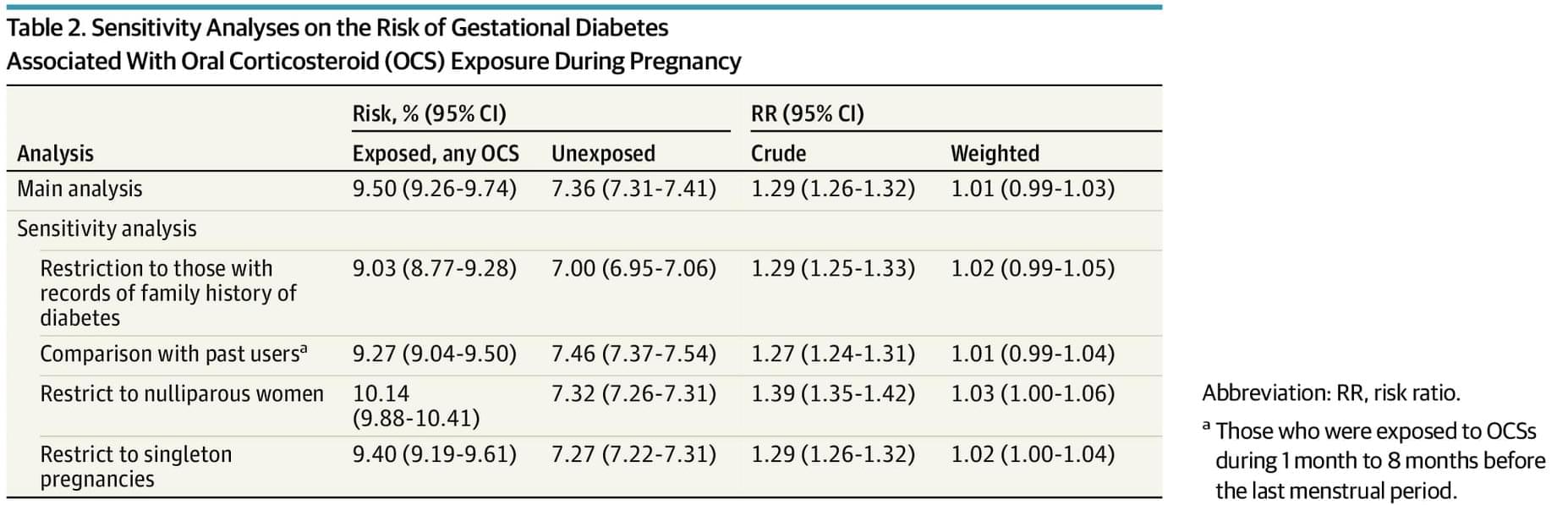
Among pregnant women, oral corticosteroid use was not linked to higher rates of gestational diabetes.
No substantial increase in risk was observed among women exposed to OCSs between 1 and 27 weeks’ gestation, except for a slight increase during weeks 4–6. The findings remained consistent across age groups, indications, doses, and durations.
Question Does oral corticosteroid use during pregnancy increase the risk of gestational diabetes?
Findings In this cohort study of 1 325 940 pregnancies resulting in live births, oral corticosteroid use between 1 and 27 weeks’ gestation was not associated with an increased risk of gestational diabetes compared with unexposed pregnancies.
Meaning These results suggest that oral corticosteroid treatment during pregnancy does not elevate the risk of gestational diabetes and may be considered a reasonable therapeutic option for managing maternal conditions.
Stem cell patch reverses brain damage in fetuses with spina bifida
A patch made of stem cells from donor placentas has been used to treat fetuses in the womb with a severe form of spina bifida as part of a world-first trial. The novel approach seems to have reversed a brain complication associated with the congenital condition at least as effectively as the go-to treatment, but is expected to enable more children to walk over the long term.
The mother of one of the babies, who is now 4 years old, says she expected that her son Toby would require a wheelchair when he was diagnosed with the condition in the womb. “But Toby is healthy [and] has hit all of his milestones – he’s walking, running and jumping – and has no problems with bladder control, which is rare for people with the condition,” she says.
Spina bifida – which affects about 1 in every 2,800 births in the US every year – occurs when a baby’s spine and spinal cord do not fully develop in the womb. In the most severe form of the condition, called myelomeningocele, the spinal cord and its surrounding tissue protrude out of a gap in the vertebrae, which often impairs mobility and bowel and bladder control. The cause of spina bifida is unknown, but folic acid deficiency during pregnancy raises the risk.
One of the standard treatments involves surgery in the womb that tucks the spinal cord and the surrounding tissue back into the vertebrae, before sewing up the skin to form a tight seal. “But many children still end up unable to walk and there’s [usually] no improvement in bowel or bladder control,” says Diana Farmer at the University of California, Davis.
This led Farmer and her colleagues to wonder if the addition of stem cells could help by promoting the growth and repair of spinal tissue. To find out, they recruited six pregnant women carrying fetuses with myelomeningocele.
Read More
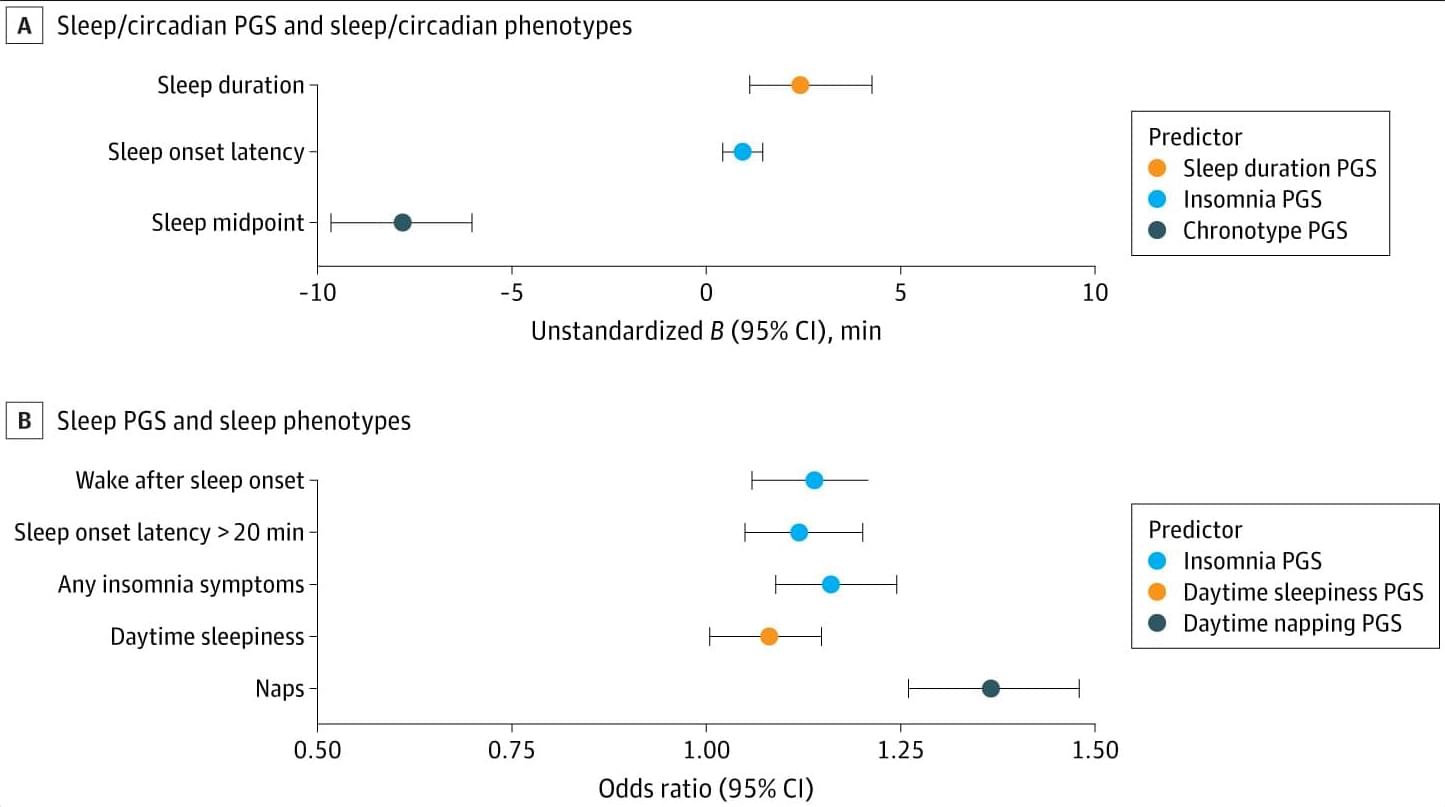
A Developmentally Informed Study of Sleep and Circadian Polygenic Scores in Adolescence
Adult sleep GWAS-derived polygenic scores demonstrated comparable associations with corresponding sleep phenotypes in Adolescents, suggesting genetic influences on sleep persist across developmental stages.
Question Do genetic variants that are associated with adult sleep/circadian phenotypes influence sleep phenotypes in adolescents?
Findings In a population-based birth cohort study (N = 3903), genetic influences on all adult sleep phenotypes (sleep duration, insomnia, daytime sleepiness, napping, and chronotype as indexed by polygenic scores derived from adult genome-wide association studies) were associated with their corresponding sleep/circadian phenotypes in adolescents aged 15 years.
Meaning Genetic variants identified in adult genome-wide association studies may also be relevant to a variety of sleep phenotypes in adolescence, suggesting that these variants index sleep phenotypes during a key developmental stage in which sleep disturbances typically emerge.
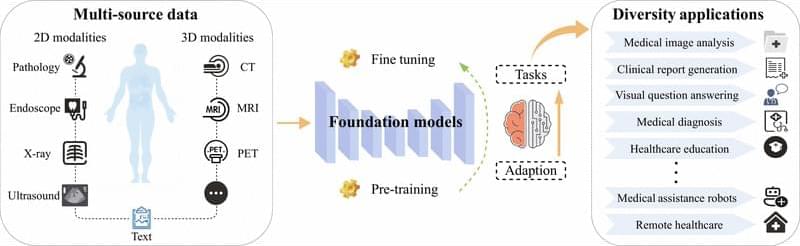
Foundation Models Meet Medical Image Interpretation
In contrast, traditional deep learning methods in the medical domain have long been constrained by scarce annotations data, weak cross-modal semantic correlation, and insufficient generalization capabilities. FMs can effectively alleviate these issues by extracting semantic representations from large-scale unlabeled data, reducing dependence on expert annotations, and enhancing cross-modal understanding and transferability [7]. This provides technical support to address challenges such as long-tail distributions, data scarcity, and modality imbalance, thereby promoting a shift in medical decision-making from experience-driven to data-driven approaches.
Unlike traditional specialist models such as nnU-Net [8], which are typically designed for a single modality and specific tasks, FMs emphasize modality unification and task generalization, enabling cross-domain transfer and knowledge sharing. With mechanisms such as prompt engineering and PEFT, these models support few-shot and even zero-shot transfer (ZST). For example, Med-PaLM [9] is based on a unified medical pretraining model, which can generate structured pathology reports and perform lesion localization from medical images. It effectively overcomes the limitations of traditional methods that require separate architectures for different tasks, significantly improving modeling efficiency and system integration. Driven by such unified model architecture, medical AI systems are evolving toward greater generality and reusability.
Despite these advancements, the unique characteristics of the medical domain pose multiple challenges to the application of FMs. On one hand, medical data are highly heterogeneous, with pronounced differences in resolution, contrast, and noise distribution across imaging modalities such as computed tomography (CT), magnetic resonance imaging (MRI), and ultrasound [10]. This limits the ability of traditional single-modality pretraining strategies to achieve effective cross-domain knowledge integration. On the other hand, clinical applications demand higher standards for model performance. Clinical decision-making relies on interpretable diagnostic evidence, yet pretraining models often behave as “black boxes”, limiting their clinical traceability [11]. In addition, the long-tail distribution of rare diseases poses fairness challenges for model generalization [12].
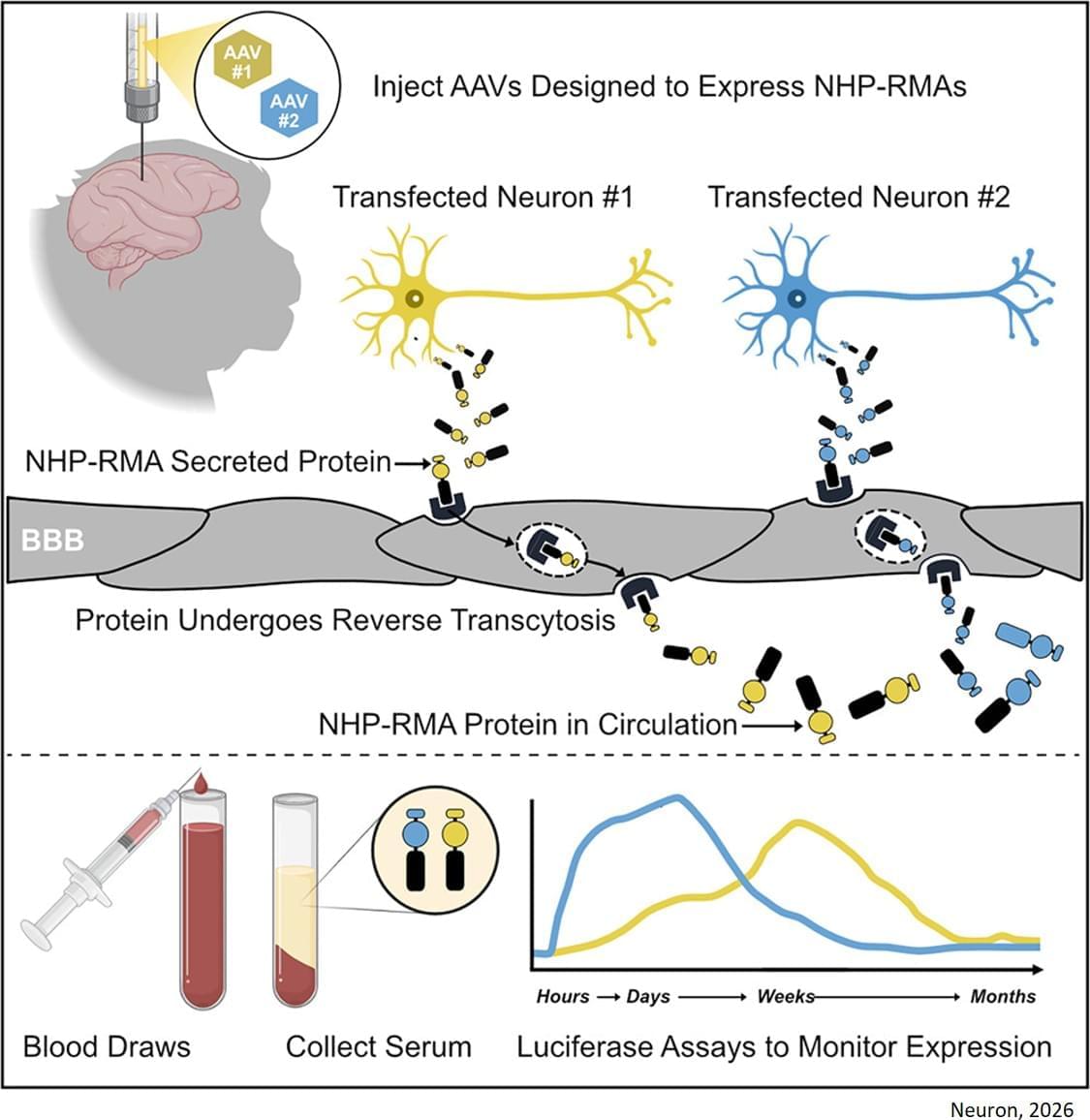
Noninvasive monitoring of gene expression in primate brains
Gene therapy has been successfully used to treat a number of diseases, including immune deficiencies, hereditary blindness, hemophilia and, recently, Huntington’s disease, a fatal neurological disorder.
An advance reported in the journal Neuron adds to the technique’s growing track record of evidence supporting the view that it could unlock powerful, personalized therapies: researchers found that released markers of activity (RMAs) ⎯ engineered proteins designed to cross the blood-brain barrier and persist in the blood for hours at a time, providing a reliable and noninvasive way to get information about gene expression in the brain ⎯ work just as well in monkeys as they do in mice.
Alongside precision, RMA technology is also capacious and adaptable: Different serum markers can be designed to track multiple genes across different brain regions. ScienceMission sciencenewshighlights.