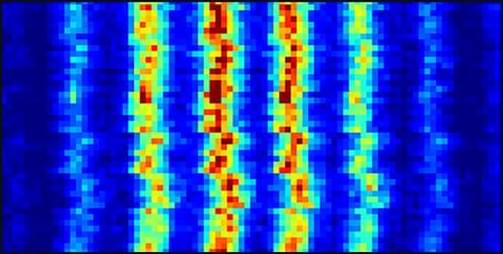
Turbulence, the chaotic, irregular motion that causes the bumpiness we sometimes experience on an airplane, has intrigued scientists for centuries. At the Okinawa Institute of Science and Technology (OIST), researchers are exploring this phenomenon in a special class of materials known as complex fluids.
🚕 Q: What real-world application of Tesla’s FSD technology is currently operating? A: Tesla Road, a robo taxi service in Austin, Texas, allows paid customers to ride in Teslas that are literally driving themselves, demonstrating Tesla’s FSD supervised technology in action.
🛻 Q: How are Cybertruck owners responding to their vehicles? A: Cybertruck owners, including celebrities Theo Von and Kat Williams, describe their vehicles as unique experiences that feel like “driving in the future”, forming a small but enthusiastic group.
💰 Q: What financial challenge is Rivian facing in the EV market? A: Rivian faces a $100 million deficit due to the Trump administration’s rollback of fuel economy standards, compounded by high price points and lack of profitability per vehicle, making it difficult to compete with Tesla.
🤝 Q: What recent partnership has Honda formed for autonomous driving development? A: Honda and Helm AI have entered a multi-year joint development agreement to accelerate Honda’s Navigate on Autopilot system for highway and urban autonomy, though it’s not full autonomy and requires constant driver attention.
End of the road for GPS? Image-based AI tool cuts navigation errors by nearly 40 times.
Global reliance on GPS has grown to the point where outages or signal interference can have serious consequences. From logistics and delivery fleets to aviation and defense, industries depend on precise navigation.
Yet GPS signals are vulnerable. Tall buildings, tunnels, jamming devices, or even atmospheric conditions can cause disruptions. By providing a GPS-free alternative, PEnG could make navigation more resilient and reliable.
The Surrey researchers argue that their work is as much about everyday convenience as it is about safety.
Ark Invest forecasts that Tesla’s robotaxi business could reach $10 trillion by 2029, driven by its manufacturing efficiency, data advantage, and strategic positioning in major urban markets ## ## Questions to inspire discussion.
Tesla’s Robotaxi Dominance.
🚗 Q: How significant could Tesla’s robotaxi business become? A: Tesla’s robotaxi business could represent around 90% of its enterprise value by 2029, capturing a substantial share of Ark’s projected $10 trillion global robotaxi market.
🏙️ Q: What’s the potential impact of robotaxis on urban transportation? A: Research suggests 200,000 robotaxis, supplemented by privately owned vehicles in an Airbnb-like model, could meet all of urban Austin’s vehicle miles traveled (VMT) demand, with peak demand requiring 350,000 vehicles.
Manufacturing and Cost Advantages.
🏭 Q: How does Tesla’s manufacturing capability compare to urban demand? A: Tesla’s Austin factory alone could produce more vehicles than urban Austin’s entire ride-hail fleet in approximately 9 days, showcasing its vertically integrated manufacturing advantage.
🤖 Q: What is the biggest valuation upside for Tesla? A: Tesla’s autonomy roadmap is considered the biggest valuation upside, with the company’s robotaxi plans involving 5-passenger vehicles without a driver seat potentially increasing upside option values for investors.
🚘 Q: How has Tesla’s Full Self-Driving (FSD) system improved? A: FSD has made massive improvements with Version 13, and Version 14 may be the breakthrough moment that pushes Tesla past human-level driving and conquers another three nines of safety.
Future Projections.
📈 Q: What is the expected FSD take rate in the coming years? A: The FSD take rate is projected to increase to 20% in the next few years, with cyber cabs having FSD included, while individual owners may need to opt-in for a while before it becomes standard on all new cars.
Over the past decades, energy engineers have been developing a wide range of new technologies that could power electronic devices, robots and electric vehicles more efficiently and reliably. These include solid oxide cells (SOCs), electrochemical devices that can operate in two different modes, as fuel cells or as electrolyzers.
Silicon semiconductors used in existing photodetectors have low light responsivity, and the two-dimensional semiconductor MoS₂ (molybdenum disulfide) is so thin that doping processes to control its electrical properties are difficult, limiting the realization of high-performance photodetectors.
A KAIST research team has overcome this technical limitation and developed the world’s highest-performing self-powered photodetector, which operates without electricity in environments with a light source. This paves the way for precise sensing without batteries in wearable devices, biosignal monitoring, IoT devices, autonomous vehicles, and robots, as long as a light source is present.
Professor Kayoung Lee’s research team from the School of Electrical Engineering developed the self-powered photodetector, which demonstrated a sensitivity up to 20 times higher than existing products, marking the highest performance level among comparable technologies reported to date. The work is published in the journal Advanced Functional Materials.
Apple’s prioritization of shareholder value through massive share buybacks over investing in innovation and R&D may be a strategic misstep that could hinder its future success and allow competitors to gain an edge, particularly in emerging markets like AI
## Questions to inspire discussion.
Innovation and Investment.
🔬 Q: How could Apple’s buyback program have been used differently? A: A: Apple’s $700 billion share buyback over the past decade could have been invested in R&D to develop innovative products like a car, potentially yielding greater long-term value.
🤖 Q: What is Apple’s current stance on AI development? A: Apple’s inaction in AI is notable, with Siri’s performance declining over time, indicating a lack of focus on this crucial technology sector.