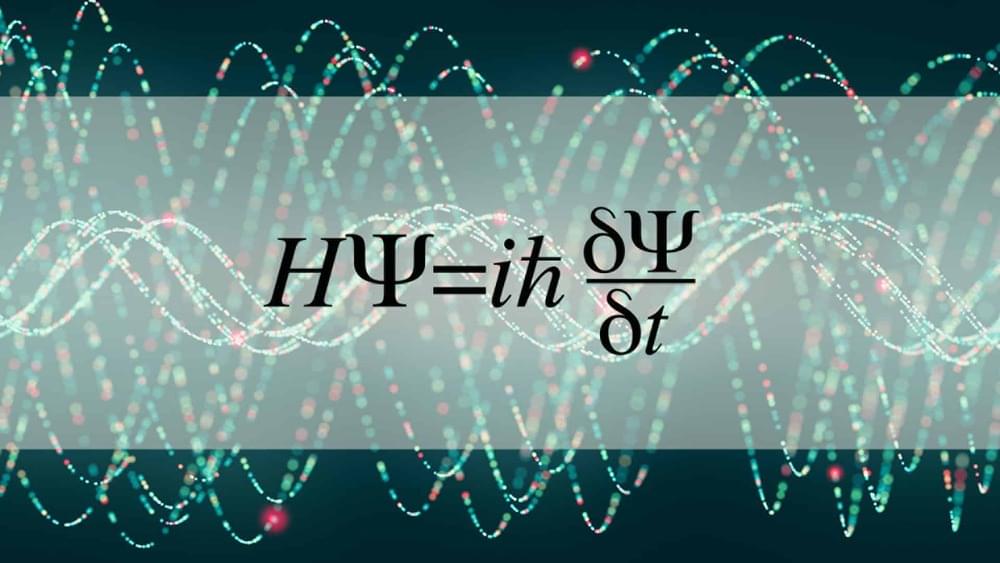
This episode focuses on the basic concepts and misconceptions of wars fought in space and examines the notions of weapons, defenses, stealth in space, and the distance involved.
Category: space – Page 193
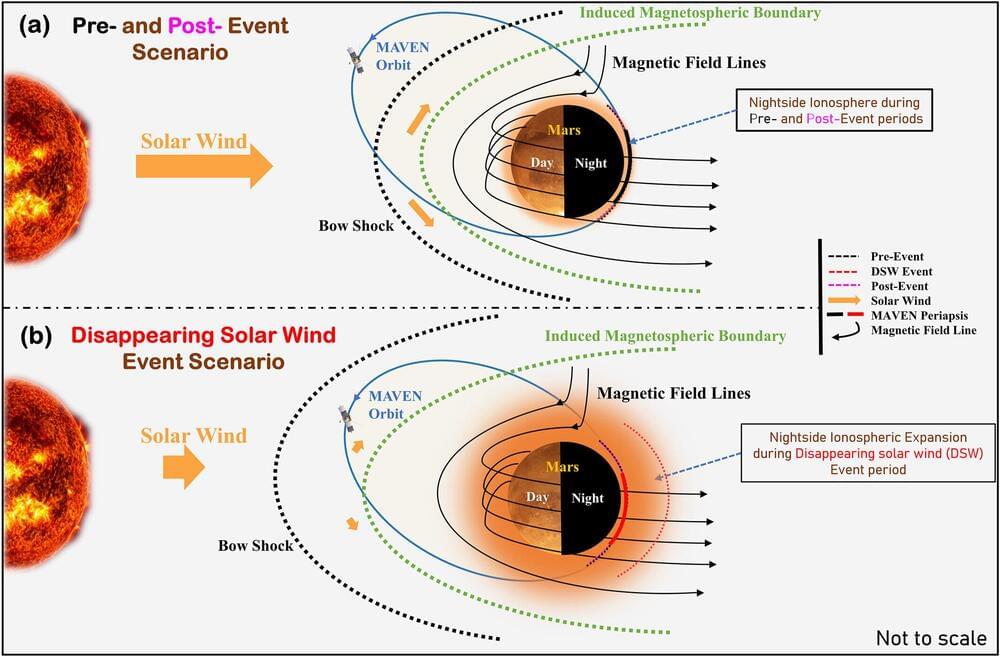
Mars’s rare disappearing solar wind event explained
Mars’s atmosphere and climate are impacted by interactions with solar wind, a stream of plasma comprised of protons and electrons that flows from the sun’s outermost atmosphere (corona), traveling at speeds of 400–1,000 kilometers per second.
As these charged particles interact with the planet’s magnetic field and atmosphere, we may see spectacular auroras over polar regions on Earth. Given Mars’s lack of a global magnetic field, auroras here are instead diffused across the planet.
However, sometimes this solar wind can “disappear” in rare events when there is a gap in the solar wind path as the sun increases its solar activity. This occurs when a faster portion of solar wind overtakes a slower one in a corotating interaction region and incorporates it, leaving a lower-density void in the solar wind path.
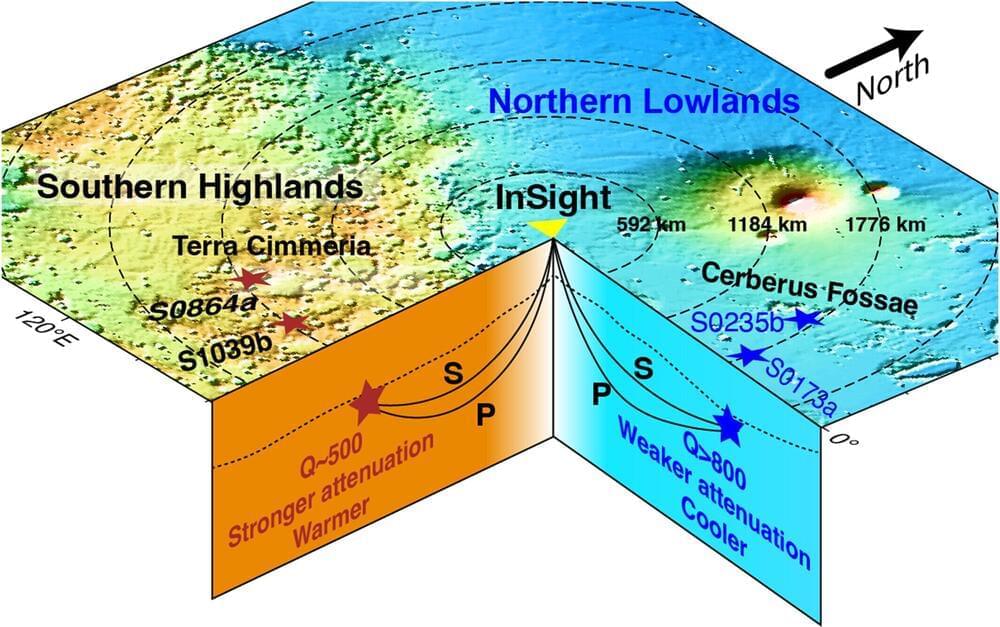
Mars’s two distinct hemispheres caused by mantle convection not giant impacts, study claims
Mars has northern and southern hemispheres like Earth, but their defining characteristics are markedly different, a phenomenon known as Martian dichotomy. The Southern Highlands are older, higher in elevation and more cratered than the Northern Lowlands. The elevated terrain of the former acts as a natural barrier to airflow, resulting in varied wind patterns and contributing to localized weather phenomena.
Explanations for the origin of this dichotomy primarily surround giant impactors (~2,000 kilometers in diameter) from space and large-scale convective movements of the mantle caused by differences in its temperature and density.
Research published in Geophysical Research Letters has attempted to further unravel this origin story through study of Martian earthquakes, or marsquakes. Much like on Earth, this seismic activity can be used to explore driving mechanisms beneath Mars’s surface.

Tiny galaxy reignites, shedding light on star formation and cosmic evolution
In a study published in the Astrophysical Journal, a team of researchers led by Kristen McQuinn, a scientist at the Space Telescope Science Institute and an associate professor in the Department of Physics and Astronomy at the Rutgers University-New Brunswick School of Arts and Sciences, has reported finding that Leo P, a small galaxy and a distant neighbor of the Milky Way, “reignited,” reactivating during a significant period on the timeline of the universe, producing stars when many other small galaxies didn’t.
By studying galaxies early in their formation and in different environments, astronomers said they may gain a deeper understanding of the universe’s origins and the fundamental processes that shape it.
McQuinn and other members of the research team studied Leo P through NASA’s James Webb Space Telescope, a space-based apparatus that features a large, segmented mirror and an expansive sunshield, both of which enable it to capture detailed images of distant celestial objects.
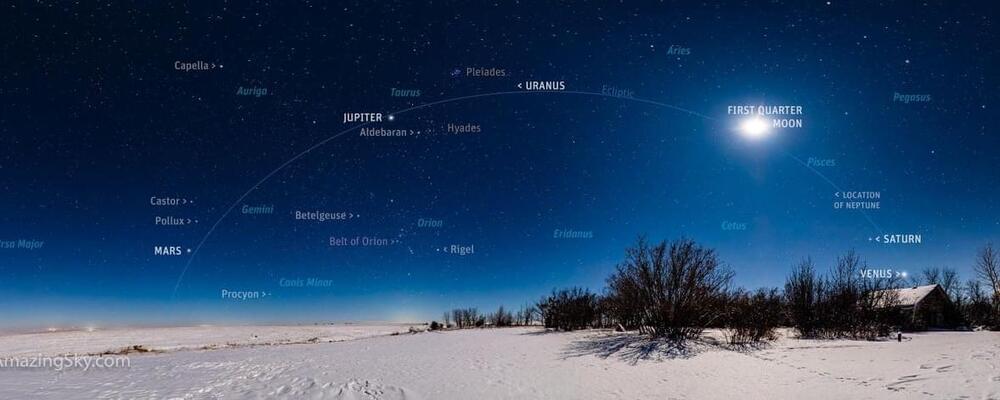
Debunked: January 25’s ‘Once In 396 Billion Years’ Planetary Alignment
Have you read on social media about the “once in 396 billion years” planetary alignment happening on Jan. 25? Guess what? Social media is not reliable. Here’s what’s really going on — and why you don’t have to wait.
Four planets are easily visible to the naked eye this month. Next month, for a short period, there will be five. It’s not irregular, not particularly rare, and certainly not some kind of weird alignment—as the online hype would have you believe—but it is a spectacular sight. But is it one of the best stargazing and astronomy sights of 2025?
Here’s the truth about the so-called “planet parade” and when you can see it as its best all this month and during February.
The Biggest Simulation Ever: Frontier Supercomputer Models the Universe
At Argonne National Laboratory, scientists have leveraged the Frontier supercomputer to create an unprecedented simulation of the universe, encompassing a span of 10 billion light years and incorporating complex physics models.
This monumental achievement allows for new insights into galaxy formation and cosmic evolution, showcasing the profound capabilities of exascale computing.
Breakthrough in Universe Simulation.
Robots In Space: Bots in the economy update
Tomorrow at 1PM PT / 4PM ET, we Premiere a new episode of Robots In Space, and this is about bots, including the latest on Phoenix from Sanctuary AI, the impact of cognitive automation on jobs, the Economic Singularity, plus our proprietary Event Horizon Indicator.
Discover how robotics and AI are reshaping our economic landscape in this eye-opening analysis. As an engineer, I break down the latest developments in humanoid robots, particularly Sanctuary AI’s breakthrough in hydraulic robotics and robot dexterity. Learn about my proprietary Event Horizon Indicator that tracks our progression toward the Economic Singularity through labor force participation and unemployment trends. From warehouse robotics to manufacturing automation, understand how the robot workforce is transforming industries and what this means for the future of work. Whether you’re interested in AI economics or concerned about tech unemployment, this video provides crucial insights into the ongoing robot revolution and its impact on our economy.
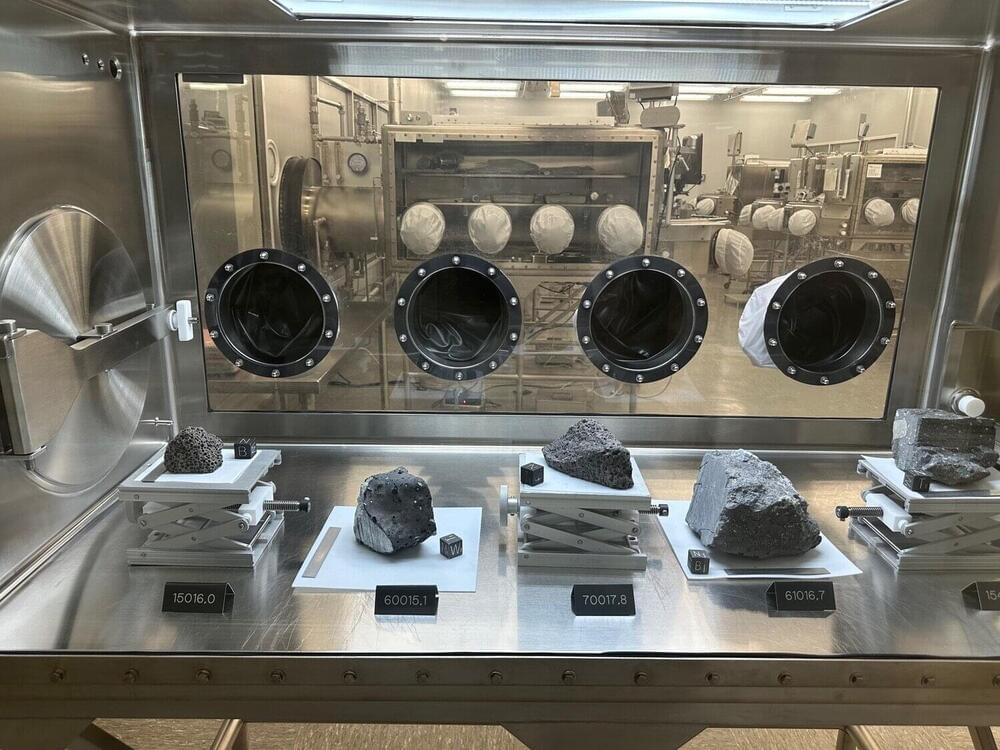
Is the moon a chunk ejected from Earth? Study sheds light on moon formation, origin of water on Earth
A research team from the University of Göttingen and the Max Planck Institute for Solar System Research (MPS) has discovered another piece in the puzzle of the formation of the moon and water on Earth. The prevailing theory had been that the moon was the result of a collision between early Earth and the protoplanet Theia. New measurements indicate that the moon formed from material ejected from the Earth’s mantle with little contribution from Theia.
In addition, the findings support the idea that water could have reached Earth early in its development and may not have been added by late impacts. The results are published in the Proceedings of the National Academy of Sciences.
The researchers analyzed oxygen isotopes from 14 samples from the moon and carried out 191 measurements on minerals from Earth. Isotopes are varieties of the same element that differ only in the weight of their nucleus. The team used an improved version of laser fluorination, a method in which oxygen is released from rock using a laser.
NASA celebrates Edwin Hubble’s discovery of a new universe
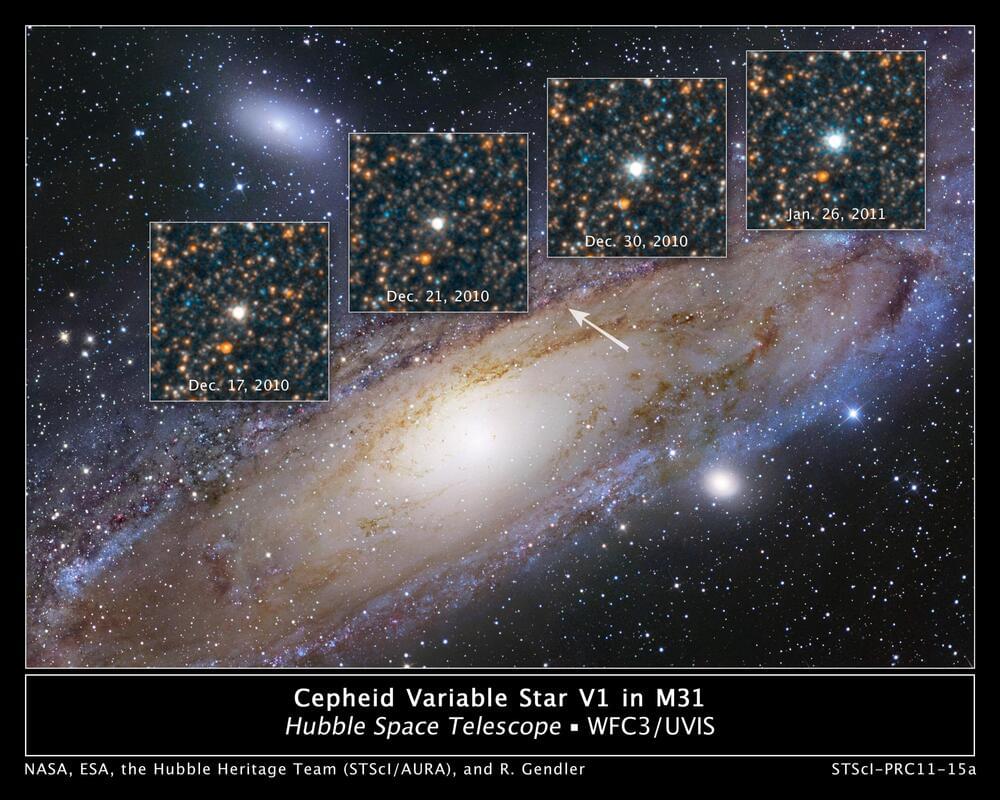
For humans, the most important star in the universe is our sun. The second-most important star is nestled inside the Andromeda galaxy. Don’t go looking for it—the flickering star is 2.2 million light-years away, and is 1/100,000th the brightness of the faintest star visible to the human eye.
Yet, a century ago, its discovery by Edwin Hubble, then an astronomer at Carnegie Observatories, opened humanity’s eyes as to how large the universe really is, and revealed that our Milky Way galaxy is just one of hundreds of billions of galaxies in the universe ushered in the coming-of-age for humans as a curious species that could scientifically ponder our own creation through the message of starlight. Carnegie Science and NASA are celebrating this centennial at the 245th meeting of the American Astronomical Society in Washington, D.C.
The seemingly inauspicious star, simply named V1, flung open a Pandora’s box full of mysteries about time and space that are still challenging astronomers today. Using the largest telescope in the world at that time, the Carnegie-funded 100-inch Hooker Telescope at Mount Wilson Observatory in California, Hubble discovered the demure star in 1923. This rare type of pulsating star, called a Cepheid variable, is used as milepost markers for distant celestial objects. There are no tape-measures in space, but by the early 20th century Henrietta Swan Leavitt had discovered that the pulsation period of Cepheid variables is directly tied to their luminosity.