Toggle light / dark theme

Jump-Based Training May Combat Cartilage Breakdown in Space

What exercises can future astronauts on long-term missions to the Moon or Mars conduct to help mitigate the effects of cartilage damage resulting from microgravity? This is what a recent study published in npj Microgravity hopes to address as an international team of researchers investigated the health benefits of future astronauts performing jumping workouts during long-duration space missions. This study holds the potential to help astronauts, mission planners, and the public better understand the risks and strategies for long-duration space missions, especially as human exploration expands to the Moon and Mars.

“Think about sending somebody on a trip to Mars, they get there, and they can’t walk because they developed osteoarthritis of the knees or the hips and their joints don’t function,” said Dr. Marco Chiaberge, who is a research scientist at Johns Hopkins University and lead author of the study. “Astronauts also perform spacewalks often. They serviced the Hubble Space Telescope five times, and in the future, they will need to spend more time in space and the Moon, where we will build larger telescopes to explore the universe and where they will need to stay as healthy as possible.”

For the study, the researchers conducted a nine-week study with mice to ascertain the benefits of jumping exercises three times a week compared to limited movement regarding cartilage growth and sustainability. In the end, the researchers found that not only did the mice who participated in jumping exercises exhibit a 26 percent increase in cartilage compared to 14 percent reduction for the non-movement mice, but the jumping mice also displayed 110 percent thicker cartilage. Additionally, the jumping mice were found to exhibit 15 percent greater bone mineral density due to the jumping exercises.

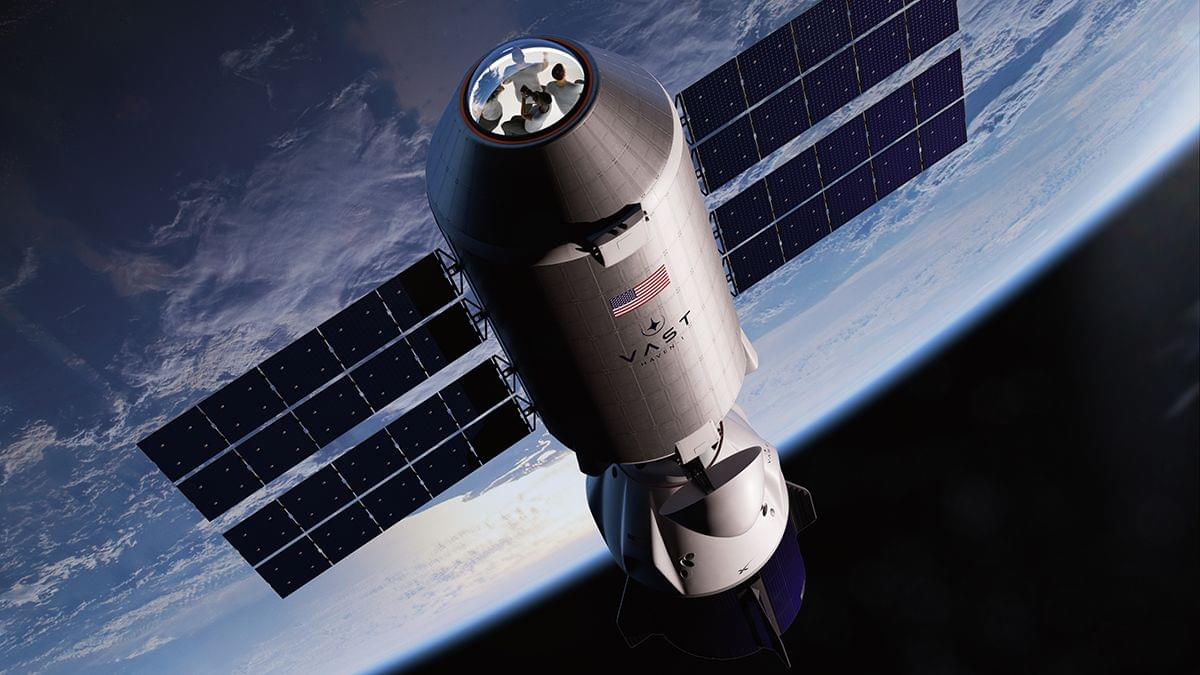
True Anomaly opens Long Beach factory, citing proximity to Space Force customers

The move places True Anomaly in closer proximity to the Space Systems Command in Los Angeles, which oversees billions in Space Force procurement, and taps into Southern California’s deep aerospace talent pool.

The majority of the Long Beach factory will be dedicated to the design, development and manufacturing of new products for the military market, including some being developed for classified U.S. Space Force programs, True Anomaly’s CEO Even Rogers said in an interview.

The company’s headquarters and existing manufacturing facility will remain in Centennial, Colorado, where True Anomaly makes its flagship product, the Jackal satellite, designed to perform in-orbit activities such as rendezvous and proximity operations, and imaging of objects in orbit. The company also developed an operating system software for space domain awareness called Mosaic.

Meta Announces LlamaCon, Its First Generative AI Dev Conference

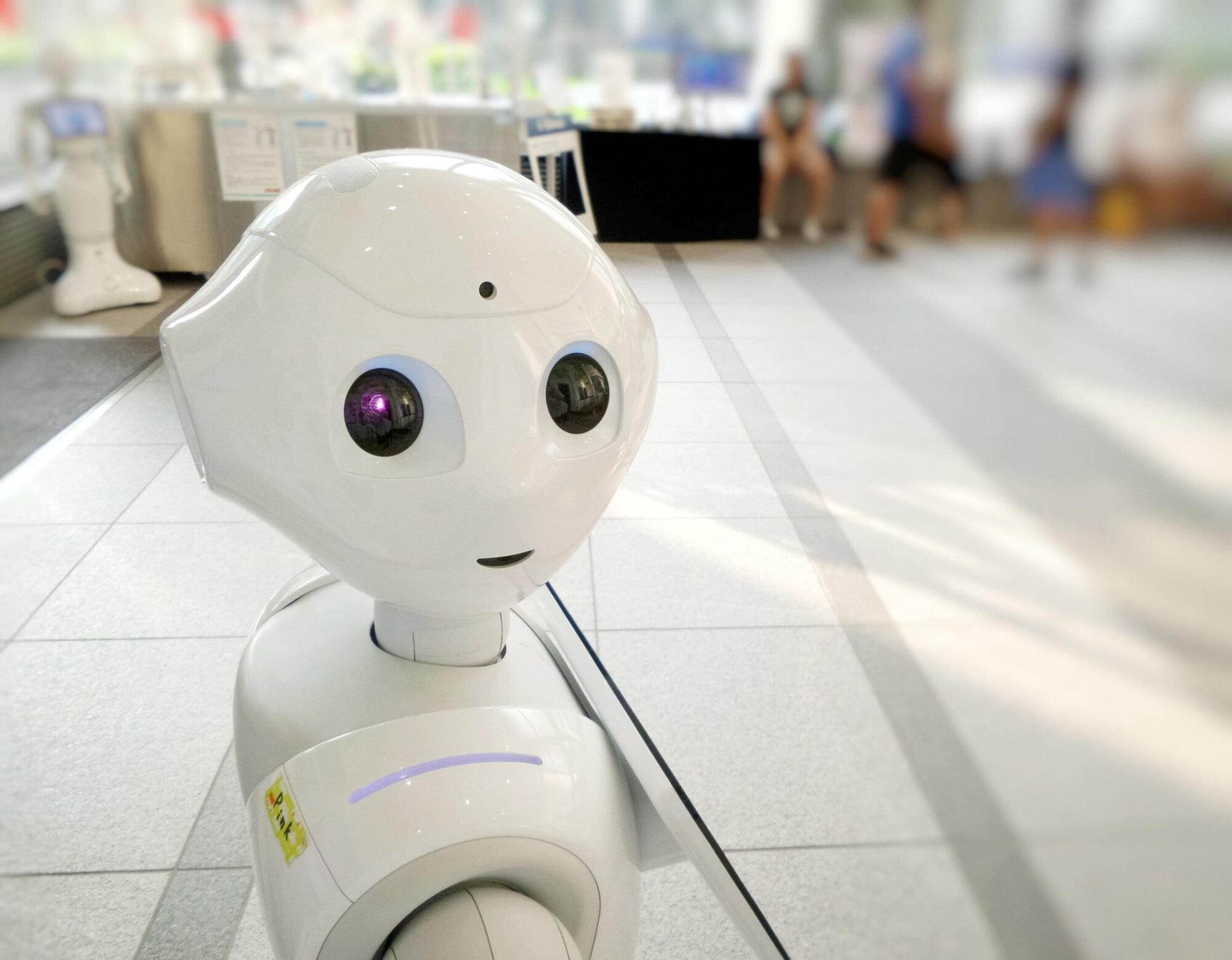
In today’s AI news, Meta on Tuesday announced that it’ll host its first-ever dev conference dedicated to generative AI. Called LlamaCon after Meta’s Llama family of generative AI models, the conference is scheduled to take place on April 29. Meta said that it plans to share the latest on its open source AI developments to help developers build amazing apps and products.

In other advancements, after her sudden departure from OpenAI last fall, ex-CTO Mira Murati vanished from public view to start something new. Now, she is ready to share some details about what she’s working on. Her new AI startup is called Thinking Machines Lab, and while the specifics of what it plans to release are still under wraps, the company says its goal is “to make AI systems more widely understood, customizable and generally capable.”

Meanwhile, In a new paper, OpenAI researchers detail how they developed an LLM benchmark called SWE-Lancer to test how much foundation models can earn from real-life freelance software engineering tasks. The test found that, while the models can solve bugs, they can’t see why the bug exists and continue to make more mistakes.

And, Humane is selling most of its company to HP for $116 million and will stop selling AI Pin, the company announced today. AI Pins that have already been purchased will continue to function normally until 3PM ET on February 28th, Humane says in a support document. After that date, Pins will “no longer connect to Humane’s servers.”

Then, in this episode of Top of Mind, Gartner Global Chief of Research Chris Howard breaks down the buzz around agentic AI. Learn how AI agents can make autonomous decisions, optimize solutions and even collaborate in multi-agent systems to transform the future of business now.

And, inbound conversational AI phone calls can now easily be personalized using Twilio and ElevenLabs Conversational AI. Provide dynamic variables based on the inbound caller id, and override the prompt, language, first message to fully customize your voice AI agents.

In other videos, Tim is diving into SkyReels, a powerful new AI video model that’s free, open-source, and comes with its own robust platform. In this deep dive, he’ll walk through SkyReels’ unique features—from its human-centric training data to its text-to-video and image-to-video workflows.

‘City killer’ asteroid now has 3.1% chance of hitting Earth: NASA

An asteroid that could level a city now has a 3.1-percent chance of striking Earth in 2032, according to NASA data released Tuesday—making it the most threatening space rock ever recorded by modern forecasting.

Despite the rising odds, experts say there is no need for alarm. The global astronomical community is closely monitoring the situation and the James Webb Space Telescope is set to fix its gaze on the object, known as 2024 YR4, next month.

“I’m not panicking,” Bruce Betts, chief scientist for the nonprofit Planetary Society told AFP.

Researchers develop first room temperature holmium-doped yttrium lithium fluoride thin disk laser

In a study published in Optics Express, a research group led by Prof. Fu Yuxi from Xi’an Institute of Optics and Precision Mechanics (XIOPM) of the Chinese Academy of Sciences has developed the first room temperature holmium-doped yttrium lithium fluoride (Ho: YLF) composite thin disk laser, which can achieve high efficiency and quality continuous-wave laser output.

Lasers operating in the 2 µm spectral range are highly valued for their eye safety, high water absorption, and low atmospheric attenuation.

Conventional 2 µm lasers typically require cryogenic cooling to control thermal effects, which increases system complexity and cost, and restricts their use in compact, space-constrained, and mobile platforms. Therefore, developing high-power, room-temperature 2 µm lasers has become a vital research direction.

A Deep-Sea Telescope Just Detected the Most Energetic Ghost Particle Ever

A neutrino of record-breaking energy — 220 PeV — has been detected by the underwater KM3NeT telescope, marking a pivotal moment in astrophysics.

This tiny but powerful particle, born from the universe’s most extreme events, provides fresh clues about cosmic accelerators. While its exact origin remains unknown, scientists believe it could be the first detected cosmogenic neutrino. The discovery fuels new momentum for multi-messenger astronomy, with future observations expected to shed light on the deepest mysteries of the cosmos.

Jupiter’s moon Callisto is very likely an ocean world

More pocked with craters than any other object in our solar system, Jupiter’s outermost and second-biggest Galilean moon, Callisto, appears geologically unremarkable. In the 1990s, however, NASA’s Galileo spacecraft captured magnetic measurements near Callisto that suggested that its ice shell surface—much like that of Europa, another moon of Jupiter—may encase a salty, liquid water ocean.

But evidence for Callisto’s subsurface ocean has remained inconclusive, as the moon has an intense . Scientists thought this electrically conductive upper part of the moon’s atmosphere might imitate the magnetic fingerprint of a salty, conductive ocean.

Now, researchers have revisited the Galileo data in more detail. Unlike in prior studies, this team incorporated all available magnetic measurements from Galileo’s eight close flybys of Callisto. Their expanded analysis much more strongly suggests that Callisto hosts a subsurface ocean.

By the end of today, NASA’s workforce will be about 10 percent smaller

Ugly.


Job losses are always terrible. This will be a dark and painful day at a space agency that brings so much light and joy to the world. Many of the probationary employees are just starting out their careers and were likely thrilled to land a job at NASA to explore the universe. And then all of that youthful energy and hope was extinguished this week.

It’s possible to view these losses through a couple of lenses.

Yes, NASA is clearly losing some capability with these latest cuts. Many of these hires were likely being counted on to bring new energy into the space agency and become its future discoverers and leaders. And their jobs are being sacrificed for no clear purpose. Is it to increase funding for the military? Is it to pay for tax cuts for the rich? There is a lot of anger that the relatively thin budget line of NASA—less than one-half of 1 percent of the federal budget—is being sliced for such purposes.

/* */