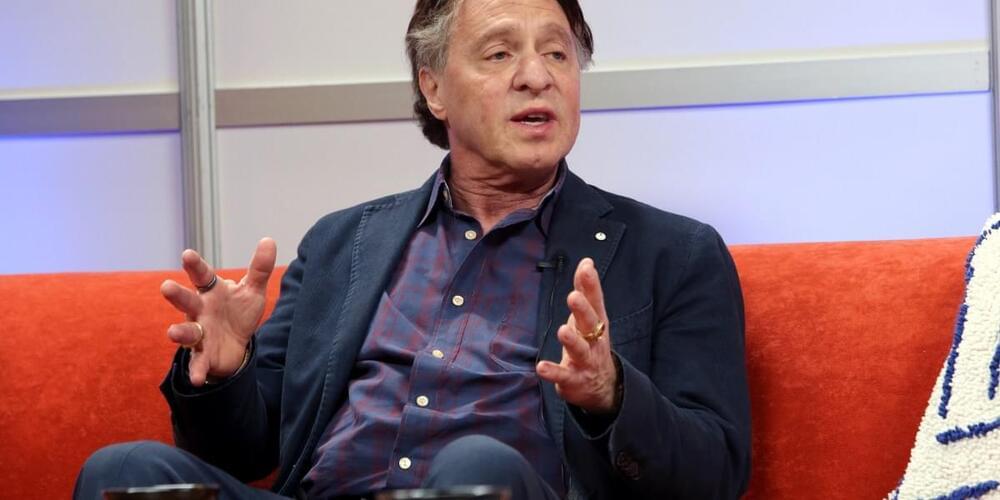
How will AI improve our lives in the years to come? From its inception six decades ago to its recent exponential growth, futurist Ray Kurzweil highlights AI’s transformative impact on various fields and explains his prediction for the singularity: the point at which human intelligence merges with machine intelligence.
If you love watching TED Talks like this one, become a TED Member to support our mission of spreading ideas: https://ted.com/membership.
The TED Talks channel features talks, performances and original series from the world’s leading thinkers and doers. Subscribe to our channel for videos on Technology, Entertainment and Design — plus science, business, global issues, the arts and more. Visit https://TED.com to get our entire library of TED Talks, transcripts, translations, personalized talk recommendations and more.
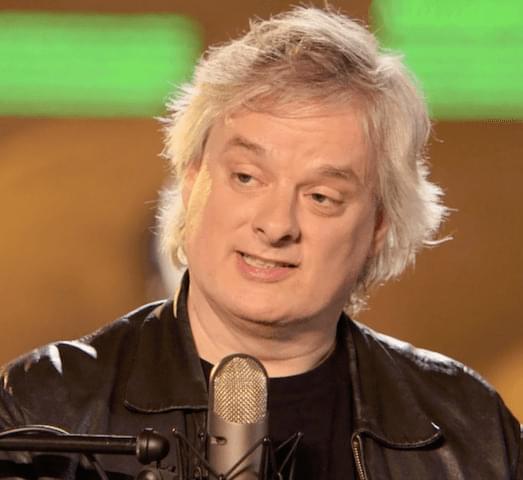
David is one of the world’s best-known philosophers of mind and thought leaders on consciousness. I was a freshman at the University of Toronto when I first read some of his work. Since then, Chalmers has been one of the few philosophers (together with Nick Bostrom) who has written and spoken publicly about the Matrix simulation argument and the technological singularity. (See, for example, David’s presentation at the 2009 Singularity Summit or read his The Singularity: A Philosophical Analysis)
During our conversation with David, we discuss topics such as: how and why Chalmers got interested in philosophy; and his search to answer what he considers to be some of the biggest questions – issues such as the nature of reality, consciousness, and artificial intelligence; the fact that academia in general and philosophy, in particular, doesn’t seem to engage technology; our chances of surviving the technological singularity; the importance of Watson, the Turing Test and other benchmarks on the way to the singularity; consciousness, recursive self-improvement, and artificial intelligence; the ever-shrinking of the domain of solely human expertise; mind uploading and what he calls the hard problem of consciousness; the usefulness of philosophy and ethics; religion, immortality, and life-extension; reverse engineering long-dead people such as Ray Kurzweil’s father.
This is a recording of the AGI23 Conference, Day 1, June 16th 2023, Stockholm. This video shows the following tutorial: Test and Evaluation First Principles for General Learning Systems, led by Tyler Cody.
SingularityNET was founded by Dr. Ben Goertzel with the mission of creating a decentralized, democratic, inclusive, and beneficial Artificial General Intelligence (AGI). An AGI is not dependent on any central entity, is open to anyone, and is not restricted to the narrow goals of a single corporation or even a single country.
The SingularityNET team includes seasoned engineers, scientists, researchers, entrepreneurs, and marketers. Our core platform and AI teams are further complemented by specialized teams devoted to application areas such as finance, robotics, biomedical AI, media, arts, and entertainment.
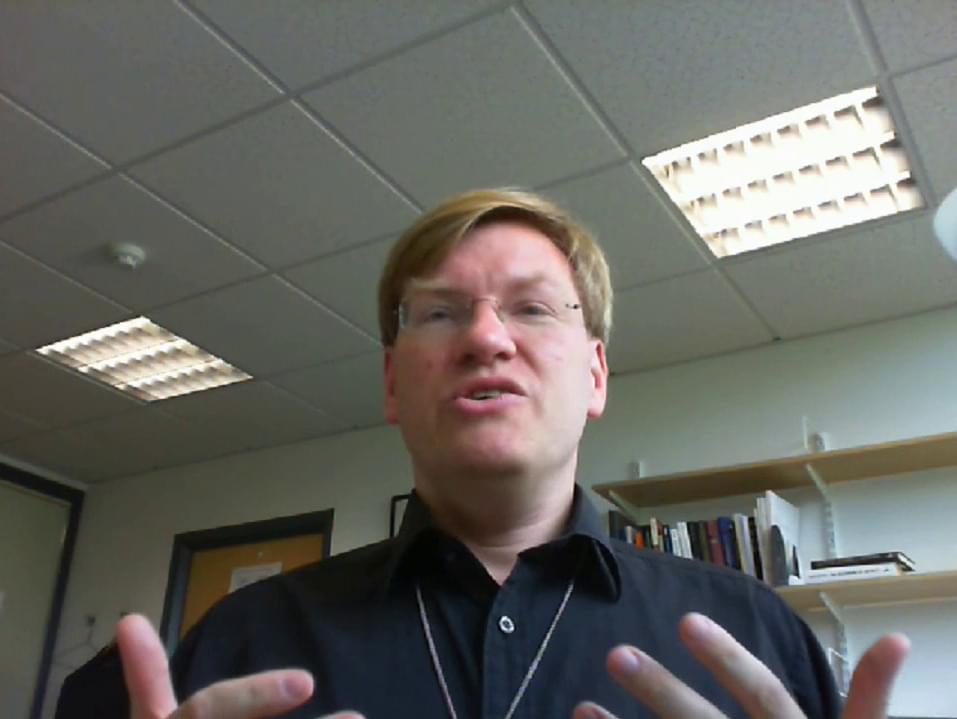
Want to find out how and why Anders Sandberg got interested in transhumanism and ethics? Want to hear his take on the singularity? Check out his interview for SingularityWeblog.com
In this thought-provoking lecture, Prof. Jay Friedenberg from Manhattan College delves into the intricate interplay between cognitive science, artificial intelligence, and ethics. With nearly 30 years of teaching experience, Prof. Friedenberg discusses how visual perception research informs AI design, the implications of brain-machine interfaces, the role of creativity in both humans and AI, and the necessity for ethical considerations as technology evolves. He emphasizes the importance of human agency in shaping our technological future and explores the concept of universal values that could guide the development of AGI for the betterment of society.
00:00 Introduction to Jay Friedenberg. 01:02 Connecting Cognitive Science and AI 02:36 Human Augmentation and Technology. 03:50 Brain-Machine Interfaces. 05:43 Balancing Optimism and Caution in AI 07:52 Free Will vs Determinism. 12:34 Creativity in Humans and Machines. 16:45 Ethics and Value Alignment in AI 20:09 Conclusion and Future Work.
SingularityNET was founded by Dr. Ben Goertzel with the mission of creating a decentralized, democratic, inclusive, and beneficial Artificial General Intelligence (AGI). An AGI is not dependent on any central entity, is open to anyone, and is not restricted to the narrow goals of a single corporation or even a single country.
The SingularityNET team includes seasoned engineers, scientists, researchers, entrepreneurs, and marketers. Our core platform and AI teams are further complemented by specialized teams devoted to application areas such as finance, robotics, biomedical AI, media, arts, and entertainment.
The American computer scientist and techno-optimist Ray Kurzweil is a long-serving authority on artificial intelligence (AI). His bestselling 2005 book, The Singularity Is Near, sparked imaginations with sci-fi like predictions that computers would reach human-level intelligence by 2029 and that we would merge with computers and become superhuman around 2045, which he called “the Singularity”. Now, nearly 20 years on, Kurzweil, 76, has a sequel, The Singularity Is Nearer – and some of his predictions no longer seem so wacky. Kurzweil’s day job is principal researcher and AI visionary at Google. He spoke to the Observer in his personal capacity as an author, inventor and futurist.
Why write this book? The Singularity Is Near talked about the future, but 20 years ago, when people didn’t know what AI was. It was clear to me what would happen, but it wasn’t clear to everybody. Now AI is dominating the conversation. It is time to take a look again both at the progress we’ve made – large language models (LLMs) are quite delightful to use – and the coming breakthroughs.
How will AI improve our lives in the years to come? From its inception six decades ago to its recent exponential growth, futurist Ray Kurzweil highlights AI’s transformative impact on various fields and explains his prediction for the singularity: the point at which human intelligence merges with machine intelligence.
THE SINGULARITY IS NEARER: When We Merge With A.I., by Ray Kurzweil ______ A central conviction held by artificial intelligence boosters, but largely ignored in public discussions of the technology, is that the ultimate fulfillment of the A.I. revolution will require the deployment of microscopic robots into our veins. In the short term, A.I. may help us print clothing on demand, help prevent cancer and liberate half of the work force. But to…