A new study finds children are particularly susceptible to the influence of AI.
This story is brought to you by SynbiCITE, which is accelerating the commercialization of synthetic biology applications. To learn how SynbiCITE is nucleating a sustainable UK economy, visit www.synbicite.com.
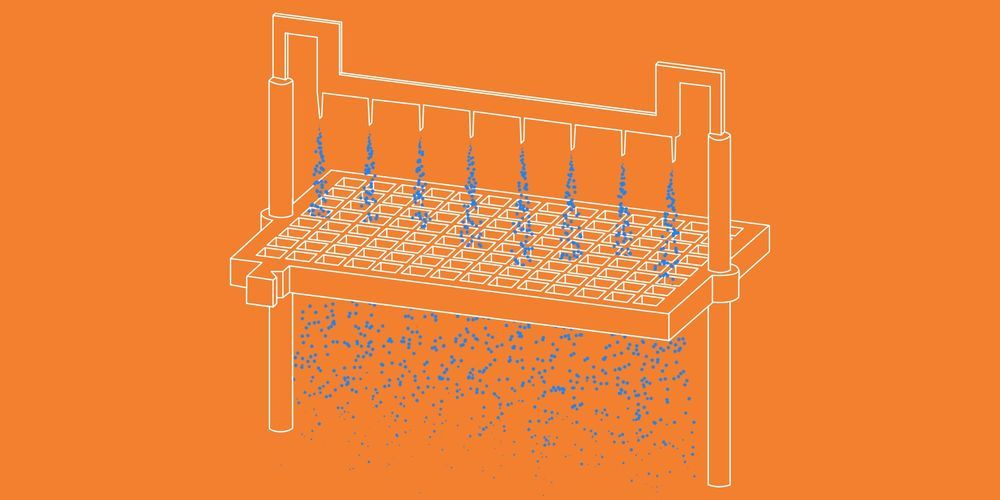
Just as Henry Ford’s assembly line revolutionized the automobile industry, synthetic biology is being revolutionized by automated DNA assembly (see SynBioBetaLive! with Opentrons). The key features of an assembly line translate well into the field of synthetic biology – speed, accuracy, reproducibility and validation. Instead of welding chassis together, small robotic arms are lifting delicate plates holding dozens of samples, adding and removing miniscule amounts of fluid.
In 2014, Imperial College London received £2 million to develop a DNA Synthesis and Construction Foundry to operate with SynbiCITE, the UK Innovation and Knowledge Centre for synthetic biology. Speaking at the Foundry’s inception, SynbiCITE co-director Prof. Paul Freemont said, “Standardizing the methods for synthesising DNA is crucial if we are going to scale up efforts to design and create this genetic material. The new DNA Synthesis and Construction Foundry will streamline and automate the ‘writing’ of DNA at an industrial scale so that tens of thousands of designed DNA constructions can be built and tested.”
Kinema Systems and GhostRobotics faced off and shared their pitches with the live audience at NVIDIA’S GPU Technology Conference (GTC) to showcase different approaches with autonomous systems using deep learning, machine learning and AI.
Kinema Systems, based in Menlo Park, Calif., is building innovative deep learning and 3D vision-based robotic solutions for logistics and manufacturing.
From Philadelphia, Pa., GhostRobotics is revolutionizing legged robotics and the market for autonomous unmanned ground vehicles used in unstructured terrain and harsh environments.
“In his brilliant book, Kai-Fu Lee applies his superpowers to predicting the disruptive shifts that will define the AI-powered future and proposes a revolutionary social contract that forges a new synergy between AI and the human heart.” – Marc Benioff, Chairman & CEO Salesforce.
“AI is surpassing human intelligence in more and more domains, transforming the planet. Kai-Fu Lee has been at the epicentre of the AI revolution for thirty years and has now written the definitive guide.” – Erik Brynjolfsson, professor, MIT, bestselling co-author of The Second Machine Age and Machine, Platform, Crowd
“Kai-Fu Lee is at the forefront of the coming AI revolution, helping us transcend the limitations of thought, reach, and vision. This seminal book on AI is a must read for anyone serious about understanding the future of our species.” – Peter Diamandis, Executive Founder, Singularity University; bestselling author of Abundance and BOLD.
Denis Aabo Sørensen lost his left hand nine years ago, while handling fireworks. Since then, he has used prosthetic hands, but never one like this. Last year, a team of European engineers created for him a prosthetic hand that connects directly to the remaining nerves in his upper arm. That means the hand is able to send sensations of touch back through his arm and into his brain. Plus, when Sørensen wanted to grab something, he could move the hand by simply thinking about it.
Take a look at these cool robots!
The University of Central Lancashire (UCLan) has unveiled the world’s first graphene skinned plane at an internationally renowned air show. Juno, a three-and-a-half-metre wide graphene skinned aircraft, was revealed on the North West Aerospace Alliance (NWAA) stand as part of the ‘Futures Day’ at Farnborough Air Show 2018.
The University’s aerospace engineering team has worked in partnership with the Sheffield Advanced Manufacturing Research Centre (AMRC), the University of Manchester’s National Graphene Institute (NGI), Haydale Graphene Industries (Haydale) and a range of other businesses to develop the unmanned aerial vehicle (UAV), which also includes graphene batteries and 3D printed parts.
Billy Beggs, UCLan’s Engineering Innovation Manager, said: The industry reaction to Juno at Farnborough was superb with many positive comments about the work we’re doing. Having Juno at one the world’s biggest air shows demonstrates the great strides we’re making in leading a programme to accelerate the uptake of graphene and other nano-materials into industry.