Toggle light / dark theme

This Robotic Arm Inspired by Luke Skywalker Has Allowed an Amputee to Feel Again

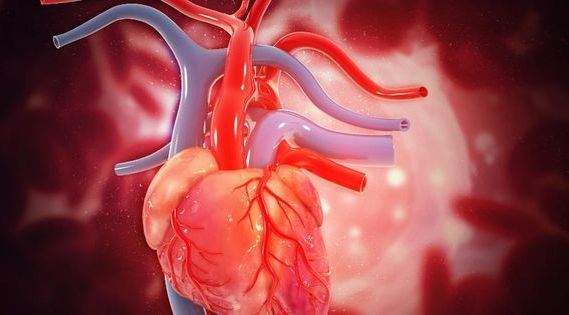
Research on robotic prostheses is coming along in leaps and bounds, but one hurdle is proving quite tricky to overcome: a sense of touch. Among other things, this sense helps us control our grip strength — which is vitally important when it comes to having fine motor control for handling delicate objects.

Enter a new upgrade for the LUKE Arm — named for Luke Skywalker, the Star Wars hero with a robotic hand. Prototype versions of this robotic prosthesis can be linked up to the wearer’s nerves.

And, thanks to biomedical engineers at the University of Utah, for the participants of their experimental study, the arm can now also produce an ability to feel. This spectacular advance allowed one wearer to handle grapes, peel a banana, and even feel his wife’s hand in his.

Why ‘upgrading’ humanity is a transhumanist myth

Click on photo to start video.

Though some computer engineers claim to know what human consciousness is, many neuroscientists say that we’re nowhere close to understanding what it is — or its source.

In this video, bestselling author Douglas Rushkoff gives the “transhumanist myth” — the belief that A.I. will replace humans — a reality check. Is it hubristic to upload people’s minds to silicon chips, or re-create their consciousness with algorithms, when we still know so little about what it means to be human?

You can read more about Rushkoff’s perspective on this issue in his new book, Team Human.

What is Machine Learning (Unsupervised Learning) — Part 2

This video was made possible by Brilliant. Be one of the first 200 people to sign up with this link and get 20% off your premium subscription with Brilliant.org! https://brilliant.org/singularity

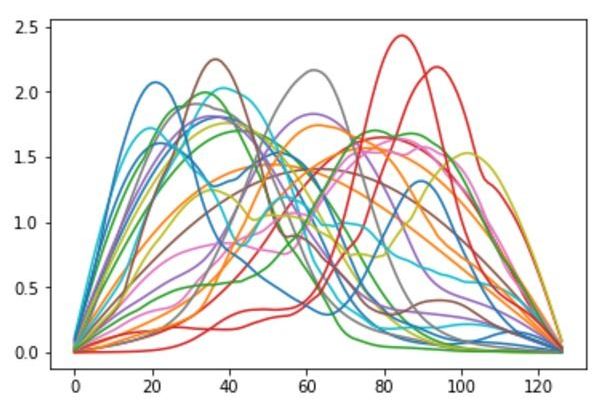
In the last video in this series, we started on a quest to clear up the misconceptions between artificial intelligence and machine learning, beginning with discussing supervised learning, an essential foundational building block in understanding the modern field of machine learning.

The focus of this video then will continue right were the last one left off, so sit back, relax and join me once again in an exploration into the field of machine learning — more specifically, unsupervised learning!

Thank you to the patron(s) who supported this video ➤

Wyldn pearson garry ttocsra brian schroeder

Become A Channel Member, Patron or Make A Donation ➤.

UPS Seeks Authority for Commercial Drone Flights

The parcel carrier said Tuesday it had applied to the Federal Aviation Administration for certification of drone flights through the company’s recently formed subsidiary called UPS Flight Forward Inc.

The certification if approved, would allow drone flights beyond an operator’s visual line of sight, at night and without limit to the number of drones or operators in command, the company said. Such flights are highly restricted in the U.S.

The FAA is working out the regulatory framework to govern commercial uses of unmanned aircraft, which has been generally restricted to flights below 400 feet and within sight of an operator on the ground.

Elon Musk Now Wants To Implant Computers Into Human Brains

This new tech is the product of Neuralink, a company that Elon founded in 2016 with a goal of creating an implantable brain-computer interface (BCI) and yes, it is as crazy as it sounds.

He stated that the initial goal with this is to enable people with quadriplegia (paralysis) to control a smartphone or computer with just their thoughts. But anyone that knows the entrepreneur knows that he intends to go bigger than that.

His vision also consists of giving humans the ability to “merge” with AI and therefore give them superhuman intelligence. This is what may then seem like an objective that is too hype to be an actual plan for new technology development.

Microsoft, Google and the Artificial Intelligence Race

Microsoft and Google companies want to be central to the development of the thinking machine.


The decision by Microsoft to invest $1 billion in OpenAI, a company jointly founded by Elon Musk, brings closer the time when machines threaten to replace humans in any tasks that humans do today.

OpenAI, which was founded just four years ago, has pioneered a range of technologies which have pushed the frontiers of massive data processing in defiance of the physical and computer capabilities that governed such developments for generations.

Now, with the investment from Microsoft, the pace of technological change is likely to accelerate rapidly. Today, Artificial Intelligence is at a level of what is known as ‘weak AI’ and relies on humans to create the algorithms which allow for the crunching of massive amounts of data to produce new and often predictive results. Artificial General Intelligence, or Strong AI, will herald a new era when robots will essentially be able to think for themselves.

/* */