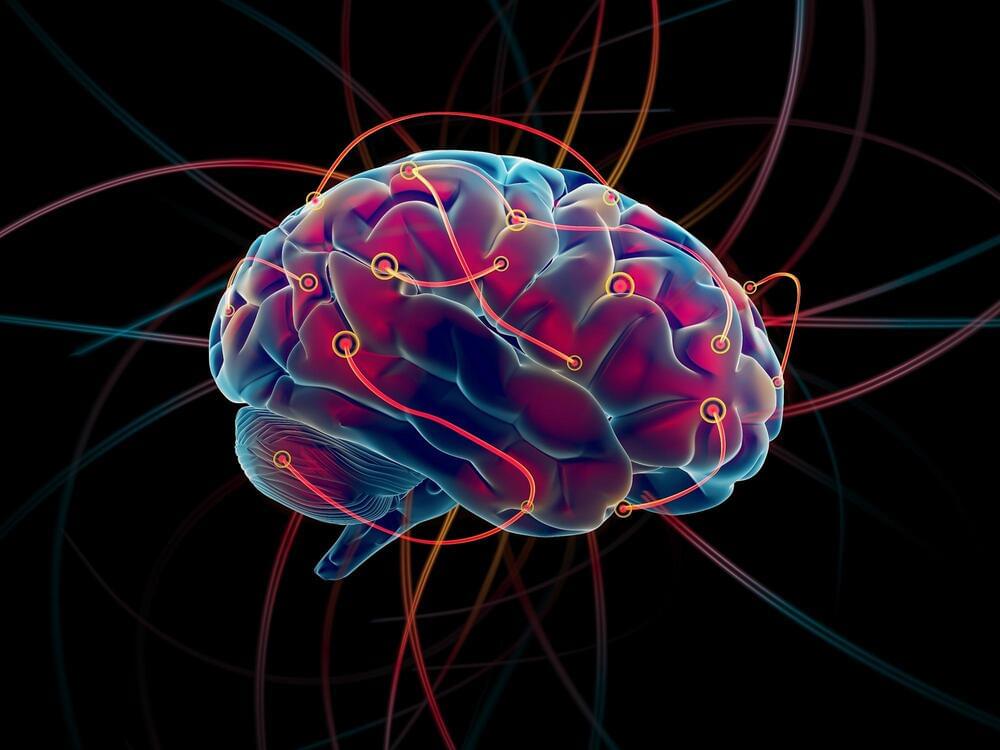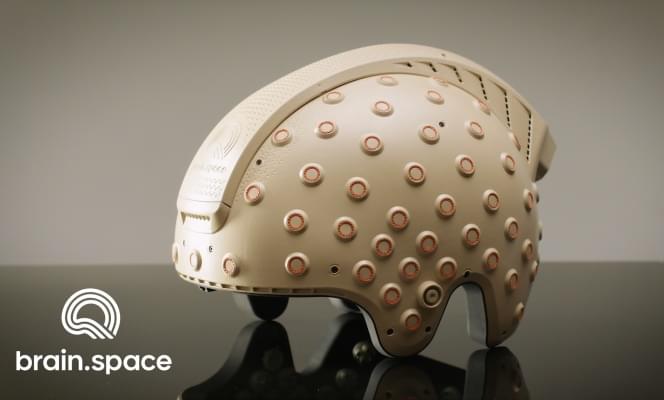
Scientists achieve brain to brain communication between humans.
We need to know whether a gathering individual could work together utilizing just their cerebrums.
Scientists achieve brain to brain communication between humans.
We need to know whether a gathering individual could work together utilizing just their cerebrums.
Based on a novel intertwined theoretical and experimental approach, we examined one of the pillars of the Orch OR model, namely the gravity-related collapse model. In this context, we examined the Orch OR calculations using the gravity-related (called Diosi-Penrose, DP, for reasons we explain in the article) theory along with recent experimental constraints on the DP cutoff parameter (R0). We showed that, in this context, the Orch OR based on the DP theory is definitively ruled out for the case of atomic nuclei level of separation, without needing to consider the impact of environmental decoherence; we also showed that the case of partial separation requires the brain to maintain coherent superpositions of tubulin of such mass, duration, and size that vastly exceed any of the coherent superposition states that have been achieved with state-of-the-art optomechanics and macromolecular interference experiments. We conclude that none of the scenarios we discuss (with possible exception to the case of partial separation of tubulins) are plausible.
When our phones and computers run out of power, their glowing screens go dark and they die a sort of digital death. But switch them to low-power mode to conserve energy, and they cut expendable operations to keep basic processes humming along until their batteries can be recharged.
Our energy-intensive brain needs to keep its lights on too. Brain cells depend primarily on steady deliveries of the sugar glucose, which they convert to adenosine triphosphate (ATP) to fuel their information processing. When we’re a little hungry, our brain usually doesn’t change its energy consumption much. But given that humans and other animals have historically faced the threat of long periods of starvation, sometimes seasonally, scientists have wondered whether brains might have their own kind of low-power mode for emergencies.
Now, in a paper published in Neuron in January, neuroscientists in Nathalie Rochefort’s lab at the University of Edinburgh have revealed an energy-saving strategy in the visual systems of mice. They found that when mice were deprived of sufficient food for weeks at a time — long enough for them to lose 15%-20% of their typical healthy weight — neurons in the visual cortex reduced the amount of ATP used at their synapses by a sizable 29%.
[Epistemic Status: written off the top of my head, thought about it for over a decade]
What do we desire for a theory of consciousness?
We want it to explain why and how the structure of our experience is computationally relevant. Why would nature bother to wire, not only information per se, but our experiences in richly structured ways that seem to track task-relevant computation (though at times in elusive ways)?
The brain is the central information center and constantly monitors the state of every organ present in a body. Previous research has shown that the brain also receives signals from the gut microbiota.
In a new Immunity journal study, researchers discuss the work of Gabanyi et al. (2022), published in a recent issue of Science, which reveals that hypothalamic gamma-aminobutyric acid (GABAergic) neurons recognize microbial muropeptides through the cytosolic receptor NOD2, which regulates food intake and body temperature.
Scientists from the University of California, Irvine have discovered that an injury to one part of the brain changes the connections between nerve cells across the entire brain. The new research was published this week in Nature Communications.
Every year in the United States, nearly two million Americans sustain a traumatic brain injury (TBI). Survivors can live with lifelong physical, cognitive and emotional disabilities. Currently, there are no treatments.
One of the biggest challenges for neuroscientists has been to fully understand how a TBI alters the cross-talk between different cells and brain regions.
Rune Labs, a precision neurology company, has announced its StrivePD software ecosystem for Parkinson’s disease has been granted 510(k) clearance by the US Food and Drug Administration (FDA) to collect patient symptom data through measurements made by Apple Watch.
By combining powerful wearable technology and self-reported symptom information with brain imaging, electrophysiology, genetic and other clinical data, StrivePD enables a data-driven approach to care management and clinical trial design for Parkinson’s.
Longevity. Technology: With this clearance, the Rune Labs’ StrivePD app enables precision clinical care and trial participation for tens of thousands of Parkinson’s patients who already use these devices in their daily lives.
Summary: Using single-cell technology, researchers discover how the social division of labor in an ant colony reflects in the functional specialization of the ant brain at a cellular level.
Source: BGI Group.
International researchers led by China’s BGI-Research used single cell technology to study the brains of ants, explaining for the first time how the social division of labor within ant colonies reflects in the functional specialization of their brains at cellular levels.
Enjoy the talk given by Liz Parrish on June 14, 2022 during the Digital Enterprise Show 2022. The event took place from June 14th to the 16th in Málaga, Spain.
BioViva Science is using bioinformatics to improve gene therapies to enhance healthy human longevity and combat age-related diseases like Alzheimer’s, diabetes, cancer, and heart disease. TimeKeeper™ is an epigenetic clock and the BioViva BioVault™ is a bioinformatics database for researchers and consumers.