A newly released neuroimaging study reveals that young adults who heavily overuse smartphones show altered functional connectivity in the amygdala. These specific neural differences correlate to everyday difficulties in managing negative emotions.
ADAMTS7 has been repeatedly associated with coronary artery disease.
https://doi.org/10.1172/JCI187451 In this Research Article, Robert C. Bauer & team use the largest human atherosclerosis carotid artery scRNA-seq dataset and new mouse models to demonstrate that ADAMTS7 is expressed across multiple vascular cell types and contributes to atherosclerosis by promoting lipid accumulation in smooth muscle cells.
The image shows smooth muscle cells labeled with ZsGreen and counterstained with DAPI (blue) for nuclei—indicating increased foam cells from a diet-induced mouse model of atherosclerosis with Adamts7-overexpressing SMCs were from SMC origin.
1Cardiometabolic Genomics Program, Division of Cardiology, Department of Medicine, Columbia University, New York, New York, USA.
2Department of Biostatistics, Epidemiology and Informatics, University of Pennsylvania Perelman School of Medicine, Philadelphia, Pennsylvania, USA.
Address correspondence to: Robert C. Bauer, Cardiometabolic Genomics Program, Division of Cardiology, Department of Medicine, Columbia University, 630 W. 168th Street, PS10-401, New York, New York 10,032, USA. Phone: 1.212.342.0952; Email: [email protected].
To improve the ability of metapipeline-DNA to determine where changes in the genome have occurred, the scientists worked with the Genome in a Bottle Consortium led by the U.S. Department of Commerce’s National Institute of Standards and Technology. By incorporating this public-private-academic consortium’s meticulously validated resources, the researchers reduced the rate of false positives without reducing the tool’s precision in finding true genetic variants.
The researchers also produced two case studies demonstrating the pipeline’s capabilities for cancer research. The investigators used metapipeline-DNA to analyze sequencing data from five patients that donated both normal tissue and tumor samples, as well as another five from The Cancer Genome Atlas.
The next step is to get metapipeline-DNA into more labs to accelerate discoveries, and to continue improving the resource with more user feedback. ScienceMission sciencenewshighlights.
In a single experiment, scientists can decipher the entire genomes of many patient samples, animal models or cultured cells. To fully realize the potential to study biology at this unprecedented scale, researchers must be equipped to analyze the titanic troves of data generated by these new methods.
Scientists published findings in Cell Reports Methods discussing building and testing a new computational tool for tackling massive and complex sequencing datasets. The new resource, named metapipeline-DNA, may also make sequencing data analysis more standardized across different research labs.
The sequence of a single human genome represents about 100 gigabytes of raw data, the rough equivalent of 20,000 smartphone photos. The sheer scale of experimental data increases significantly as tens or hundreds of genomes are added into the mix.
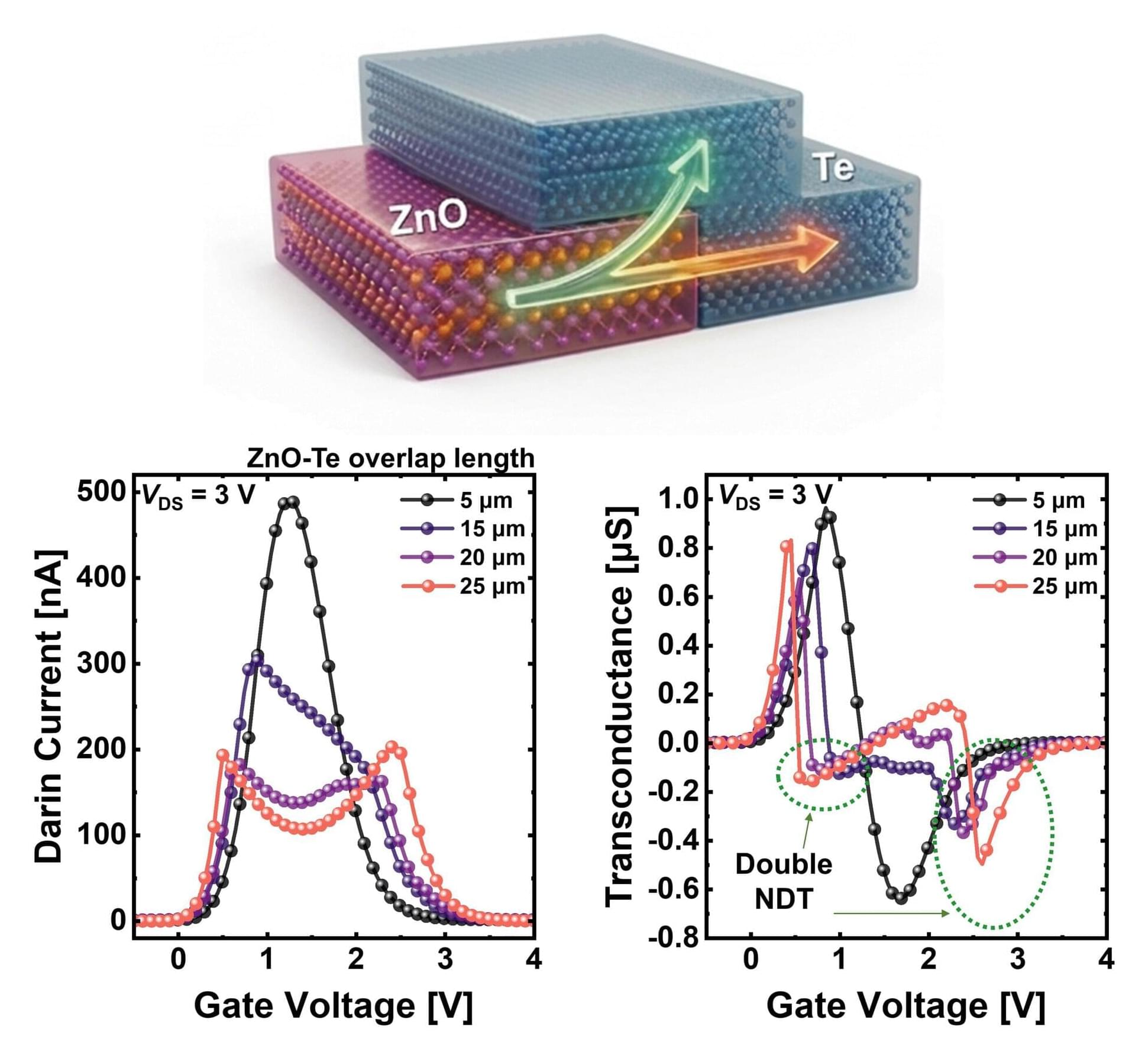
The high-performance semiconductor devices powering smartphone displays, AI computing, EV batteries and more are increasingly incorporating 2D materials to overcome silicon’s scaling limits. To optimize these technologies, a University of Michigan Engineering team developed a precise mathematical framework that accounts for anisotropic—or unevenly spreading—conductivity and device geometry.
Accurate models of how currents move through anisotropic thin films, made of layered 2D materials, can enable the design of more reliable, high-performance nanoelectric devices. Specifically, the model can help engineers reduce current crowding and spreading resistance, essentially current traffic jams, that occur at vertical electrical contacts that connect with the top of a 2D surface. The study is published in ACS Applied Electronic Materials.
A team of international researchers have developed a breakthrough way to observe what is happening inside electronic chips while they are operating—without touching them, taking them apart, or switching them off. The new technique uses terahertz waves, a safe and non-ionizing form of electromagnetic radiation, to detect tiny movements of electrical charge inside fully packaged semiconductor devices. For the first time, this allows scientists and engineers to monitor electronic components as they function in the real world.
The study, published in the IEEE Journal of Microwaves, involves researchers from Adelaide University in Australia, US technology company Virginia Diodes Inc, the Hasso Plattner Institute and the University of Potsdam, Germany.
Adelaide University Group Leader of the Terahertz Engineering Laboratory (TEL), Professor Withawat Withayachumnankul, said that semiconductors underpin almost every modern technology, from smartphones and medical devices to vehicles, power grids and defense systems.
You’re late for an important appointment. Just as you are leaving your house, you realize your phone is flat. Imagine you could charge it almost instantly by exploiting the strange rules of quantum physics. That’s the promise of quantum batteries.
My colleagues and I at CSIRO have developed the world’s first quantum battery prototypes —and the direction the technology has taken is surprising.
A new exploit kit for iOS devices and delivery framework dubbed “DarkSword” has been used to steal a wide range of personal information, including data from cryptocurrency wallet apps.
DarkSword targets iPhones running iOS 18.4 through 18.7 and is linked to multiple actors, including UNC6353, suspected to be Russian, who used the Coruna exploit chain disclosed earlier this month.
Researchers at mobile security company Lookout discovered DarkSword while investigating the infrastructure used for the Coruna attacks. Google’s Threat Intelligence Group and iVerify also collaborated for a more comprehensive analysis of this previously unknown threat and the adversaries leveraging it.
Researchers at Pointcloud GmbH in Zürich, Switzerland, have packed advanced 4D sensing technology — once too bulky for everyday use — onto a single silicon chip.
It’s a 4D imaging sensor that maps the physical world while simultaneously clocking the speed of every object it sees. It offers a low-cost, high-speed vision solution for everything from autonomous drones to future smartphones.
“This result demonstrates the capabilities of FMCW LiDAR FPA sensors as enablers of ubiquitous, low-cost, compact coherent 4D imaging cameras,” the researchers wrote in the study paper.
Apple has released its first Background Security Improvements update to fix a WebKit flaw tracked as CVE-2026–20643 on iPhones, iPads, and Macs without requiring a full operating system upgrade.
The CVE-2026–20643 flaw allows malicious web content to bypass the browser’s Same Origin Policy.
Apple says the flaw is a cross-origin issue in the Navigation API that was addressed with improved input validation.