Toggle light / dark theme

Kim Jong Un surfaces — North Korea leader spotted at factory visit on May Day

Seoul/New York: Kim Jong Un ended his almost three-week absence from public events with a factory visit, an appearance that will ease, but not end, concern about the stability of the North Korean regime and control of its nuclear arsenal.

Kim presided over a May Day ceremony to mark the completion of the Sunchon Phosphatic Fertilizer Factory northeast of the capital Pyongyang, the official Korean Central News Agency reported early Saturday. State media released photos showing the North Korean leader in a black Mao suit cutting a ribbon outside the facility, which non-proliferation experts say could be used to help produce fissile material for nuclear bombs.

U.S. President Donald Trump declined to comment on Kim’s reemergence besides telling reporters before heading to Camp David for the weekend that he “may” speak with the North Korean leader. “We’ll have something to say about it at the appropriate time,” Trump said.

Researchers see path to quantum computing at room temperature

Army researchers predict quantum computer circuits that will no longer need extremely cold temperatures to function could become a reality after about a decade.

For years, solid-state quantum technology that operates at room temperature seemed remote. While the application of transparent crystals with had emerged as the most likely route to this milestone, the plausibility of such a system always remained in question.

Now, Army scientists have officially confirmed the validity of this approach. Dr. Kurt Jacobs, of the U.S. Army Combat Capabilities Development Command’s Army Research Laboratory, working alongside Dr. Mikkel Heuck and Prof. Dirk Englund, of the Massachusetts Institute of Technology, became the first to demonstrate the feasibility of a quantum logic gate comprised of and optical crystals.

Can Electric Cars on the Highway Emulate Plane-to-Plane Refueling?

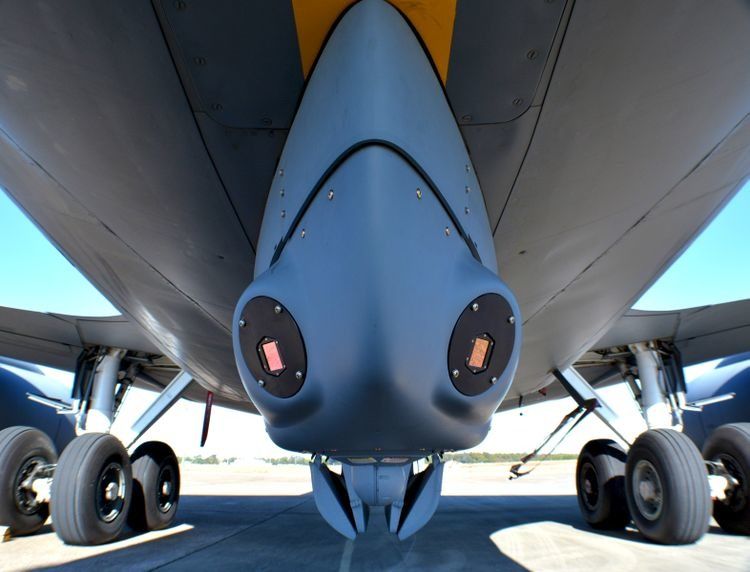
Jet fighters can’t carry a huge tank of fuel because it would slow them down. Instead they have recourse to air-to-air refueling, using massive tanker planes as their gas stations. If electric vehicles could pull off the same kind of peer-to-peer charging scheme it could eliminate range phobia and speed the adoption of EVs.


On-the-road peer-to-peer charging depends on steerable booms to make the connection.

Robots Will Replace Soldiers In Combat, Says Russia

Russia continues it’s pursuit of Killer Robots. Battlefield deployment can be expected soon. Civilian deaths caused by the erroneous decisions of a robot are imminent.

Ban Killer Robots!


While some Russian robots have underperformed expectations in combat, the Ministry of Defence is working on a new generation of combat machines for training and possible future use. At the center of this design is the Marker UGV, or uncrewed ground vehicle. Resembling a miniature tank with treads and turrets, the Marker is as much a test bed as it is a machine expected to see battle.

“The Ministry of Defence is discussing the eventual use of robotic swarms in combat— and Marker is definitely the platform to test that out,” says Bendett, an Adjunct Senior Fellow at CNAS. “As envisioned, it will be able to launch swarms of UAVs or loitering munitions, making it a truly versatile robotic platform.”

The development parallels many robotic programs under way in the United States. It is remarkable, too, that both nations have hit upon swarms of ground robots as a way to supplement existing human formations in combat. Russia plans to test swarms of ground robots later in 2020.

Engineers, medical team design 3D-printed ventilator that requires no electricity

A research collaboration and ensuing friendship between a trauma surgeon in Oregon and a handful of engineers in Florida has resulted in a new ventilator design that requires no electricity and could be a game-changer during the COVID-19 pandemic.

Albert Chi, who specializes in critical care and prosthetics, was keeping a close eye on COVID-19 during the early days. He immediately began working with his team at Oregon Health and Science University to develop a new, easy way to replicate ventilators that could be deployed anywhere. Specializing in trauma, Chi as a retired commander of the U.S. Navy Reserve and well versed in extreme conditions.

When Chi had a design, he called his friend and clinical-trial collaborator Albert Manero CEO and co-founder of Limbitless Solutions in Orlando, Florida.

Air Force Wants 30 Flying Cars in the Next 10 Years

“Most of the vendors have a plan to have a pilot as well as autonomous operations,” he added.

“Since we have put our hand up and said, ‘We want to accelerate this market so that it’s dual-use, the military wants to buy the exact same vehicle that would be available domestically,’ companies have shared with us privately that they have seen the amount of investment given by venture capitalists go up,” Roper said. “And they expect that that will continue the further we go through the door on competition.”

The Air Force plans to request funding for flying car research in the fiscal 2022 budget request, in addition to the research funding the service already set aside for the experiment, he said.

New research shows the Army could soon develop a rifle with hyper-velocity rounds

Circa 2019


But perhaps soldiers should be glad that the Army didn’t go with the infamous Heckler & Koch G11 or the futuristic XM29 OICW, or the ill-fated XM8 assault rifle.

Instead of a very conventional rifle firing the 5.56 NATO round, the Army is now rapidly progressing towards developing and field-testing a new weapon that can double the muzzle speeds of a bullet.

The primary advantages to this new (and no-so-new) technology are insane armor-penetration capabilities at close ranges, and next-level accuracy at longer ranges.

New Engines Will Keep the B-52 Bomber Flying for 100 Years

The U.S. Air Force’s fleet of B-52H heavy strategic bombers are on track to becoming a fleet of flying centenarians. The service wants to purchase over 600 new engines for its B-52s, ensuring that the “Big Ugly Fat Fella” can fly on to 2050 or later. This will practically ensure that some bombers, delivered in the early 1960s, will still be dropping bombs in the early 2060s.

/* */