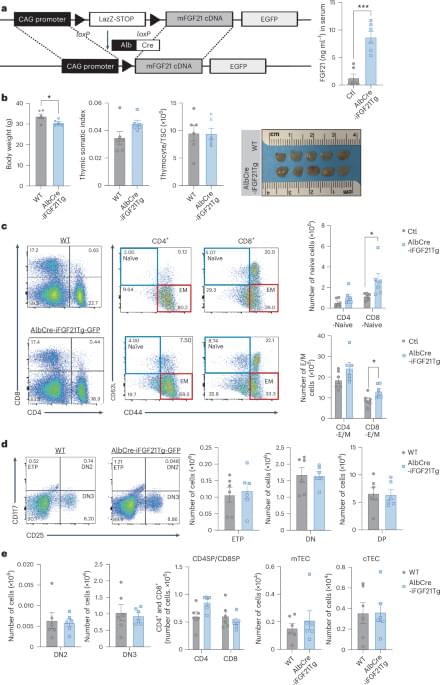
Youm et al. demonstrate that elevating locally derived FGF21 delays thymic aging and extends organismal healthspan, dependent in part on expression of the FGF21 co-receptor β-klotho on thymic epithelial cells.

The impact of the collapse extended far beyond the immediate disruption to traffic and businesses in the area, affecting wastewater services for 1.2 million residents in the prefecture. Authorities called on inhabitants of surrounding cities to reduce their water usage, pressing them to curtail activities like bathing and washing clothing. In addition, wastewater was collected to reduce the flow to the damaged pipe, with the effluent then chlorinated and released into a nearby river, potentially damaging the environment.
The wide scale of service disruption is linked to Japan’s approach to wastewater management. Wastewater operations are overseen by public sewage systems operated by a single municipality or regional sewage systems operated jointly by multiple municipalities. The pipeline in Yashio was in the latter category and carried wastewater collected from 12 municipalities. While such regional management systems provide significant advantages to cities in terms of efficiency and cost savings, the failed pipe and resulting sinkhole illustrates the risk of widespread disruption of services when anything goes wrong.
Moreover, the incident laid bare the fragile state of Japan’s sewage infrastructure. Morita Hiroaki, who heads the prefectural panel studying the gargantuan task of repairing the damaged pipe, highlighted the direness of the situation when he warned that reconstruction could take at least two or three years to complete.
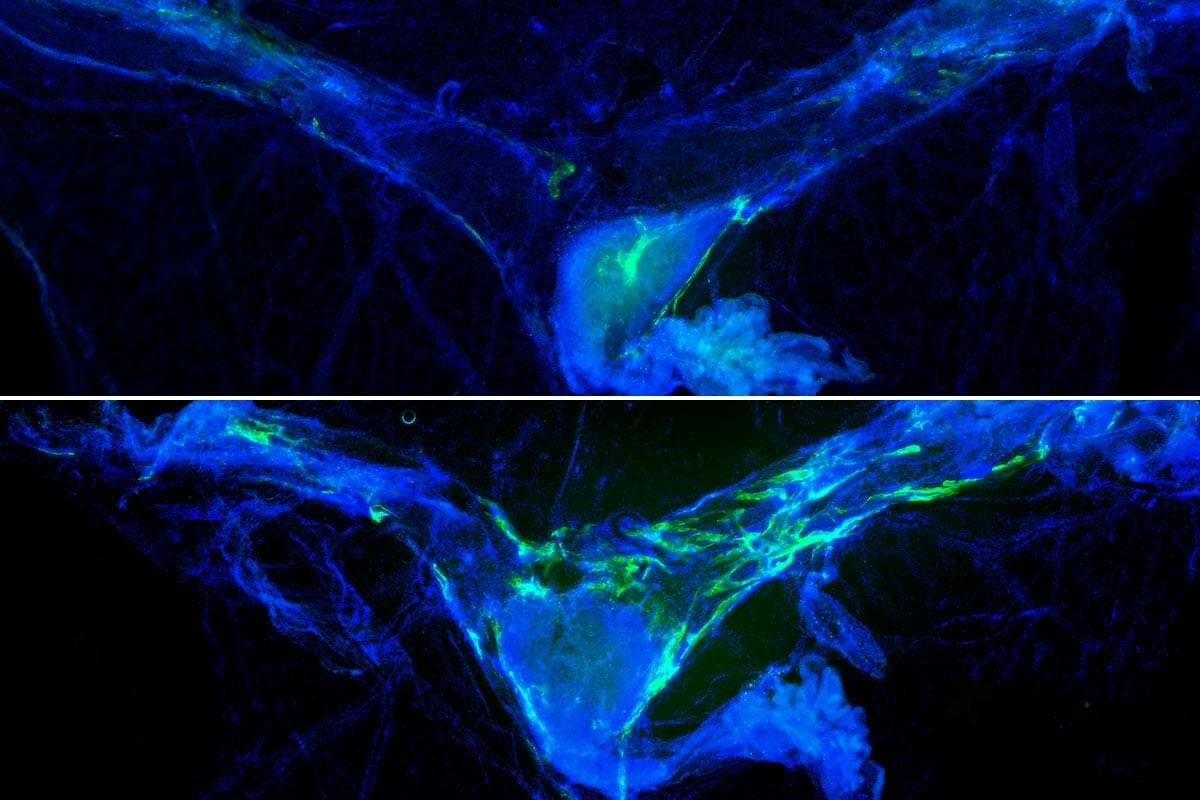
As aging bodies decline, the brain loses the ability to cleanse itself of waste, a scenario that scientists think could be contributing to neurodegenerative conditions such as Alzheimer’s disease and Parkinson’s disease, among others.
Now, researchers at Washington University School of Medicine in St. Louis report they have found a way around that problem by targeting the network of vessels that drain waste from the brain. Rejuvenating those vessels, they have shown, improves memory in old mice.
The study, published online in the journal Cell, lays the groundwork to develop therapies for age-related cognitive decline that overcome the challenges faced by conventional medications that struggle to pass through the blood-brain barrier to reach the brain.
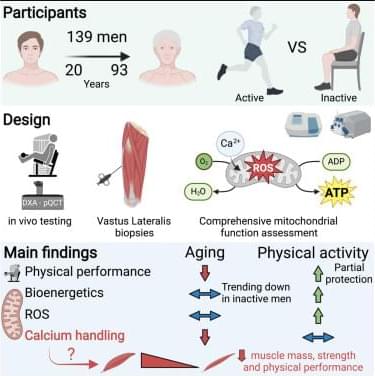
Cefis et al. show that mitochondrial respiration and ROS production are not affected during healthy muscle aging but identify altered mitochondrial calcium handling as a potential key driving mechanism. They also highlight physical activity as a powerful stimulus to enhance physical performance and mitochondrial energetics throughout the human adult lifespan.

Filipino researchers have optimized the traditional method of producing Philippine rice wine, known as tapuy, to enhance its nutritional value, potentially making it a superfood rich in antioxidants and anti-aging compounds.
Edward Kevin B. Bragais of Ateneo de Manila University and Paul Mark B. Medina of the University of the Philippines investigated how different starter cultures, specific microorganisms used to initiate fermentation, locally called bubod, affect the solid byproducts of winemaking. These byproducts, known as lees, consist mainly of rice residues, yeast, and other microbial compounds and are typically discarded.
The researchers found that by optimizing the fermentation process with a well-defined microbial culture, tapuy lees could become a valuable source of natural compounds with potential medical and nutritional benefits.
Protecting pneumococcal infection in elderly.
The researchers. provide insights into mechanisms underlying respiratory bacterial susceptibility in the elderly.
Circadian rhythms is impaired in the aging process. The authors wanted to figure out the relation ship between impaired circadian rhythm and bacterial infections during aging.
They demonstrate that the altered circadian expression of the nuclear receptor Rev-erb-a and the apelin/apelin receptor (APJ) in aged lungs associates with dysregulated time-of-day control of pulmonary immune defenses against pneumococcal infections.
The authors found an interaction between Rev-erb-α and the apelinergic axis that controls host defenses against S. pneumoniae via alveolar macrophages. Pharmacological repression of Rev-erb-α in elderly mice resulted in greater resistance to pneumococcal infection. https://sciencemission.com/pneumococcal-infection-in-elderly
Silva Angulo et al. provide insights into mechanisms underlying respiratory bacterial susceptibility in the elderly. The authors demonstrate that the altered circadian expression of the nuclear receptor Rev-erb-α and the apelin/apelin receptor (APJ) in aged lungs associates with dysregulated time-of-day control of pulmonary immune defenses against pneumococcal infections.
“.
Gene therapy was used to increase levels of Klotho, one of the first longevity genes discovered in the 1990’s, in mice. This led to improved physical fitness, muscular regenerative capacity, bone micrstructure, neurogenesis and a 20% increase in lifespan.
Contents:
Intro 0:00
Figure 1 — Longevity experiment follow-up and AAV treatment effectivity assessment 1:20
Figure 2 — Physical tests and histological analysis of muscular tissue from treated naturally aged animals 4:04
Figure 3 — Histological analysis of muscle from s-KL-treated animals 7 days after transplantation 6:27
Figure 4 — MicroCT structural and gene expression analysis in treated bones of 24-MO mice 7:34
Figure 5 — Histological analysis of Iba1, GFAP, and neurogenesis markers in CNS from aged animals 8:52
Figure 6 — Transcriptomic analysis of hippocampal RNA-seq data 9:59
Graphical Abstract & Conclusion 11:04.
Study reviewed:

The healthcare industry faces a significant shift towards digital health technology, with a growing demand for real-time and continuous health monitoring and disease diagnostics [1, 2, 3]. The rising prevalence of chronic diseases, such as diabetes, heart disease, and cancer, coupled with an aging population, has increased the need for remote and continuous health monitoring [4, 5, 6, 7]. This has led to the emergence of artificial intelligence (AI)-based wearable sensors that can collect, analyze, and transmit real-time health data to healthcare providers so that they can make efficient decisions based on patient data. Therefore, wearable sensors have become increasingly popular due to their ability to provide a non-invasive and convenient means of monitoring patient health. These wearable sensors can track various health parameters, such as heart rate, blood pressure, oxygen saturation, skin temperature, physical activity levels, sleep patterns, and biochemical markers, such as glucose, cortisol, lactates, electrolytes, and pH and environmental parameters [1, 8, 9, 10]. Wearable health technology includes first-generation wearable technologies, such as fitness trackers, smartwatches, and current wearable sensors, and is a powerful tool in addressing healthcare challenges [2].
The data collected by wearable sensors can be analyzed using machine learning (ML) and AI algorithms to provide insights into an individual’s health status, enabling early detection of health issues and the provision of personalized healthcare [6,11]. One of the most significant advantages of AI-based wearable health technology is to promote preventive healthcare. This enables individuals and healthcare providers to proactively address symptomatic conditions before they become more severe [12,13,14,15]. Wearable devices can also encourage healthy behavior by providing incentives, reminders, and feedback to individuals, such as staying active, hydrating, eating healthily, and maintaining a healthy lifestyle by measuring hydration biomarkers and nutrients.

Contact: Cara Martinez | Email: [email protected]
Los Angeles — April 14, 2015 – An injection of stem cells into the eye may soon slow or reverse the effects of early-stage age-related macular degeneration, according to new research from scientists at Cedars-Sinai. Currently, there is no treatment that slows the progression of the disease, which is the leading cause of vision loss in people over 65.
“This is the first study to show preservation of vision after a single injection of induced neural progenitor stem cells into a AMD-like rat model for retinal degeneration,” said Shaomei Wang, MD, PhD, lead author of the study published in the journal STEM CELLS and a research scientist in the Eye Program at the Cedars-Sinai Board of Governors Regenerative Medicine Institute.