Toggle light / dark theme

Scientists Discover Existence of an Elusive Superconductive State First Predicted in 2017

In a ground-breaking experiment, researchers from the University of Groningen collaborated with their peers from Nijmegen and Twente universities in the Netherlands, and the Harbin Institute of Technology in China. Together, they confirmed the existence of a superconductive state that was first predicted in 2017.

Their findings, which demonstrate evidence for a unique form of the FFLO superconductive state, were recently published in the journal Nature. This breakthrough has the potential to be impactful, particularly within the field of superconducting electronics.

Forecasting community Metaculus predicts human-like AI by 2026

Im still in the 2029 camp. But if it happens soon would be great. And, i still project ASI 5 years after arrival of Agi.


The online forecasting community Metaculus currently predicts that there will be a weak human-like AI in January 2026. This is about 25 years earlier than the early 2020 prediction.

Metaculus is a forecasting platform and community focused on compiling and refining predictions about various events, scientific advances, technological breakthroughs, and other topics. Participants submit their predictions to questions posed on the platform, and these predictions are combined into a consensus forecast.

Metaculus uses a scoring system to incentivize accurate predictions and to track participants’ performance over time. This motivates them to revisit and update their forecasts as new information becomes available. The platform is open to anyone who wants to participate.

What makes US Precision Guided Missiles “FLOP” In Ukraine?

Electronic warfare systems are now able to jam precision guided weapons.


In the midst of ongoing conflict, Ukrainian forces are leveraging US-supplied glide bombs to their advantage. This video delves into the use of two distinct glide bombs: the GLSDB (Ground-Launched Small Diameter Bomb) and the JDAM-ER (Joint Direct Attack Munition-Extended Range). However, these American-made guided weapons are facing challenges due to Russia’s electronic interference, impacting their precision and effectiveness.

Despite the initial success of the HIMARS system in Ukraine’s counteroffensive in September 2022, recent reports suggest that Russian electronic jammers have disrupted the system’s GPS-guided targeting, leading to missed targets. The stakes are high as Ukraine heavily relies on HIMARS to target Russian logistical and military infrastructure.

The video also explores the impact of jamming interference on the operational effectiveness of the JDAM-ER. Despite anti-jamming enhancements, Russia’s advanced electronic warfare systems are influencing the flight path of these intelligent weapons.

This video provides an in-depth analysis of the ongoing electronic warfare and the countermeasures being developed. It highlights the need for continuous innovation and adaptation in the face of evolving warfare tactics. Watch now to understand the intricate dynamics of modern warfare.

What Will Fashion Retail Look Like In The Future?

The metaverse is emerging as a new platform for fashion and retail, allowing brands to reach consumers through innovative online experiences and immersive digital spaces.

The possibilities are enormous for companies that want to raise brand awareness, improve customer experience, and deepen engagement with their followers. The global apparel market is expected to reach $2.25 trillion by 2025 — and smart brands are leveraging the latest technologies to gain a competitive edge.

Let’s explore some of the ways the future internet will transform how we shop online and engage with retail brands.


The metaverse and web3 technologies have the potential to transform the world for fashion and retail brands.

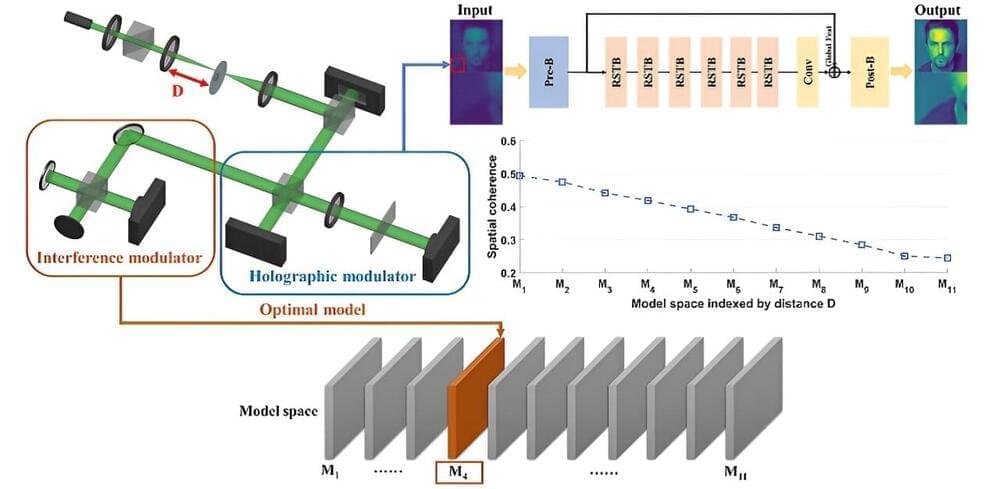
Breakthrough in Photonics: Training Neural Networks at the Speed of Light!

To try everything Brilliant has to offer—free—for a full 30 days, visit https://brilliant.org/AnastasiInTech.
The first 200 of you will get 20% off Brilliant’s annual premium subscription.

The paper: https://www.science.org/doi/10.1126/science.ade8450
How computing with Different Colours of Light works: https://youtu.be/mt8I71VUazw.

00:00 — Photonic Chips.
06:38 — Backpropagation Problem.
07:38 — Training NN with Light.
12:27 — Challenges of Photonic Chips.
13:46 — Investments in Photonics.

This video was sponsored by Brilliant.

👉 Support me at Patreon ➜ https://www.patreon.com/AnastasiInTech.
📩 Sign up for my Deep In Tech Newsletter for free! ➜ https://anastasiintech.substack.com

Mark “Superhero Copycat” Zuckerberg

A better world without Facebook and all its negative impacts would be a significant step forward. Facebook’s dominance and influence have often been associated with issues such as privacy breaches, the spread of misinformation, and the erosion of real social connections. By breaking free from Facebook’s grip, we can foster a healthier online environment that prioritizes privacy, genuine interactions, and reliable information. It is time to envision a world where social media platforms serve as catalysts for positive change, promoting authentic communication and meaningful connections among individuals.

(Image credit: Adobe Stock)

Mark Zuckerberg, the co-founder of Facebook (now Meta), recently celebrated reaching 100 million users in just five days with his new Twitter-like platform called Threads. However, this achievement doesn’t impress me much. Instead, it highlights Zuckerberg’s tendency to imitate rather than innovate.

While I used to admire him, I now realize that he doesn’t belong in the same league as my true idols. Comparing the 100 million sign-ups for ChatGPT to the 100 million Threads users is simply absurd.

OpenAI makes GPT-4 generally available

OpenAI today announced the general availability of GPT-4, its latest text-generating model, through its API.

Starting this afternoon, all existing OpenAI API developers “with a history of successful payments” can access GPT-4. The company plans to open up access to new developers by the end of this month, and then start raising availability limits after that “depending on compute availability.”

“Millions of developers have requested access to the GPT-4 API since March, and the range of innovative products leveraging GPT-4 is growing every day,” OpenAI wrote in a blog post. “We envision a future where chat-based models can support any use case.”

/* */