Toggle light / dark theme

Resolving the Achilles’ Heel of Thermal Hall Conductivity Measurements

For a long time, researchers assumed that phonons could not contribute to the thermal Hall effect because of their lack of charge and spin. New work challenges this assumption.

How heat flows in interacting quantum many-body systems is one of the most interesting open problems in condensed-matter physics. Understanding thermal transport is particularly challenging in systems where charge-carrier contributions to energy transport are strongly suppressed, such as in insulators and superconductors. In such systems, heat transport cannot therefore be understood in terms of electronic carriers alone. In insulators, acoustic phonons are among the main energy carriers in an insulator. However, determining how and to what extent phonons contribute to heat transport in a material is the Achilles’ heel of interpreting thermal conductivity measurements. In particular, whether or not phonons can contribute to the thermal Hall effect—in which a temperature gradient in one direction produces heat flow in a perpendicular direction—remains an open question.

Bubbles Have an Unexpected Chill

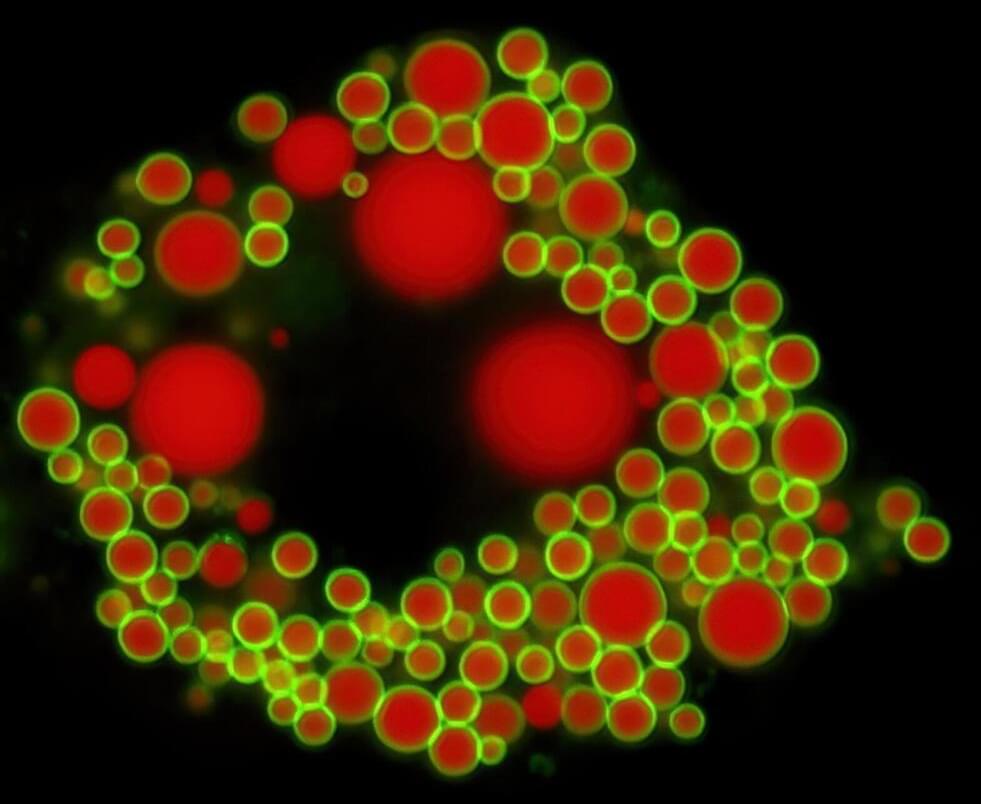
Bubbles are ubiquitous, existing in everything from the foam on a beer to party toys for children. Despite this pervasiveness, there are open questions on the behavior of bubbles, such as why some bubbles are more resistant to bursting than others. Now Francois Boulogne and colleagues from the University of Paris-Saclay have taken a step toward answering that question by measuring the temperature of the film surrounding a soap bubble, finding that it can be significantly lower than that of its local environment [1]. The team says that the result could help industrial manufacturers of bubbles better control the stability of their products.

On a sunny day, our bodies cool down by releasing energy into the environment through the evaporation of sweat. Soap films also release energy by losing liquid via evaporation. Researchers studying bubbles have tracked the evaporation of a soap film’s liquid content under different conditions. But those experiments all assumed that the film’s temperature matched that of the environment, an assumption the results of Boulogne and his colleagues challenge.

In their experiments Boulogne and colleagues created a soap bubble from a mixture made of dishwashing liquid, water, and glycerol. They then measured the soap film’s temperature under a variety of environmental conditions. They found that the film could be up to 8 °C colder than the surrounding air. They also found that glycerol content of the soap film impacted this temperature difference, with films containing more glycerol having higher temperatures. Boulogne says that such a large temperature difference could impact bubble stability. But, he adds, further experiments are needed to corroborate that idea.

A diamond-based quantum amplifier

In physics, weak microwave signals can be amplified with minimal added noise. For instance, artificial quantum systems based on superconducting circuits can amplify and detect single microwave patterns, although at millikelvin temperatures. Researchers can use natural quantum systems for low-noise microwave amplification via stimulated emission effects; however, they generate a higher noise at functionalities greater than 1 Kelvin.

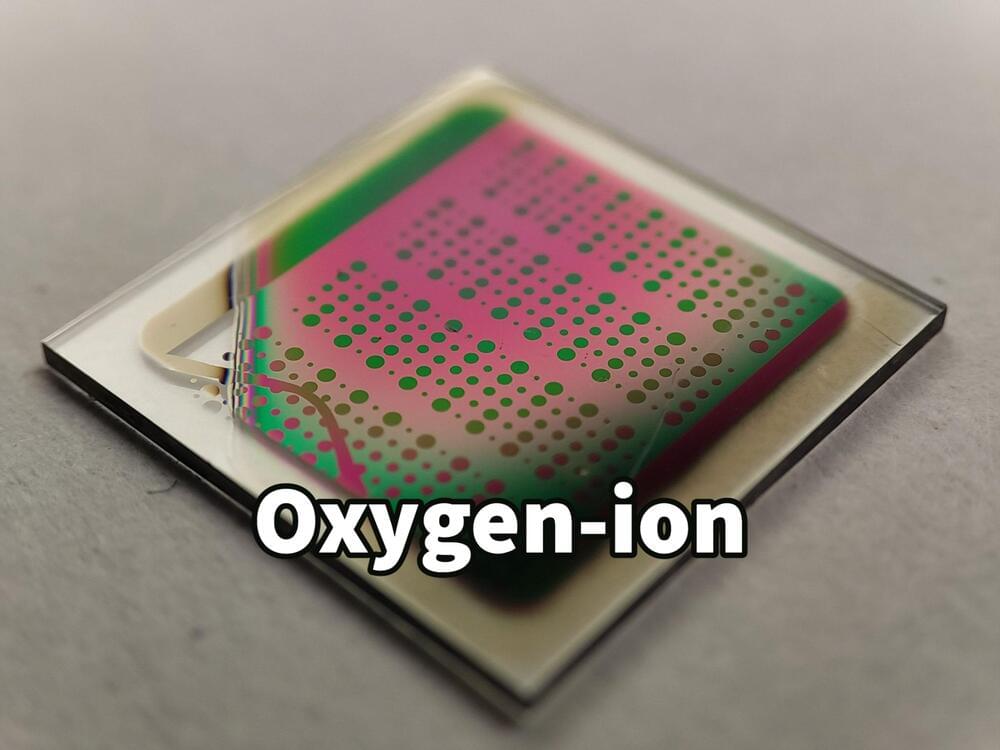
In this new work, published in the journal Science Advances, Alexander Sherman and a team of scientists in chemistry at the Technical-Israel Institute of Technology, Haifa, used electron spins in diamond as a quantum microwave amplifier to function with quantum-limited internal noise above liquid nitrogen temperatures. The team reported details of the amplifier’s design, gain, bandwidth, saturation power and noise to facilitate hitherto unavailable applications in quantum science, engineering and physics.

The game-changing tech in DARPA’s new missile

A few weeks ago, the Defense Advanced Research Projects Agency (DARPA) quietly unveiled a new high-speed missile program called Gambit. The program is meant to leverage a novel method of propulsion that could have far-reaching implications not just in terms of weapons development, but for high-speed aircraft and even in how the Navy’s warships are powered.

This propulsion system, known as a rotation detonation engine (RDE), has the potential to be lighter than existing jet engines while offering a significant boost in power output, range, and fuel efficiency.

The Gambit missile is just one of a number of programs placing a renewed focus on RDE technology, though for the most part, these systems have managed to fly under the media’s radar.

Follow Dr. Chris Combs on Twitter: https://twitter.com/DrChrisCombs.
Follow Steve Trimble: https://twitter.com/TheDEWLine.

📱 Follow Sandboxx News on social.
Twitter: https://twitter.com/sandboxxnews.
Instagram: https://instagram.com/sandboxxnews.
Facebook: https://facebook.com/sandboxxnews.
TikTok: https://www.tiktok.com/@sandboxxnews.

📱 Follow Alex Hollings on social.

Perturbation theory of large scale structure in the $ LambdaCDM Universe: Exact time evolution and the two-loop power spectrum

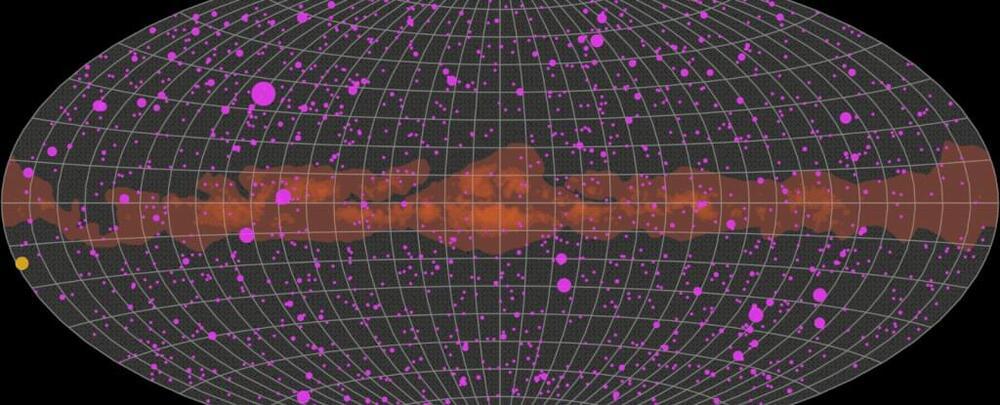
The large-scale structure (LSS) of the Universe is obviously nonlinear and very complicated. However, the scale of onset of nonlinearity is well separated from the size of the Universe which makes a large portion of the structure formation modes accessible to perturbation theory (PT). The latter is itself complicated by the time dependence of the lambdaCDM background. The authors provide an exact all-order recursive solution for the PT kernels, which allows them to go beyond the Einstein-de Sitter approximation for the time dependence, and quantify the deviation at the two-loop level in the 10% range, a deviation detectible with upcoming observations.

Vertically aligned single-walled carbon nanotubes for energy storage and the electronics industry

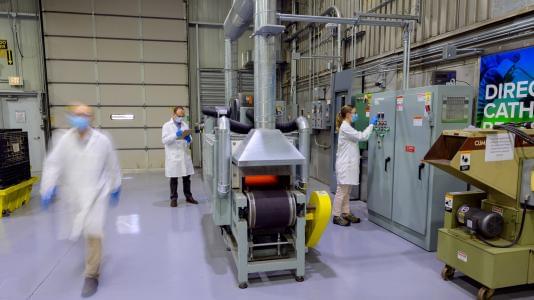
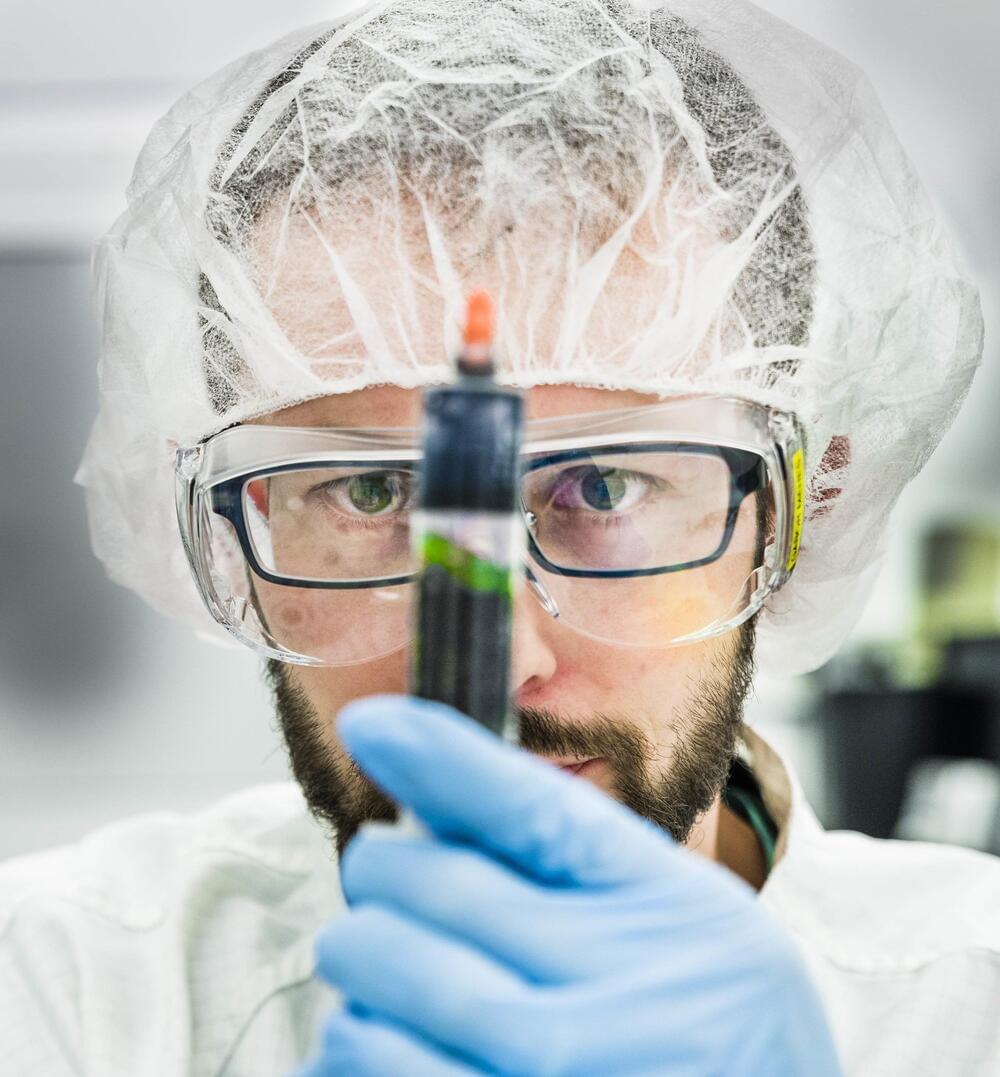
Lawrence Livermore National Laboratory (LLNL) scientists have created vertically aligned single-walled carbon nanotubes on metal foils that could be a boon for energy storage and the electronics industry.

Vertically aligned carbon nanotubes (VACNTs) have exceptional mechanical, electrical and in addition to an aligned architecture, which is key for applications such as membrane separation, thermal management, fiber spinning, electronic interconnects and energy storage.

To date, widespread integration of VACNTs into next-generation technologies is thwarted by a lack of compatible, economic, mass-production capabilities. High-quality VACNTs are typically made on substrates such as silicon (Si) or quartz wafers that are rigid, expensive and electrically insulating.

Norwegian companies submit record $20.5 billion fossil fuel investment plans amid Russia-Ukraine war

This does not bode well for eco-friendly renewables.

Last month, Europe supported a call by India to phase down fossil fuel use as part of a COP27 deal. Now, partially due to the Russian-Ukrainian war, it seems to be changing its mind.

These projects amount to total investments of more than NOK 200 billion (around $20.


Aker BP

Norway’s oil and gas company Aker BP and its partners announced on Friday that it has submitted a plan for installation and operation and ten plans for the development and operation of oil and gas projects to the Norwegian Ministry of Petroleum and Energy (MPE), according to a press release by the firm.

How do wind turbines spin during winter? The science behind frozen blades

Building a wind power operation that can thrive in icy conditions requires a keen understanding of the underlying physics.

Winter is supposed to be the best season for wind power — the winds are more potent, and since air density increases as the temperature drops, more force is pushing on the blades. But winter also comes with a problem: freezing weather.

Frequent severe icing can cut a wind farm’s annual energy production by over 20 percent, costing the industry hundreds of millions.


Piola666/iStock.

Even light icing can produce enough surface roughness on wind turbine blades to reduce their aerodynamic efficiency, which reduces the amount of power they can produce, as Texas experienced in February.

/* */