Half of the normal matter in the universe has been hiding since the Big Bang. Astronomers have just detected it for the first time.
NASA has conducted an experiment in Antarctica, which has revealed new evidence that a parallel universe exists, except the rules of physics, are the opposite of ours.
Physicists have been debating among one another since 1952 of the possibility of a multiverse, whereby many universes exist parallel to ours. These universes could have different laws of physics, or even be similar to ours — just with different timelines.
The original theory was proposed by Quantum science pioneer Erwin Schrodinger, and even he admitted that he might have seemed a little crazy when he hosted that lecture. But now a new discovery has pushed scientists to reconsider if his theory is really as far-fetched as they thought it was. A cosmic ray detection experiment in Antarctica found a particle that very well may be from another universe.
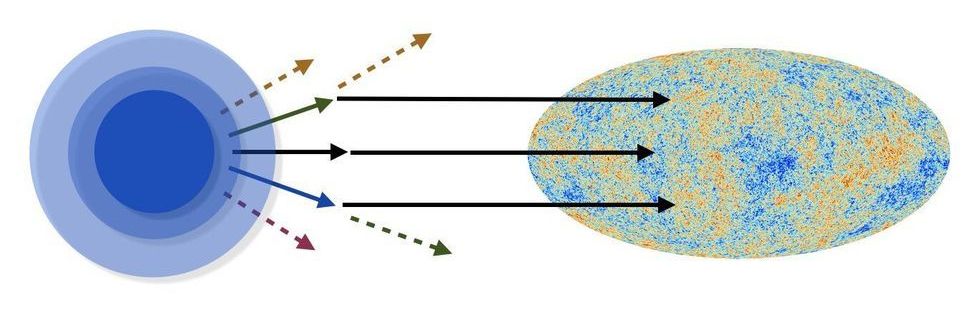
In the late 1990s, cosmologists made a prediction about how much ordinary matter there should be in the universe. About 5%, they estimated, should be regular stuff with the rest a mixture of dark matter and dark energy. But when cosmologists counted up everything they could see or measure at the time, they came up short. By a lot.
The subject of the 2018 Nobel Prize in physics, chirped pulse amplification is a technique that increases the strength of laser pulses in many of today’s highest-powered research lasers. As next-generation laser facilities look to push beam power up to 10 petawatts, physicists expect a new era for studying plasmas, whose behavior is affected by features typically seen in black holes and the winds from pulsars.
Just as a literature buff might explore a novel for recurring themes, physicists and mathematicians search for repeating structures present throughout nature.
For example, a certain geometrical structure of knots, which scientists call a Hopfion, manifests itself in unexpected corners of the universe, ranging from particle physics, to biology, to cosmology. Like the Fibonacci spiral and the golden ratio, the Hopfion pattern unites different scientific fields, and deeper understanding of its structure and influence will help scientists to develop transformative technologies.
In a recent theoretical study, scientists from the U.S. Department of Energy’s (DOE) Argonne National Laboratory, in collaboration with the University of Picardie in France and the Southern Federal University in Russia, discovered the presence of the Hopfion structure in nano-sized particles of ferroelectrics—materials with promising applications in microelectronics and computing.
Researchers at MIT and elsewhere have combined the power of a super collider with techniques of laser spectroscopy to precisely measure a short-lived radioactive molecule, radium monofluoride, for the first time.
Precision studies of radioactive molecules open up possibilities for scientists to search for new physics beyond the Standard Model, such as phenomena that violate certain fundamental symmetries in nature, and to look for signs of dark matter. The team’s experimental technique could also be used to perform laboratory studies of radioactive molecules produced in astrophysical processes.
“Our results pave the way to high-precision studies of short-lived radioactive molecules, which could offer a new and unique laboratory for research in fundamental physics and other fields,” says the study’s lead author, Ronald Fernando Garcia Ruiz, assistant professor of physics at MIT.
NASA’s WFIRST mission will explore the universe, seeking answers to some of its biggest mysteries. From understanding the nature of dark energy to studying planets outside our solar system, this mission will expand our view of the cosmos. Join experts Wednesday, May 20 at 11 a.m. ET for an exciting announcement about the WFIRST mission.