The world is getting hotter by the day. It is now 1.1 degrees Celsius warmer on average than it was before the Industrial Revolution. This means that cooling, in general, has percolated into our lifestyles, almost essential for our survival.
However, the irony is as the planet warms, the technology we seek refuge in can only contribute to climate change, making the climate hotter. Room air conditioners are expected to quadruple to 4.5 billion by 2050, according to Scientific American.
Now, cooling an environment needs an enormous amount of energy.
So, what did people use to cool down before air conditioners? Their lives must have been unbearable during long hot summers. Or were they?
I have been invited to participate in a quite large event in which some experts and I (allow me to not consider myself one) will discuss about Artificial Intelligence, and, in particular, about the concept of Super Intelligence.
It turns out I recently found out this really interesting TED talk by Grady Booch, just in perfect timing to prepare my talk.
No matter if you agree or disagree with Mr. Booch’s point of view, it is clear that today we are still living in the era of weak or narrow AI, very far from general AI, and even more from a potential Super Intelligence. Still, Machine Learning bring us with a great opportunity as of today. The opportunity to put algorithms to work together with humans to solve some of our biggest challenges: climate change, poverty, health and well being, etc.
However, the irony is as the planet warms, the technology we seek refuge in can only contribute to climate change, making the climate hotter. Room air conditioners are expected to quadruple to 4.5 billion by 2050, according to Scientific American.
For decades children and adults have learned the motto “when thunder roars, go indoors.” It is a low-tech approach to staying safe when lightning could be in the immediate area, but thanks to advancements in forecast products, meteorologists are getting more advanced warning when these sudden dangers could be on the horizon.
The National Oceanic and Atmospheric Administration says several forecast offices around the country are using an experimental LightningCast product to determine who has the greatest chance of seeing lightning upwards of an hour before a strike.
The data comes from the GOES-16 and GOES-17 satellites that are constantly monitoring the skies over North America.
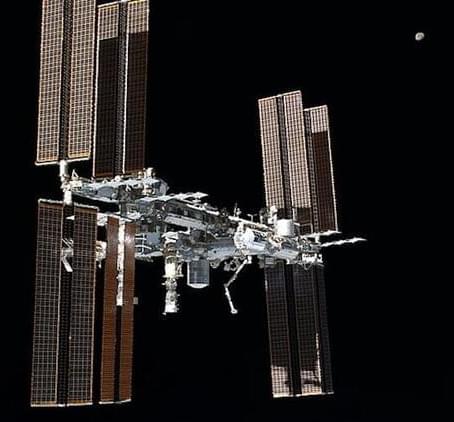
But unlike the ISS, ROSS won’t have permanent residents year-round. Instead, it will only host cosmonauts “twice a year for extended periods,” according to Reuters.
ROSS is still years out and shrouded in secrecy, so it’s hard to predict exactly how the new space station could surpass the ISS’s capabilities.
Roscosmos officials have told Russian state media that the station will likely orbit at higher latitudes than the ISS does. This could offer a better view of the Earth’s polar regions, which Russian researchers could analyze with optical, infrared, ultraviolet instruments. After all, Russia’s borders cover 53 percent of the Arctic Ocean’s entire coastline, and the country likely wants to use ROSS to chart northern sea routes as climate change melts Arctic sea ice.
The invasion that Russia has wrongfully started in Ukraine has led to more people talking about the threat of Nuclear war and World War 3. How does the Doomsday Clock relate to all this?
Script: Since 2020, the Doomsday Clock has been set to 100 seconds to midnight. Which is the closest its ever been to midnight in its 75 years of existence. As the scientists who set the clock put it: we’re “at doom’s doorstep.”
The Doomsday Clock is a metaphor to remind humans how close we are to destroying our planet through the technology we develop, with midnight representing the apocalypse. It’s a symbol to remind us to address these dangers so that we can survive on our planet. It was created by the Bulletin of the Atomic Scientists, an organization founded by scientists at the University of Chicago who worked on the Manhattan Project, which was America’s effort to develop atomic weapons during the Cold War.
When the Doomsday Clock debuted in 1947, its creator, artist Martyl Langsdorf, set it to 7 minutes to midnight. She was married to a physicist who worked on the Manhattan Project. When she heard him and other scientists talk about the consequences of developing this dangerous technology, she created the clock to show that we didn’t have much time left to get atomic weapons under control.
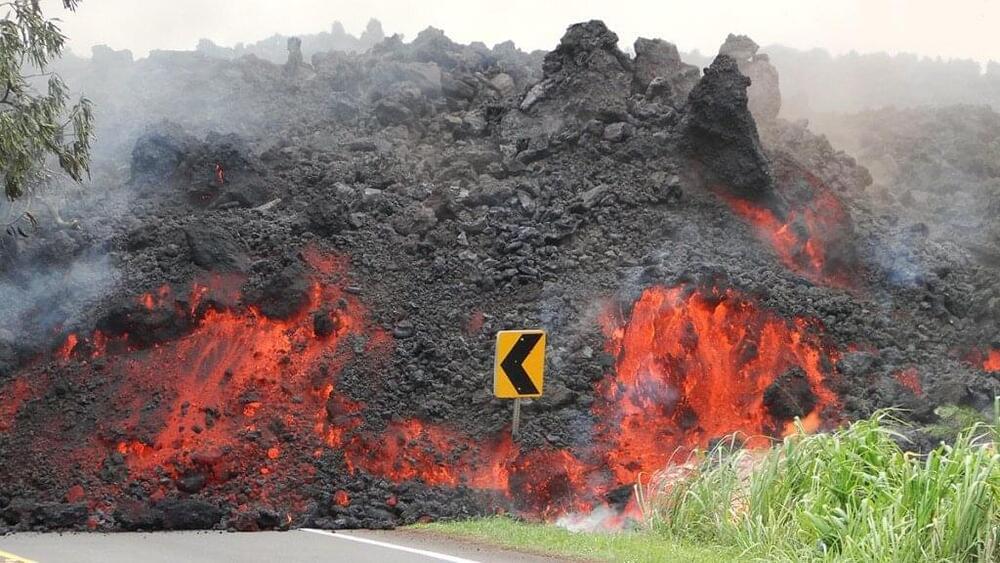
The world is ‘woefully underprepared’ for a massive volcanic eruption and the likely repercussions on global supply chains, climate and food, according to experts from the University of Cambridge’s Centre for the Study of Existential Risk (CSER), and the University of Birmingham.
Capacitors are energy storage devices—consisting of two electrodes and an electrolyte—that are capable of rapid charging and discharging because of charge adsorption and desorption properties at the electrode-electrolyte interface. Because capacitors’ energy storage does not involve chemical reactions, their storage capacity is lower than that of lithium-ion batteries, but they are useful for power leveling for renewable energy that requires repeated charging at high currents, regenerative braking energy for trains and electric or hybrid cars, as well as instantaneous voltage drop compensation devices that prevent equipment failure due to lightning strikes. They are also expected to be used to store energy for wearable devices in the near future.
Most capacitors use a liquid electrolyte with a low boiling point, which can only be used at temperatures below 80℃. Ceramic capacitors that use solid inorganic materials as a dielectric can be used at temperatures above 80℃, but their storage capacity is much lower than liquid electrolyte capacitors, which limits their use to electronic circuits.
To increase the energy storage of capacitors, it is necessary to have a large contact area at the interface between the electrode and the electrolyte. Making a large contact area is difficult using solid electrolytes; so, the creation of a capacitor with high storage capacity that can also operate at high temperatures has been desired for a long time.
I interviewed the gentleman talked about in this article yesterday. If his invention is what he says it is, deploying it to convert the existing inventory of billions of internal combustion engines would get us to net-zero emissions a lot faster.
A POWYS inventor has unveiled a zero-emissions internal combustion engine, which he says could be a game-changer in the fight against climate change.