Toggle light / dark theme

International Space Station infested with mysterious space bugs leaving astronauts at risk of ‘serious harm’

THE International Space Station is infested with mysterious space bugs that may be leaving astronauts at risk of ‘serious harm’, according to a new study.

Scientists discovered a thriving ecosystem of “infectious organisms” aboard the station which are similar to bugs found in hospitals on Earth.

A NASA team found five different varieties of Enterobacter, with researchers calculating that there is a “79% probability that they may potentially cause disease”.

Powdered Booze Could Fix Your Clogged Arteries

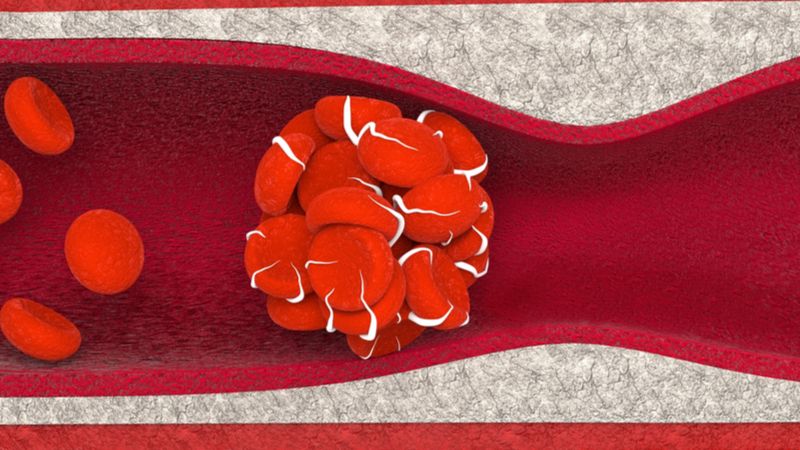
Fats and cholesterol that build up along the insides of blood vessels can limit the flow of blood around the heart, causing heart attacks or strokes. To treat this condition, called atherosclerosis, millions of Americans take drugs every day—the most popular of these, statins, alone cost up to $13 billion per year in 2014, and these don’t work for every patient. Now scientists have discovered that a compound already approved by the FDA can dissolve away this buildup in the blood vessels more effectively than existing treatments. The researchers published their study today in Science Translational Medicine.

The compound is called beta-cyclodextrin, and it’s already used in some pharmaceuticals to bind the active drug to fatty acids in the body where it is most needed.

Now, here’s the good news: beta-cyclodextrin is also the main ingredient used to make powdered alcohol. Pour booze into a heap of cyclodextrin, and the alcohol molecules cling to the ring-shaped cyclodextrin molecules, making a fluffy dry powder that packs a punch.

Parkinson’s Disease Patient in World First Stem Cell Therapy

In a world first, a patient with Parkinson’s disease has undergone transplant therapy, which uses reprogrammed stem cells to replace neurons destroyed by the disease.

Stem cell therapy is part of the toolkit

The stem cell field is an area of science that is relatively well funded and, out of all the branches of medical science relevant to aging, is probably the most understood by the public. In the last decade or so, progress in stem cell research has been rapid, and scientists now have a wide range of cell types they can create on demand via cellular programming.

Scientists may have found a way to treat cancer without chemotherapy

As advanced as medicine is today, the incidence of cancer diagnoses continues to rise.

Scientists at the International Agency for Cancer Research estimate that, this year, around 18 million people will be diagnosed with cancer, and around 10 million people will die of tumours— while these are the highest figures to date, researchers all over the world are looking for new therapeutic options.

Scientists from Northwestern University in the US recently discovered a kind of genetic “kill code” in cells that could theoretically be used to treat cancer without chemotherapy.

Eurosymposium on Healthy Ageing – Dr. Marco Demaria

At the Eurosymposium on Healthy Ageing, we had the privilege of interviewing Dr. Marco Demaria of the European Research Institute for the Biology of Ageing.

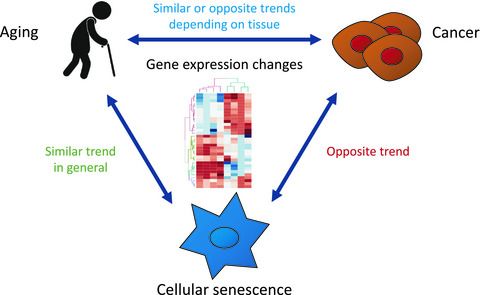
In this interview with Elena Milova, Dr. Demaria primarily talks about senescent cells, their role in age-related diseases, and methods of controlling them. Among the ways of controlling them include blocking the inflammatory signals they secrete, destroying them with senolytic drugs, and boosting the immune system to remove them naturally.

Highly adhesive hydrogel sticks to the task of tissue regeneration

Researchers from all corners of medical science are hoping to harness advanced hydrogels to help repair damaged hearts, regrow brain tissues, or quickly shut down bleeding wounds, to name just a few examples. Scientists in Switzerland have now developed a new form of the material they say has unparalleled adhesive properties, a characteristic that could prove particularly useful in trying to repair cartilage and meniscus.

Skeletal imitation reveals how bones grow atom-by-atom

Researchers from Chalmers University of Technology, Sweden, have discovered how our bones grow at an atomic level, showing how an unstructured mass orders itself into a perfectly arranged bone structure. The discovery offers new insights, which could yield improved new implants, as well as increasing our knowledge of bone diseases such as osteoporosis.

The bones in our body grow through several stages, with atoms and molecules joining together, and those bigger groupings joining together in turn. One in the growth process is when molecules crystallise, which means that they transform from an amorphous mass into an ordered structure. Many stages of this transformation were previously a mystery, but now, through a project looking at an imitation of how our bones are built, the researchers have been able to follow this crystallisation process at an atomic level. Their are now published in the scientific journal Nature Communications.

“A wonderful thing with this project is that it demonstrates how applied and fundamental research go hand in hand. Our project was originally focused on the creation of an artificial biomaterial, but the material turned out to be a great tool to study bone building processes. We first imitated nature, by creating an artificial copy. Then, we used that copy to go back and study nature,” says Martin Andersson, Professor in Materials Chemistry at Chalmers, and leader of the study.

/* */