Toggle light / dark theme

Existing antibiotic found to take out the root cause of Lyme disease

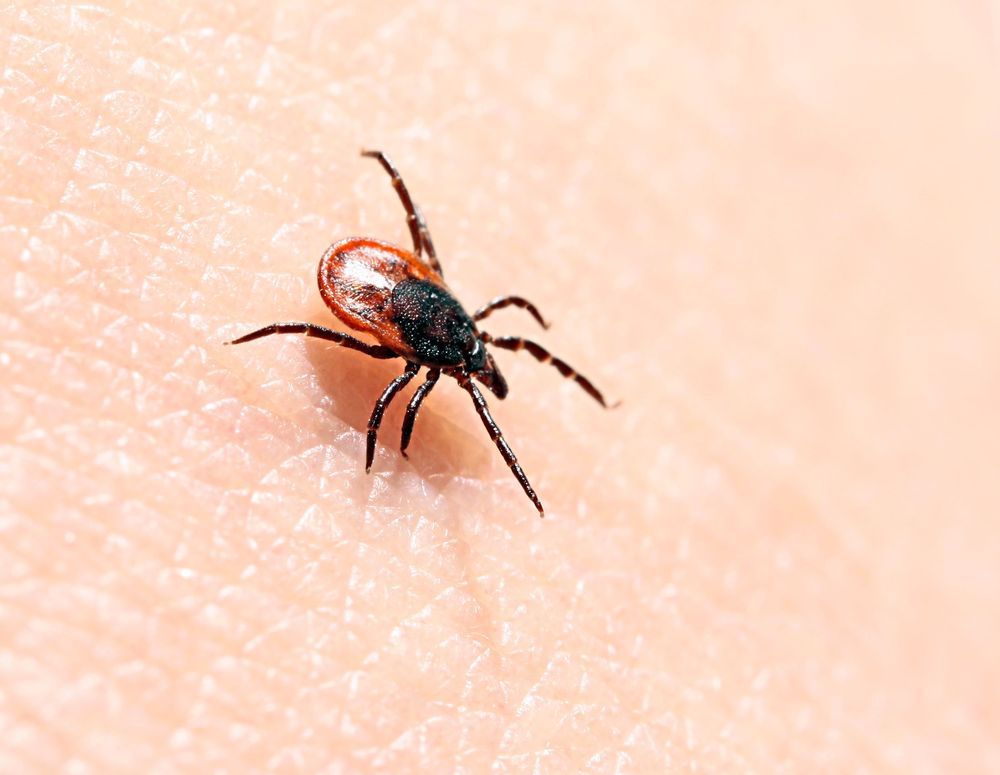
Lyme disease is an infectious condition spread by ticks that affects as many as 300,000 people in the US every year, according to the Center for Disease Control and Prevention. Today’s treatment is largely effective in treating the infection, but a good portion of patients do not respond and go on to endure lingering symptoms. A new study has revealed that an already-approved antibiotic can completely eliminate the underlying bacteria that causes the disease in mice, offering new hope of a more comprehensive therapy for humans.

While the standard antibiotics used to treat Lyme disease do the job for the majority of patients, somewhere between 10 and 20 percent go on to experience its symptoms. These include muscle pain, fatigue, fever, headaches and heart problems. There are couple of theories for why this might be.

“Some researchers think this may be due to drug-tolerant bacteria living in the body and continuing to cause disease,” said study author Jayakumar Rajadas. “Others believe it’s an immune disorder caused by bacteria during the first exposure, which causes a perpetual inflammation condition. Whatever the cause, the pain for patients is still very real.”

US Military Scientists Hope To Have Coronavirus Therapeutic

A new approach would use RNA or DNA to help the body develop antibodies to the rapidly spreading illness.

A U.S. military research program that seeks a new way to boost a body’s immunity to viruses could change how governments and militaries prepare for pandemics — and might even arrive soon enough to help with the COVID −19 outbreak.

DARPAs Pandemic Prevention Platform isn’t looking to create a vaccine, which can take years to produce and weeks to take effect in the body. Rather, the goal is to identify the specific monoclonal antibodies that the body naturally produces when it encounters a virus, and then trick the body into producing the one that guards against a specific illness. That could serve as a temporary, months-long shield that can protect the individual from the pathogen until a vaccine can be brought online.

China May Have Identified Patient Zero in the Coronavirus Outbreak

And others in the research community, like this nuclear physicist at the Large Hadron Collider, are realizing how close they came to catching the virus.

The first COVID-19 case may have started as early as November 17. A good chunk of my reararch group, and our particular slice of the nuclear physics community, were literally in Wuhan until just a week before this. To think what could have been… https://www.scmp.com/news/china/society/article/3074991/coro…raced-back

— Dennis V. Perepelitsa (@dvperepelitsa) March 13, 2020

BREAKING! Coronavirus Research: Could Echinacea Act As A Prophylaxis Against The SARS-Cov-2 Coronavirus? More Research Warranted

Coronavirus Research : A recent study published on an open platform but has yet to be peer reviewed caught our eyes as it was strangely conducted by the prestigious Spiez Laboratory In Switzerland by a team of leading virologists and microbiologists, but what intrigued me was that why would a prestigious research centre like the Spiez laboratory that had enormous funds and had some of the leading specialist post a ‘half-baked’ research on an open platform?

Echinacea Flowers

The five hottest synthetic biology job markets in the world

Although the majority of the synthetic biology market is concentrated in North America and Europe, the synthetic biology landscape is growing worldwide — with some of the fastest growing areas developing outside of the United States. There are several hotspots — formed when innovation at one company or university lab sparks new spinoffs — that synthetic biology followers should pay close attention to in the coming months and years.

The United Kingdom and Ireland

Among non-US hotspots for synthetic biology, the United Kingdom stands out. While most US universities still lack programs in synthetic biology, they are not hard to come by in the UK. Imperial College London, the University of Warwick, Cambridge University, and the University of Edinburgh are all particularly noteworthy for the depth and breadth of synthetic biology research. And, OpenPlant, a joint initiative between the University of Cambridge, John Innes Centre, and the Earlham Institute, is advancing synthetic biology by engineering the next generation of DNA tools for “smart” crop breeding systems.

HIV ‘Created by Scientist’ for Biological Warfare, Nobel Peace Prize Winner Says

Kenyan ecologist Wangari Maathai — who on Friday became the first African woman to win the Nobel Peace Prize — on Saturday repeated her previous claims that HIV was “created by a scientist for biological warfare,” reports. In August, Kenya’s quoted Maathai as saying that HIV/AIDS was created by scientists “for the purpose of mass extermination,” according to. “We know that the developed nations are using biological warfare, leaving guns to primitive people. They have the resources to do this,” the quoted Maathai as saying during a workshop on Aug. 30 in the central Kenyan town of Nyeri, according to. “AIDS is not a curse from God to Africans or the black people. It is a tool to control them designed by some evil-minded scientists, but we may not know who particularly did,” she added, according to the, reports (, 10/9) Saturday, Maathai repeated her belief that HIV was deliberately “devised to destroy black people,” according to. She added that her comments published in the were “intended to promote an inquiring attitude” toward HIV/AIDS among Africans and “combat the fatalistic notion that it was a curse from God,” reports. “Would you solve the problem if you believed it was a curse from God?” Maathai asked, adding that she was “encouraging people to ask questions.” Although Maathai said she never indicated that a specific region or nation was responsible for creating HIV/AIDS, she is “suspicious” about the “secrecy surrounding the origin of the virus,” according to. “Some people say it came from the monkeys, and I doubt it. … But I say it cannot be that only black people are cursed because we are dying more than any other people on this planet, and that’s a fact” (Kanina„ 10/9).

Reaction

Although the United States “congratulated” Maathai on Friday for winning the Nobel Prize, officials also “tempered [their] praise” about her claims that HIV/AIDS was created as a biological weapon, according to South Africa’s. “She’s had many long years of environmental activism,” Department of State spokesperson Richard Boucher said, adding, “We’re delighted to see that she’s the first African woman to have been selected for this unique honor.” However, an unnamed State Department senior official said that the department “vehemently” objected to Maathai’s comments concerning the origin of HIV, the reports. “She said HIV/AIDS was invented as a bioweapon in some laboratory in the West,” the official said, adding, “We don’t agree with that” (, 10/9).
/* */