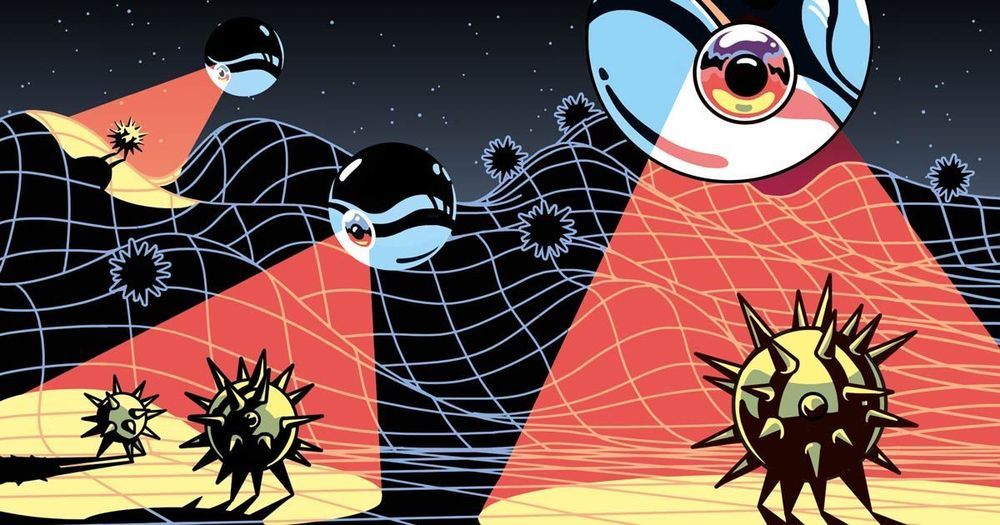
The gut has long been suspected to play a role in autoimmune disease. A research team has now identified evidence of a potential mechanism.
A new University of Barcelona study reveals the first empirical genetic evidence of human self-domestication, a hypothesis that humans have evolved to be friendlier and more cooperative by selecting their companions depending on their behaviour. Researchers identified a genetic network involved in the unique evolutionary trajectory of the modern human face and prosociality, which is absent in the Neanderthal genome. The experiment is based on Williams Syndrome cells, a rare disease.
The study, published in Science Advances, results from the collaboration between a UB team led by Cedric Boeckx, ICREA professor from the Section of General Linguistics at the Department of Catalan Philology and General Linguistics, and member of the Institute of Complex Systems of the UB (UBICS), and researchers from the team led by Giuseppe Testa, lecturer at the University of Milan and the European Institute of Oncology.
Bacterial biofilms that develop around golden staph infections make treatment difficult and prolonged, but researchers have shown in laboratory work that the hybrid antibiotics they have developed can destroy staph biofilms.
Eradicating deadly staph using a new breed of antibiotics has revealed promising results in research released by QUT, to help overcome one of the biggest modern medical challenges.
The bacteria attach to medical devices including catheters, artificial joints, implants and patients’ burns and wounds, establishing bacterial biofilms, a leading cause of failing antibiotic therapies and chronic infections.
3D printing technology is changing and will change pretty much everything. Besides printing the intermittent novelty project at home with a desktop printer, additive manufacturing or 3D printing technology is being used in a large group of businesses changing the manner in which we design, build, create, and even eat.
NASA is planning to use 3D printing technology to construct housing on Mars for future colonies while organizations like byFlow are using the emerging technology to create food and intricate edible tableware. The uses and applications appear to be both limitless and exciting, yet this is only the beginning. Things being what they are, what sort of changes can we expect to see in the medical industry?
An estimated 4,000 people are waiting for heart transplants, but the donated organs only last six hours outside a body. Duke University’s method, could extend that timeline and save lives.
A heart transplant team at Duke University, North Carolina, has become the first in the US to reanimate the heart of a deceased donor and transplant it into a recipient.
Image Credit: Csaba Deli / Shutterstock.com