Toggle light / dark theme

Bill Andrews — Turning Back the Aging Clock

Support the Channel by making a Donation ► https://goo.gl/ciSpg1
William H. Andrews ► https://goo.gl/vsNcbh

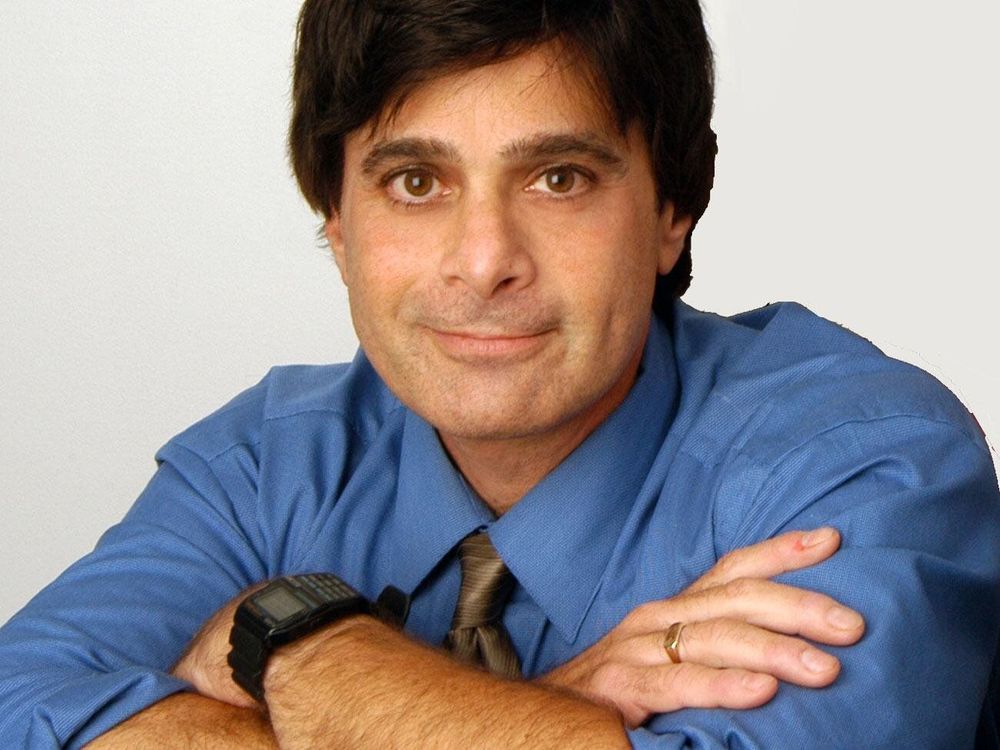
William Henry “Bill” Andrews, Ph.D. is an American molecular biologist and gerontologist whose career has centered on searching for a cure for human aging. Andrews is the founder and president of the biotechnology company Sierra Sciences. In 1997, he led the team at Geron Corporation that was the first to successfully identify human telomerase.

Dr. Bill Andrews is the creator of TAM-818, the world’s most powerful anti-aging active ingredient. TAM-818 is only found in One Truth 818 serum. For more information or to purchase visit http://www.tam818.com/

*Learn more about Dr. Bill Andrews and Sierra Sciences: http://www.sierrasci.com/

——–
Facebook: https://www.facebook.com/agingreversed
Twitter: https://twitter.com/Aging_Reversed
Support the Channel: https://goo.gl/ciSpg1
Channel t-shirt: https://teespring.com/aging-reversed

Artificial intelligence is ‘enhancing’ healthcare: IHDpay Group

Chun Yuan Chiang of IHDpay Group says artificial intelligence cannot completely replace the “high-touch” nature of medical care. However, technology can be helpful in diagnosis or in situations where patients have long, complicated medical histories, he says. Chiang was speaking on a panel with Jai Verma of Cigna International and Dai Ying of GE Healthcare.

China Killing Prisoners To Harvest Organs For Transplant: New Report Exposes Cover-Up

We must use the power of #Capitalism to destroy #Communist #China and their illegal organ harvesting that is killing millions of people and is a human rights violation because of #genocide. Free #HongKong, #Tibet, and #Taiwan.


China has been accused of the “state-run mass murder” of prisoners for their organs. Now the country is also accused of a systematic cover-up.

Scientists discover body’s protection shield

Scientists have discovered a way to manipulate the body’s own immune response to boost tissue repair. The findings, published in Current Biology today, reveal a new network of protective factors to shield cells against damage. This discovery, made by University of Bristol researchers, could significantly benefit patients undergoing surgery by speeding recovery times and lowering the risk of complication.

When a is damaged, (either accidentally or through surgery), the body quickly recruits to the injury site where they fight infection by engulfing and killing invading pathogens, through the release of toxic factors (such as unstable molecules containing oxygen known as “reactive oxygen species” e.g. peroxides). However, these bactericidal products are also highly toxic to the host tissue and can disrupt the repair process. To counteract these the repairing tissue activates powerful protective machinery to “shield” itself from the damage.

Now, researchers from Bristol’s School of Biochemistry studying , have mapped the exact identities of these protective pathways and identified how to stimulate this process in naïve tissues.

“Surprising” new insights into link between gut microbiome and aging

A new study is suggesting a metabolite produced by gut microbes could increase neuron production in the brain, improve intestinal function, and ultimately slow the aging process. Across several compelling mouse experiments the research found the negative effects of aging could be counteracted by enhanced microbial production of a molecule called butyrate.

Investigating the effect of the gut microbiome on aging, the new research first performed gut microbiome transplants between old and young mice. Using fecal transplants, young germ-free mice were colonized with the gut microbiota of older mice. The results were somewhat unexpected as the younger mice colonized with the older microbiomes displayed increased neurogenesis, a process whereby new neurons are produced in the brain.

“We’ve found that microbes collected from an old mouse have the capacity to support neural growth in a younger mouse,” explains Sven Pettersson, lead on the research team from Nanyang Technological University in Singapore. “This is a surprising and very interesting observation…”

Press Release

Award Program Honors the Achievement.

MOUNTAIN VIEW November 11, 2019 — Sens Research Foundation has been selected for the 2019 Best of Mountain View Award in the Medical Laboratory category by the Mountain View Award Program.

Each year, the Mountain View Award Program identifies companies that we believe have achieved exceptional marketing success in their local community and business category. These are local companies that enhance the positive image of small business through service to their customers and our community. These exceptional companies help make the Mountain View area a great place to live, work and play.

Fuel cell drone makes an epic ocean crossing

Although multicopter drones now are being used to transport medical samples and supplies, their 30-minute (or so) battery life limits their range. This week, however, a hydrogen-powered delivery drone managed a one-hour, 43-minute ocean crossing.

The exercise was the result of a collaboration between Texas-based drone development company Guinn Partners, Georgia-based Skyfire Consulting, the US Department of Health, and drone manufacturer Doosan Mobility Innovation – the latter supplied the aircraft, a hydrogen fuel cell-powered DS30 octocopter.

Utilizing its temperature-controlled payload system, the drone was used to transport live bacteria samples from a hospital on the Caribbean island of St. Croix to a testing facility on the neighboring island of St. Thomas. This involved crossing 43 miles (69 km) of open ocean. Upon successfully reaching its destination, the copter reportedly still had almost 30 minutes of flight time left on its fuel cell.

/* */