Toggle light / dark theme

Debugging a quantum processor: New method pinpoints qubit errors during logical operations

Researchers at the University of Innsbruck, together with partners from Sydney and Waterloo, have presented a new diagnostic method for quantum computers. It makes errors in individual quantum bits visible during logical calculation and evaluates them. The new method was demonstrated on an ion trap quantum processor in Innsbruck. It can be used to identify critical error sources—a key to developing more robust, fault-tolerant quantum processors.

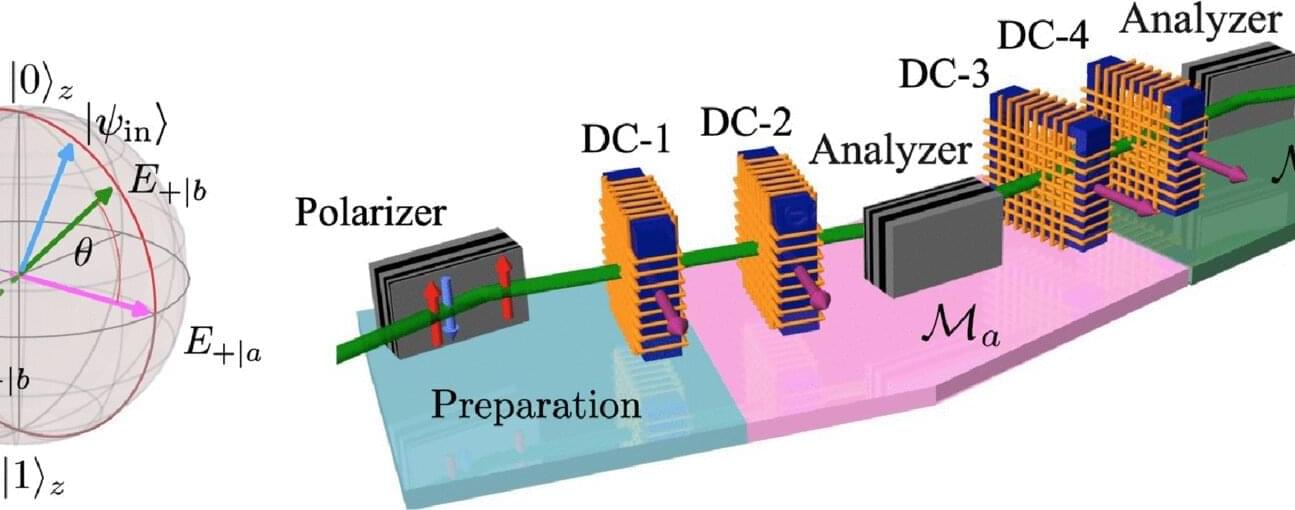
In Physical Review X, the researchers present a scalable method that can be used to reliably characterize logical quantum operations at the level of the underlying quantum bits. Cycle error reconstruction identifies which physical errors influence the performance of logically encoded gates.

“With cycle error reconstruction, we can quantitatively capture the error structure and clearly distinguish between correctable and uncorrectable contributions,” says first author Robert Freund from the Department of Experimental Physics.

Mysteries of Math and the Langlands Program — Episode 1

The first in a series of 4 lectures by Edward Frenkel filmed at MSRI, Berkeley and broadcast on the Japanese TV channel NHK in the Fall of 2015 in the “Luminous Classroom” series. The lectures went from elementary topics such as Pythagoras theorem, prime numbers and symmetries to Fermat’s last theorem and the general Langlands conjectures, and to the recent work connecting the Langlands Program to Quantum Physics. Even though the Intro is in Japanese, the lecture itself is in English.

Encryption: A Key Guardian of Our Digital Future

By Chuck Brooks and Bill Bowers.


Every time you send a text, pay for groceries with your phone, or use your health site, you are relying on encryption. It’s an invisible shield that protects your data from prying eyes. Encryption is more than just a technological protection; it is the basis for digital trust.

Encryption is more than just safeguarding data; it is also about protecting people. It helps ensure privacy by protecting persons from spying and exploitation. And it is widely adopted to help ensure digital transaction security. For National Security it serves to protect key infrastructure and government communications. And it has a human rights function by providing citizens with peace of mind by ensuring the safety of their personal information. In places where surveillance is widespread, encryption can even defend free expression and opposition. It is a human right in this digital age.

In my book Inside Cyber: How AI, 5G, IoT, and Quantum Computing Will Transform Privacy and Security, I referred to encryption as the “linchpin of privacy and commerce in a connected society.” Without it, the digital economy would crumble under the strain of criminality, fraud, and spying.

Australian consortium to develop quantum biotechnology platform to transform Alzheimer’s treatment discovery

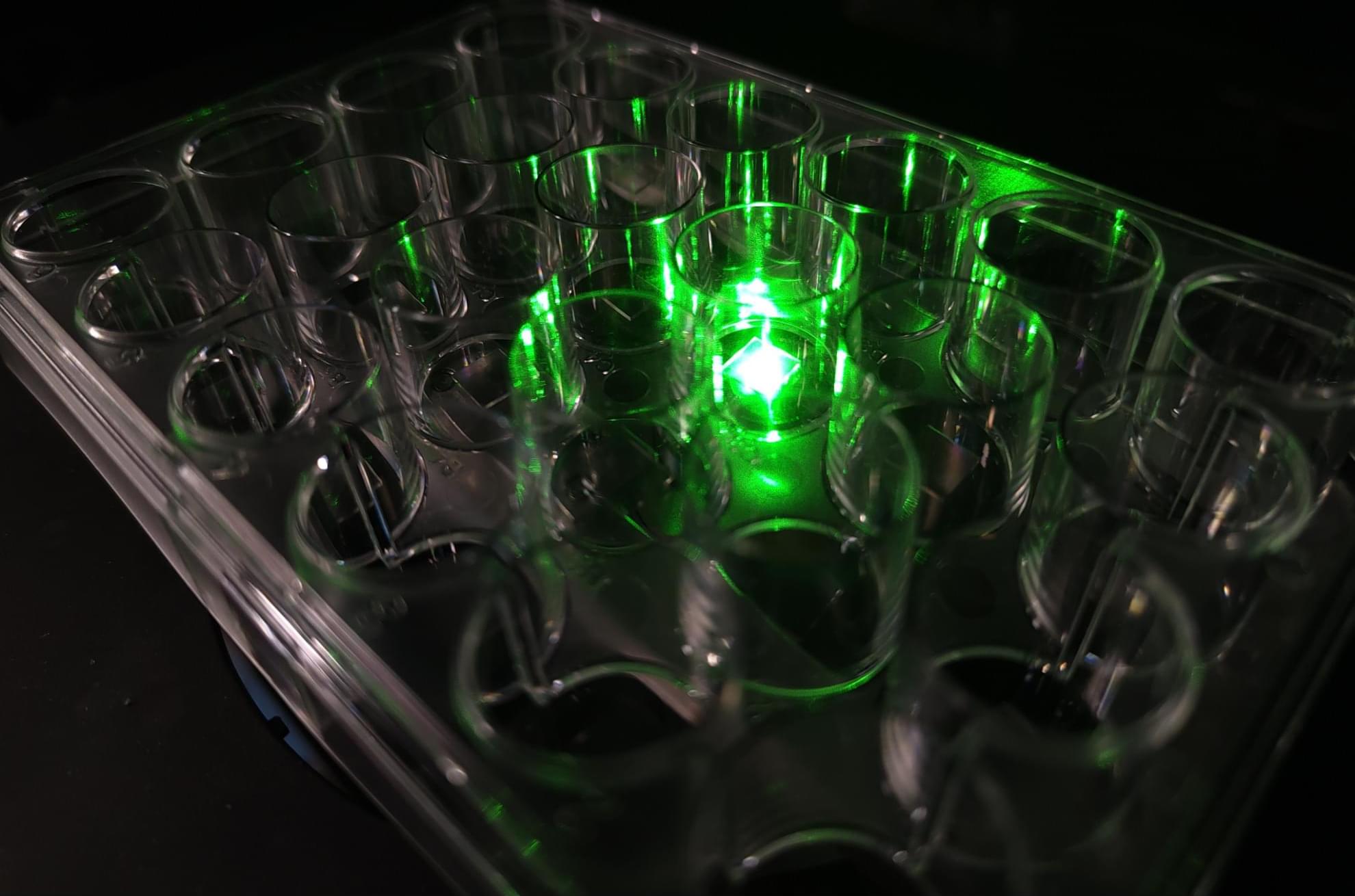
“Our system provides a pathway towards a fast, scalable tool for measuring real-time brain activity in synthetic tissue cultures that replicate human brain tissue,” Associate Professor Simpson said.

If successful, this brain-on-chip technology could help evaluate the effectiveness of treatments for neurological diseases, including Alzheimer’s, schizophrenia, epilepsy and anxiety, in the laboratory before moving into expensive and complex human trials.

A new ‘uncertainty relation’ for quantum measurement errors

One of the most striking features of quantum physics is that certain properties cannot be measured at the same time. Every measurement may inevitably affect the object’s physical state being measured—and therefore also the outcome of any subsequent measurement. How fast something is moving, for example, can depend on whether its position was measured beforehand.

How strongly a measurement intervenes in the quantum state determines how reliably the result of a second measurement can be predicted from the first. This qualitative connection has been known for a long time. What is new, however, is that researchers at TU Wien have now found a formula that allows this effect to be quantified exactly.

They discovered a simple “uncertainty relation” that links measurement disturbance and measurement correlation. Using this relation, it becomes possible in a remarkably straightforward way to determine which combinations of quantum operations are possible—and which are fundamentally excluded. Their paper is published in the journal Physical Review Research.

Quantum internet materializes in Germany due to a 30-kilometer breakthrough

Something once thought too delicate for real cities just survived them. A quiet test in Germany hints that the next internet may be both unbreakable and already under our feet.

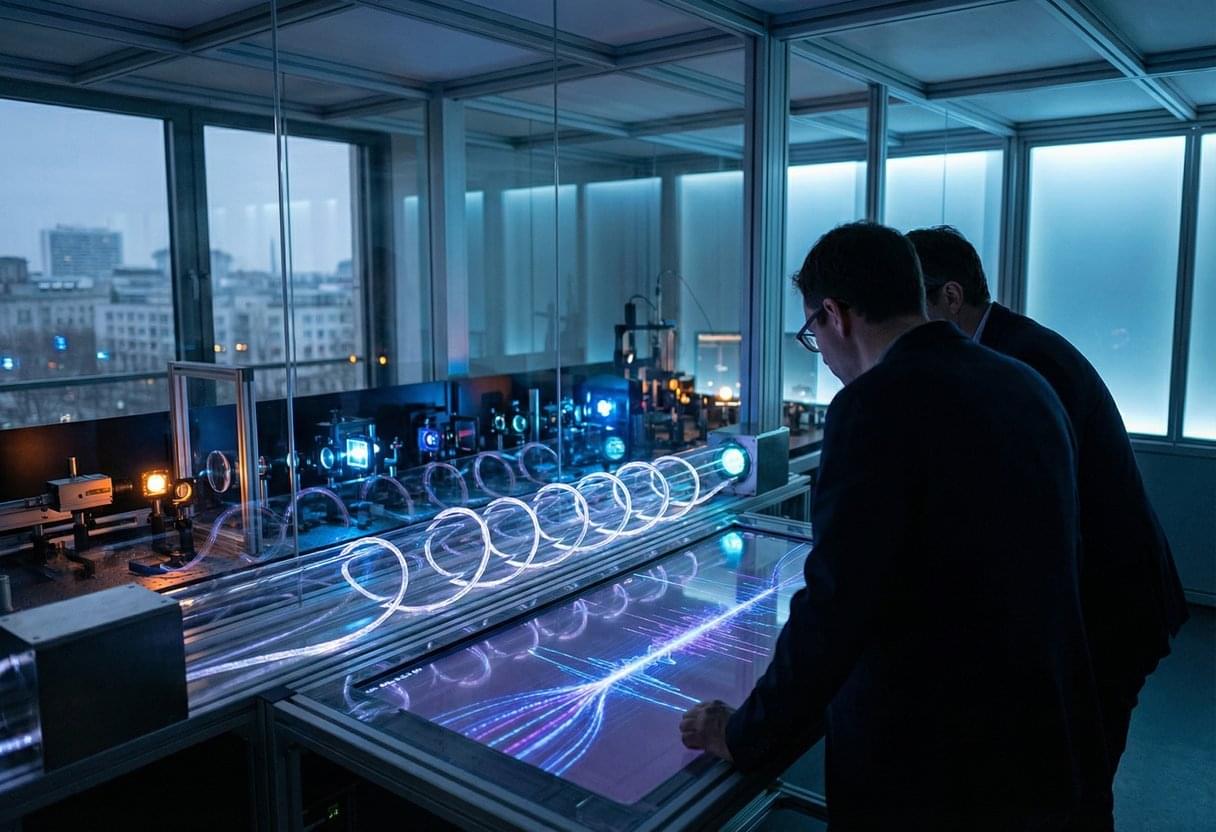
On a 30-kilometer loop of commercial fiber in Berlin, researchers just teleported data while ordinary internet traffic flowed on the same line without a hiccup. The feat, executed by T-Labs with Qunnect’s Carina platform, kept delicate quantum states steady against city vibrations and temperature swings, hitting 95 percent fidelity in real time. It shows that today’s networks can carry tomorrow’s quantum links, with stakes that range from unbreakable cryptography to connected quantum computers. For Deutsche Telekom’s Abdu Mudesir, it also signals a path to European technological sovereignty as the system scales to longer distances and more nodes.

A universal spin–orbit-coupled Hamiltonian model for accelerated quantum material discovery

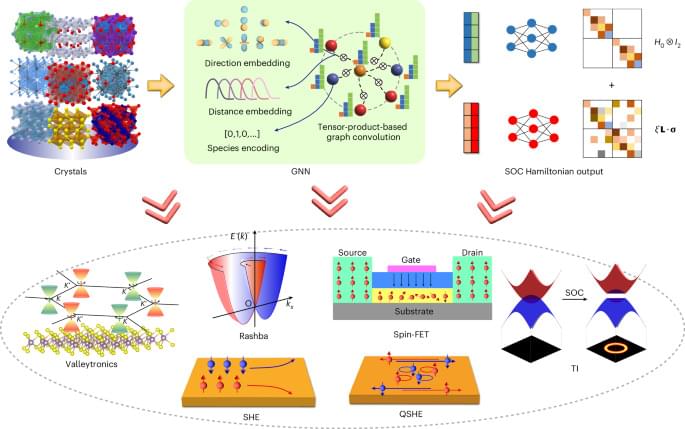
Zhong et al. introduce Uni-HamGNN, a graph neural network model that predicts spin–orbit-coupled electronic structures quickly and accurately, enabling fast screening and the discovery of advanced quantum materials across the periodic table.

Consciousness Creates the Universe Says Roger Penrose

Read “” by James P. Kowall on Medium.


Watch this very interesting video in which Roger Penrose argues that Consciousness is fundamental and came first before it created the universe through a process of observation that turns potentiality into actuality:

For 400 years, we’ve believed that mindless matter eventually evolved into conscious minds. But what if we have the causation completely backwards? What if consciousness is the precondition for the universe?

In this video, we dive deep into the quantum paradox, wave function collapse, and the radical scientific theory that consciousness isn’t an accident of evolution — it’s the fundamental building block of reality itself. From the Copenhagen interpretation to the mysteries of the biological brain, we explore how quantum mechanics suggests the physical world is simply what appears when consciousness observes itself.

/* */