Life’s capacity to survive in simulated lunar and Martian soils has been explored in two papers published in Scientific Reports. Treating simulated lunar soil with both symbiotic fungi and worm-produced compost can significantly improve the likelihood of reproduction for chickpea plants growing in the soil, indicates one study. A separate paper suggests that some microbes may be able to absorb enough water from the atmosphere to grow in simulated Martian soil at atmospheric humidity levels comparable to those on the planet.
Lunar soil—known technically as lunar regolith —does not support healthy plant growth, as it contains high concentrations of certain metals such as aluminum and zinc, does not allow water to filter through easily, and lacks the microbiome found in Earth soils. Previous research has investigated several ways to improve the fertility of lunar soil, although plants grown in these treated soils typically display various signs of stress, including stunted growth and leaf yellowing.
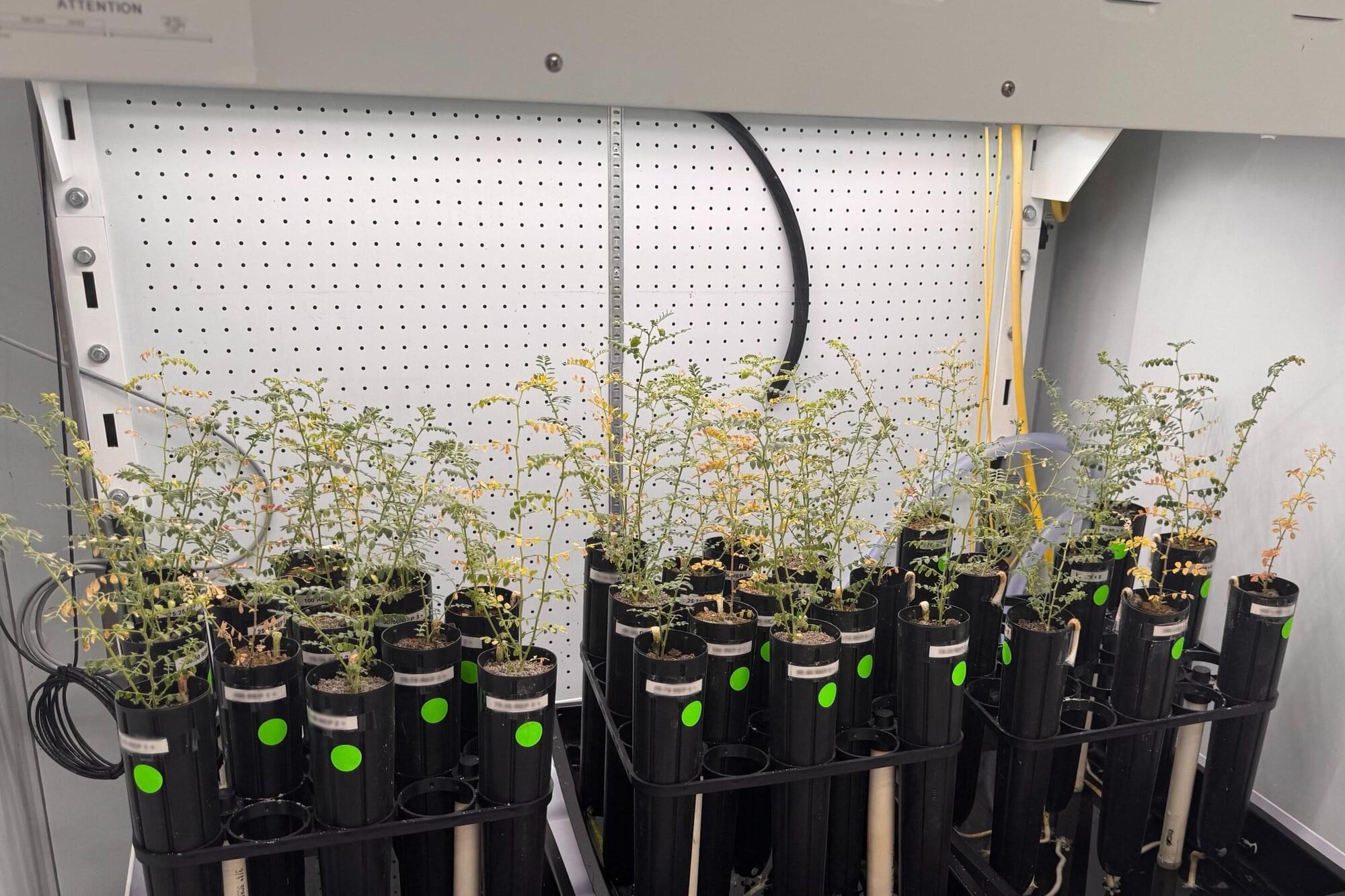
Jessica Atkin and colleagues grew chickpea plants (Cicer arietinum) in samples of simulated lunar soil that they treated in two ways: by adding vermicompost —produced by red wiggler earthworms (Eisenia fetida) as they decompose biowaste—at different concentrations; and by inoculating half of the soil samples at each concentration with arbuscular mycorrhizal fungi (AMF). On Earth, AMF improve the nutrient circulation properties of soil, reduce the quantity of potentially toxic metals available for absorption by plants, and produce a protein that helps bind soil together to reduce erosion. The authors then measured the quantity and weight of chickpea seeds produced, along with the plants’ heights and root mass.