Toggle light / dark theme

Precision tumor imaging with a fluorescence probe and engineered enzymes

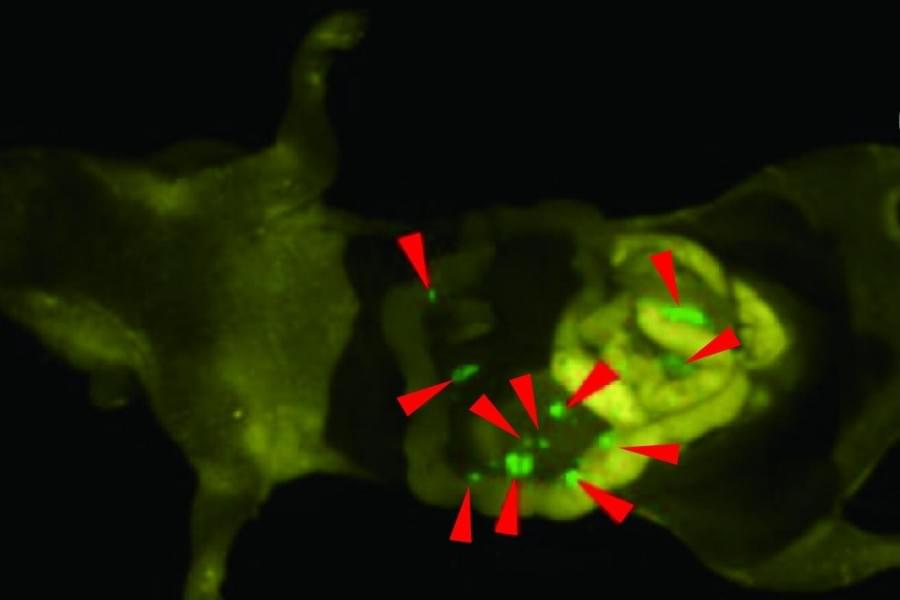
Successful cancer surgery depends on a surgeon’s ability to remove tumors, while minimizing harm to healthy tissues. Surgeons currently use glowing dyes which mark cancer cells to help differentiate from healthy cells, but these dyes aren’t perfect and will light up some healthy tissues too. For the first time, researchers including those from the University of Tokyo developed what they call a bioorthogonal fluorescence probe and a matching reporter enzyme that can activate the probe selectively at targeted tumor sites. This enables high-contrast tumor visualization with very low background. This study was performed in mice.

Cancer is a universal issue which affects uncountably many people around the world. Many will turn to surgery in the hope a surgeon will be able to completely remove a tumor leaving healthy tissues unaffected. Various tools and techniques have been developed over the years to improve the way these surgeries are performed, and visual imaging methods such as glowing dyes have proven to be very useful. But one drawback is that some probes can also be activated in healthy tissues by endogenous enzymes, creating background fluorescence and making it harder to judge what should be removed. The opposite is also possible, where cancer cells are left unmarked and are missed during surgery, increasing the chance of recurrence.

“Our group acknowledged this current shortcoming and improved upon this way to make cancer cells light up inside the body. In tests on mice, we delivered a special enzyme to tumors and used a fluorescence probe that only turns on when that enzyme is present,” said Associate Professor Ryosuke Kojima from the Laboratory of Chemical Biology and Molecular Imaging at the University of Tokyo. “Older probes often light up healthy tissue by mistake, creating background noise, but our highly selective, or bioorthogonal, dye probe is designed to stay completely off unless it meets its matching engineered enzyme. We essentially trained the enzyme through repeated mutation and selection, a form of directed evolution, so it could activate the probe strongly enough to work inside living animals.”
Quantum dynamics show ‘memory’ depends on whether states or observables evolve

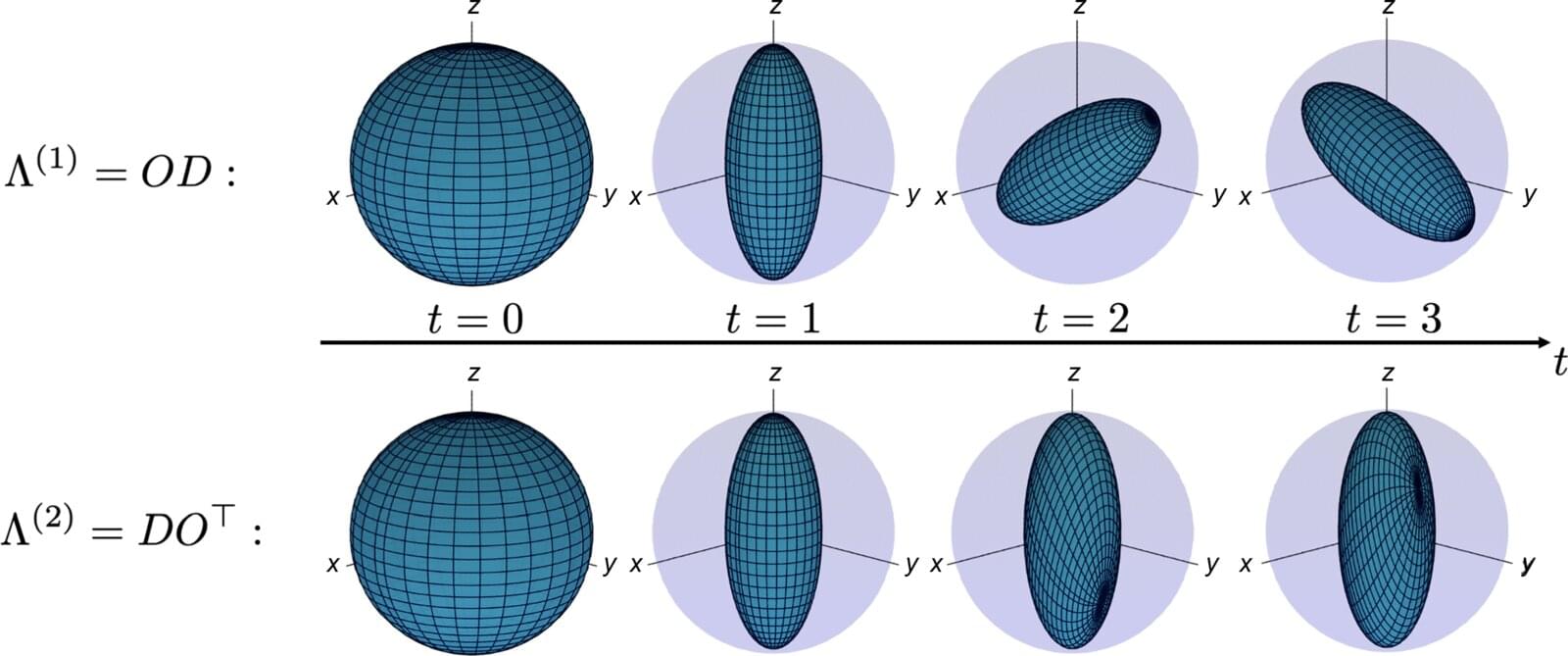
An international group of researchers have investigated the role of memory in quantum systems and dynamics. Their findings show that a quantum process can appear memoryless from one perspective while retaining memory from another. The discovery opens new research avenues into quantum systems and technologies.

In classical physics, the concept of memory is well understood. If the future evolution of a system depends only on its present state, the process is said to be memoryless. On the other hand, if past states continue to influence future outcomes, the system has memory.

In quantum physics, however, this clarity has long been missing. Quantum systems can store and transmit information in ways that have no classical analog, and the act of measurement plays a fundamental role in the dynamics.

Protein Folding and Quality Control in the Endoplasmic Reticulum: Recent Lessons from Yeast and Mammalian Cell Systems

The evolution of eukaryotes was accompanied by an increased need for intracellular communication and cellular specialization. Thus, a more complex collection of secreted and membrane proteins had to be synthesized, modified, and folded. The endoplasmic reticulum (ER) thereby became equipped with devoted enzymes and associated factors that both catalyze the production of secreted proteins and remove damaged proteins. A means to modify ER function to accommodate and destroy misfolded proteins also evolved. Not surprisingly, a growing number of human diseases are linked to various facets of ER function. Each of these topics will be discussed in this article, with an emphasis on recent reports in the literature that employed diverse models.

Jumping DNA Sequences Drive Early Tumor Growth

New research reveals that LINE-1 retrotransposons don’t just nudge genes, they also trigger massive structural upheavals early in cancer development.

Read about the findings.


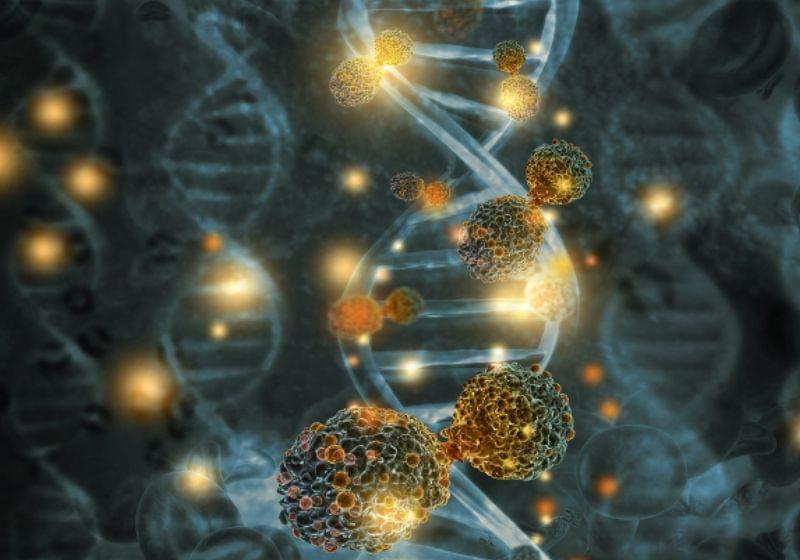
Where there’s a bountiful host, there are parasites ready to take advantage of the resources. This holds true even at microscopic levels. Lying within human DNA are repetitive elements called LINE-1 (L1) retrotransposons that promote their own propagation at the cost of the host organism’s health.1 These genetic parasites create copies of themselves that then get inserted at new locations within the genome. Until recently, scientists thought that the activity of L1s mostly resulted in local alterations to genes.

Now, in a new study published in Science, researchers have demonstrated that L1s can trigger dramatic structural changes in DNA, resulting in cancer-causing mutations.2 These findings, which shed light on the intricate relationship between cancer evolution and the genome, could lead to improved diagnostic and therapeutic strategies for different cancers.

“Cancer genomes are more influenced by these jumping fragments of DNA parasites than we previously thought,” said José Tubio, a molecular biologist at the University of Santiago de Compostela, in a statement.

How many bee species exist? New global count puts the total near 26,000

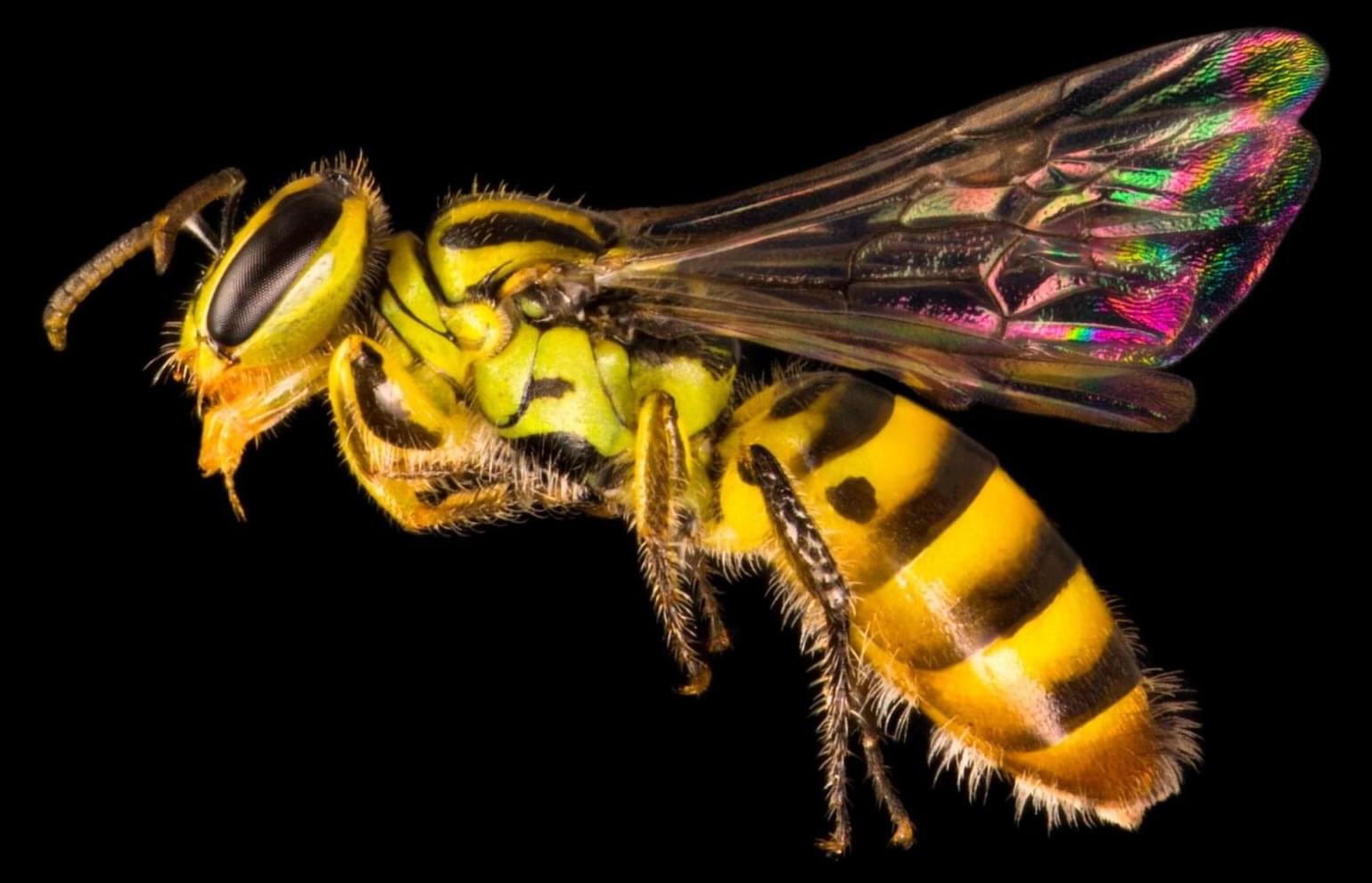
The world has far more bees than anyone realized. Scientists have, for the first time, estimated just how many species of bees are out there on a global scale, offering a clearer look at how these vital pollinators are distributed around the planet. The landmark study, led by University of Wollongong (UOW) evolutionary biologist Dr. James Dorey, provides the most comprehensive count to date—broken down by continent and country—calculating there are, at a minimum, between 3,700 and 5,200 more bee species buzzing around the world than currently recognized.

The research, outlined in a new paper published Tuesday, February 24, in Nature Communications, lifts global estimates to between 24,705 and 26,164 bee species and reveals a richer and more complex picture of the world’s bees than ever before. The findings highlight how many bee species remain unclassified or overlooked, showing that even our much-loved pollinators are not fully understood, and that closing these knowledge gaps is crucial for conservation and food security.

“Knowing how many species exist in a place, or within a group like bees, really matters. It shapes how we approach conservation, land management, and even big-picture science questions about evolution and ecosystems,” Dr. Dorey said. “Bees are a perfect example. They’re keystone species; their diversity underpins healthy environments and resilient agriculture. If we don’t understand how many bee species there are, we’re missing a key part of the puzzle for protecting both nature and farming.”

Jupiter’s Moons May Have Held Life’s Ingredients at Birth

Dr. Olivier Mousis: “Our findings suggest that Jupiter’s moons did not form as chemically pristine worlds. Instead, they may have accreted, or accumulated, a significant inventory of COMs at birth, providing a chemical foundation that could later interact with the liquid water in their interiors.” [ https://www.labroots.com/trending/space/30236/jupiter-s-moon…ts-birth-2](https://www.labroots.com/trending/space/30236/jupiter-s-moon…ts-birth-2)


When did Jupiter’s Galilean moons first contain the ingredients for life? This is what complementary studies published in The Planetary Science Journal and Monthly Notices of the Royal Astronomical Society hopes to address as an international team of scientists investigated potential timescales for when three of Jupiter’s Galilean moons, Io, Europa, Ganymede, and Callisto, could have first formed the ingredients for life. This study has the potential to help scientists better understand the formation and evolution of the Galilean moons and what this could mean in the search for life beyond Earth.

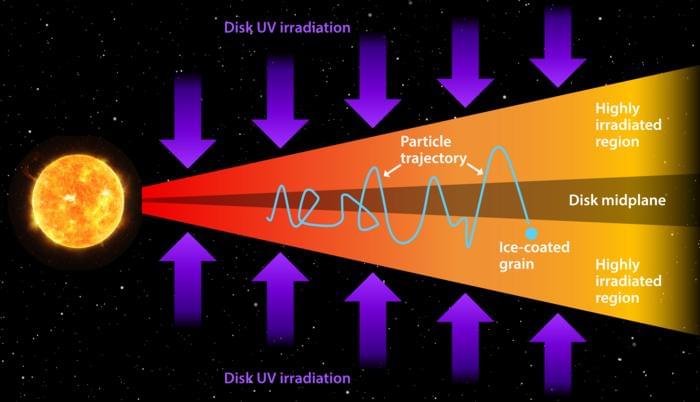
For the studies, the researchers explored the formation of complex organic molecules (COMs) within Jupiter’s original disk of gas, dust, and ice, also called the circumplanetary disk, along with modeling how COMs could be delivered to the Jupiter system from the protoplanetary disk that formed the Sun and planets. They examined how interaction with ultraviolet radiation from the Sun could influence COM formation. The overarching goal of both studies was to ascertain both how and when Jupiter’s Galilean moons received the ingredients for life, specifically focusing on icy grains that currently comprise Europa, Ganymede, and Callisto.

In the end, the researchers found that icy grains could have obtained COMs and delivered them to Jupiter’s moons both within Jupiter’s circumplanetary disk and from the solar system’s protoplanetary disk. Additionally, the models showed that approximately half of the simulated icy grains could have formed within the solar system’s protoplanetary disk and were delivered to Jupiter’s moons. Finally, the researchers estimated these processes occurred billions of years ago during the early formation of the solar system.

How Alien Would Aliens Behave?

Forget tentacles—what matters is the mind. We explore how alien behavior might emerge from evolution, culture, and technology, and why our biggest first contact risk may be misunderstanding.

Watch my exclusive video Mass Drivers on the Moon: https://nebula.tv/videos/isaacarthur–
Get Nebula using my link for 40% off an annual subscription: https://go.nebula.tv/isaacarthur.
Get a Lifetime Membership to Nebula for only $300: https://go.nebula.tv/lifetime?ref=isa
Use the link https://gift.nebula.tv/isaacarthur to give a year of Nebula to a friend for just $36.

Visit our Website: http://www.isaacarthur.net.
Join Nebula: https://go.nebula.tv/isaacarthur.
Support us on Patreon: / isaacarthur.
Support us on Subscribestar: https://www.subscribestar.com/isaac-a
Facebook Group: / 1583992725237264
Reddit: / isaacarthur.
Twitter: / isaac_a_arthur on Twitter and RT our future content.
SFIA Discord Server: / discord.
Credits:
How Would Aliens Behave?
July 13, 2025; Episode 732
Written, Produced & Narrated by: Isaac Arthur.
Select imagery/video supplied by Getty Images.
Music Courtesy of Epidemic Sound http://epidemicsound.com/creator.
Stellardrone, \

/* */