Toggle light / dark theme

Abstract: BreastCancer is associated with loss of the sirtuin deacetylase SIRT2, which leads to genomic instability and carcinogenesis, but the precise mechanism has been unclear

David S. Yu & team now show SIRT2 deacetylates MRE11 facilitating DNA binding to promote DNA end resection and ATM-dependent DNA damage signaling:

The figure shows MRE11 K393 deacetylation by SIRT2 promotes DNA end resection after ionizing radiation exposure, in the osteosarcoma cell line U20S.


1Department of Radiation Oncology and Winship Cancer Institute, Emory University School of Medicine, Atlanta, Georgia, USA.

2Department of Biology, Clark Atlanta University, Atlanta, Georgia, USA.

3Department of Biochemistry, Emory University School of Medicine, Atlanta, Georgia, USA.
Philip Kitcher — Philosophy of Reductionism & Emergence

Like us on Facebook for daily videos, updates, announcements, and much more: https://shorturl.at/tak4l.

Can biology be explained entirely in terms of chemistry and then physics? If so, that’s “reductionism.” Or are there “emergent” properties at higher levels of the hierarchy of life that cannot be explained by properties at lower or more basic levels?

Wear your support for the show with a Closer To Truth merchandise purchase: https://bit.ly/3P2ogje.

Philip Stuart Kitcher is a British philosopher who is the John Dewey Professor Emeritus of philosophy at Columbia University. He specialises in the philosophy of science, the philosophy of biology, the philosophy of mathematics, and more recently pragmatism.

Donate to help Closer To Truth continue exploring the world’s deepest questions without the need for paywalls: https://closertotruth.com/donate/

Closer To Truth, hosted by Robert Lawrence Kuhn and directed by Peter Getzels, presents the world’s greatest thinkers exploring humanity’s deepest questions. Discover fundamental issues of existence. Engage new and diverse ways of thinking. Appreciate intense debates. Share your own opinions. Seek your own answers.

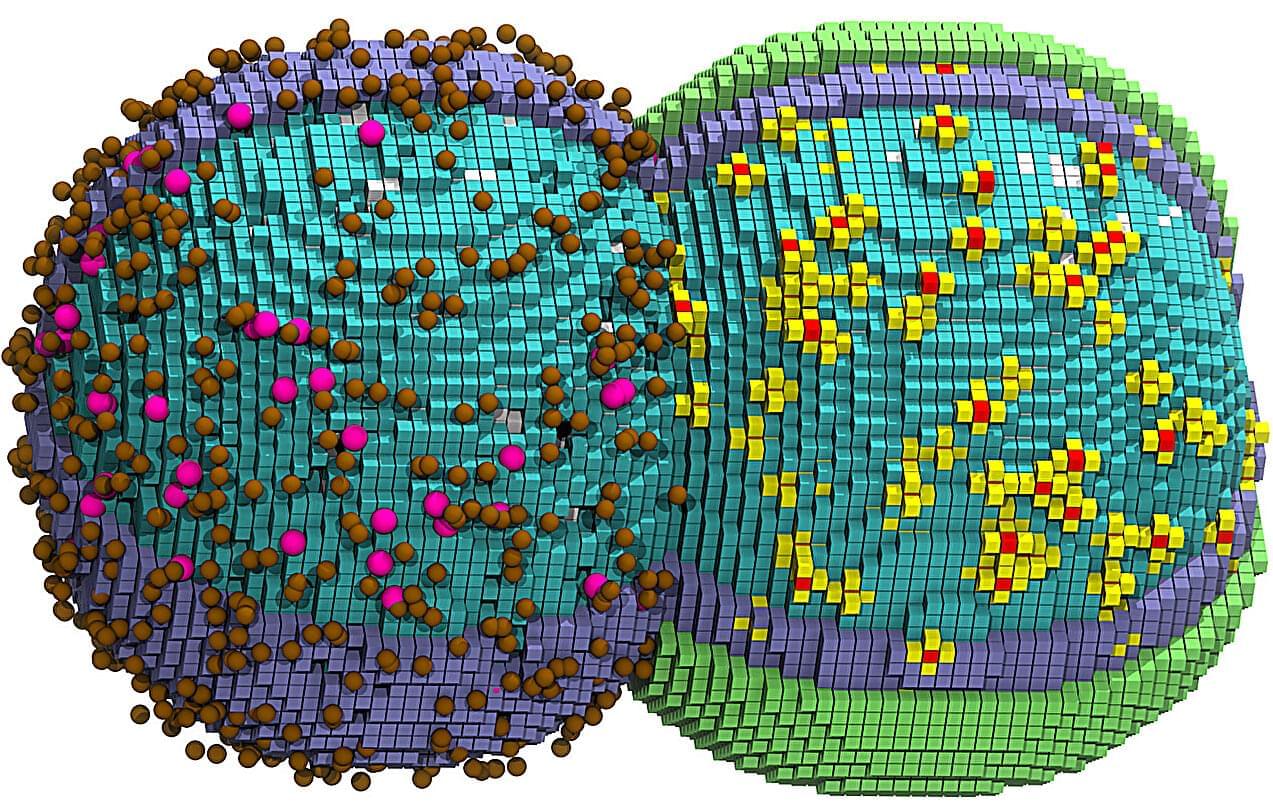
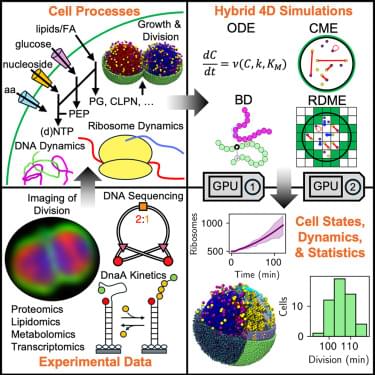
Bringing the genetically minimal cell to life on a computer in 4D

This work represents a fundamental advance in understanding life’s basic principles. By building a cell from the bottom up—specifying every gene, protein, and reaction—researchers can test how life functions with minimal complexity. The simulation serves as a “digital twin” that allows scientists to probe questions impossible to address experimentally, such as how spatial organization affects cellular processes or how subtle parameter changes alter cell cycle timing.


Simulating the complete cell cycle of the minimal cell provides a platform to understand the progression of complete states over time. The spatial heterogeneity of the intracellular environment can strongly affect biochemical reactions that control phenotypes.

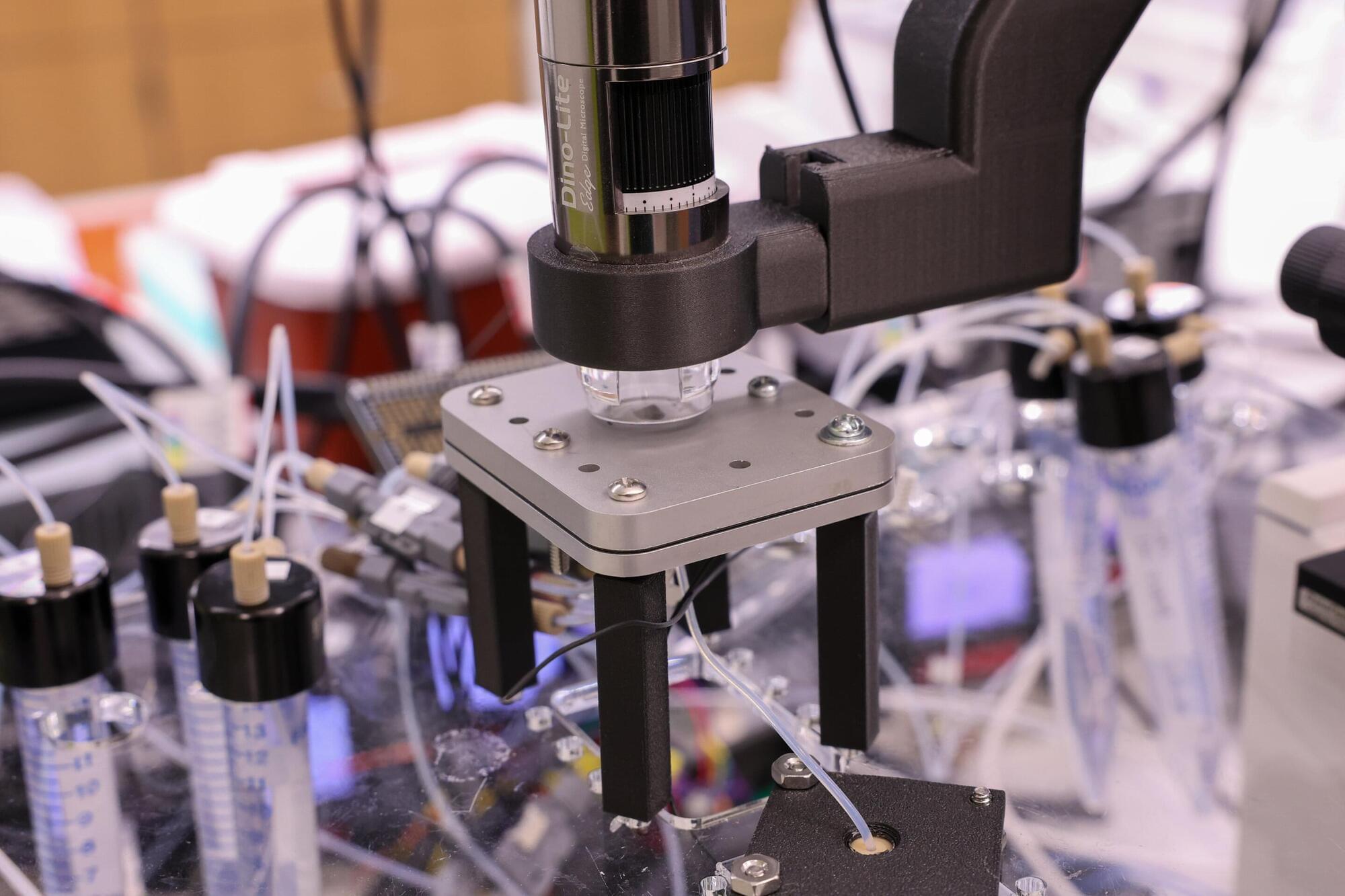
Robotic microfluidic platform brings AI to lipid nanoparticle design

AI has designed candidate drugs for antibiotic-resistant infections and genetic diseases. But efforts to incorporate AI into the design of lipid nanoparticles (LNPs), the revolutionary delivery vehicles behind mRNA therapies like the COVID-19 vaccines, have been much more limited.

Designing LNPs is especially challenging: Each formulation combines multiple lipid components whose ratios influence how the particle delivers genetic instructions inside cells. Scientists still lack a clear map connecting those chemical inputs to biological outcomes.

The reason? There simply isn’t enough data.

Chemistry in Pictures: Glowing with pride

“It looks like a tiny solar system. But instead of planets, it’s a snapshot of my research journey in the lab,” says Sadiya Tanga, a chemistry graduate student at Ashoka University. Tanga’s work has focused on a type of drug molecule called proteolysis-targeting chimeras, or PROTACs for short. PROTACs have two active ends, one that grabs a target protein and another that grabs a molecular flag that tells the cell to break down the whole assembly as waste. “Each glowing flask and sphere holds a different compound I worked hard to design and synthesize,” Tanga says. “The colors you see are from parts of the molecules that shine under UV light.”

Why simulating an entire cell cycle took years, multiple GPUs and six days per run

By simulating the life cycle of a minimal bacterial cell—from DNA replication to protein translation to metabolism and cell division—scientists have opened a new frontier of computer vision into the essential processes of life. The researchers, led by chemistry professor Zan Luthey-Schulten at the University of Illinois Urbana-Champaign, present their findings in the journal Cell.

The team simulated a living cell at nanoscale resolution and recapitulated how every molecule within that cell behaved over the course of a full cell cycle. The work took many years: vast computer resources, large experimental datasets, a suite of experimental and computational techniques and an understanding of the roles, behaviors and physical interactions of thousands of molecular players.

The researchers had to account for every gene, protein, RNA molecule and chemical reaction occurring within the cell to recreate the timing of cellular events. For example, their model had to accurately reflect the processes that allow the cell to double in size prior to cell division.

One-hour saliva test spots biomarker linked to several cancers

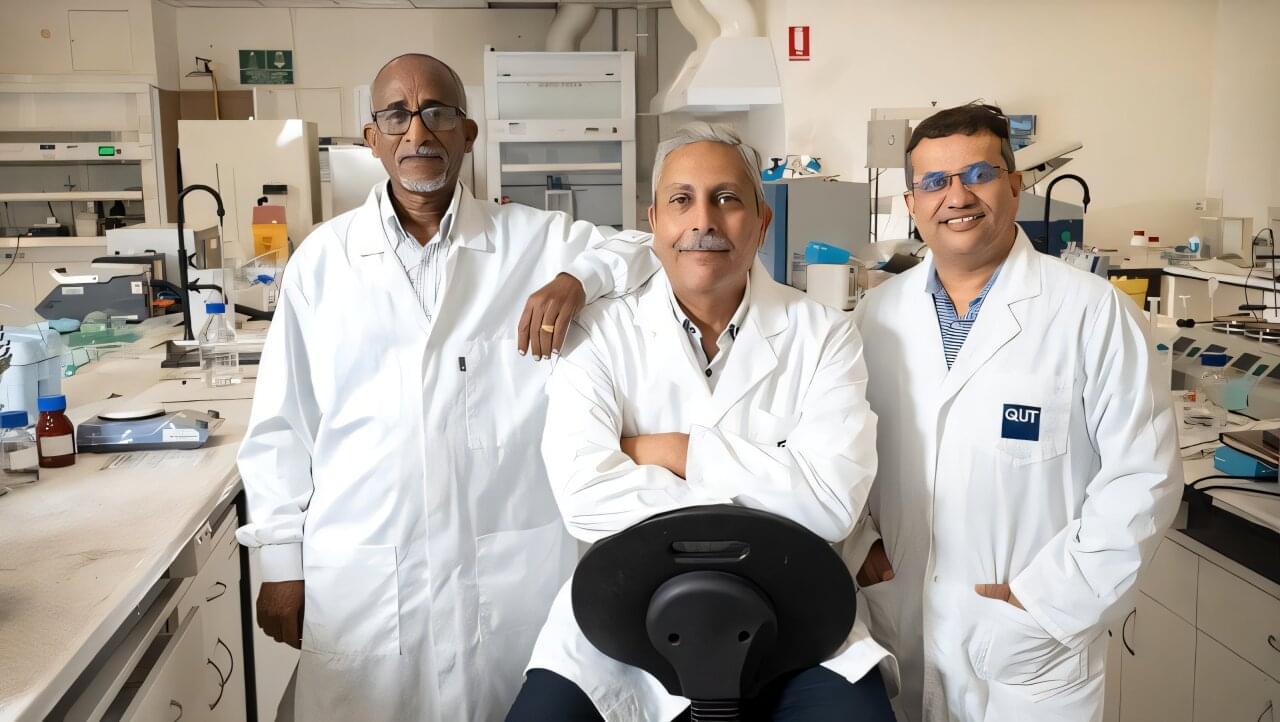
QUT researchers have developed a simple one-hour saliva test for a protein biomarker that has been linked with oral, colon and pancreatic cancers. The findings are published in the journal Talanta.

The paper is titled “Label free paper sensor and light driven material for the rapid screening of S100P cancer biomarker in saliva.” Corresponding author, Associate Professor Emad Kiriakous, from QUT’s School of Chemistry and Physics, said this technology could pave the way for simple, low-cost, point-of-care screening tools to help identify and treat cancer early.

Professor Kiriakous said the QUT team developed a rapid testing technique of saliva using paper coated in gold and silver nanoparticles to create a highly sensitive sensor that records the Raman spectrum (or SERS, the process by which a substance scatters laser light which is used to identify molecules) of saliva samples.

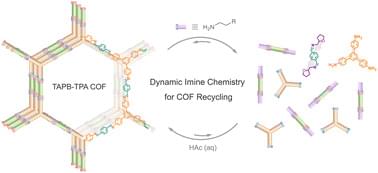
Chemical recycling of imine-linked covalent organic frameworks

Imine-linked covalent organic frameworks (COFs) have been explored for various applications; however, chemical recycling of end-of-life COFs is an undeveloped area of research. Here, we report closed-loop recycling methods for imine-linked COFs, realizing their chemical depolymerization and reconstruction through d.

/* */